

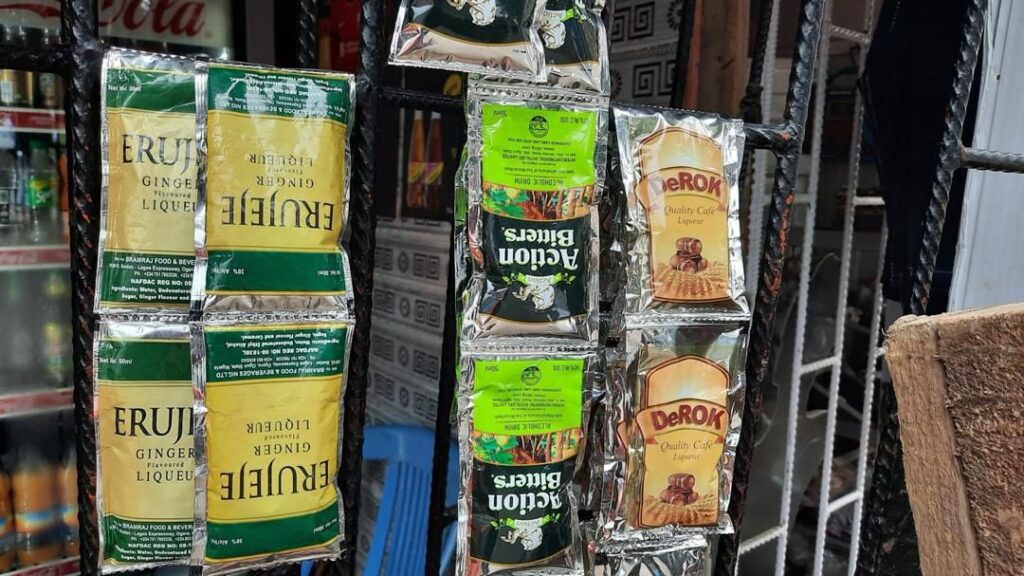
The National Agency for Food and Drug Administration and Control (NAFDAC) has resumed enforcement of the ban on the production and sale of alcoholic beverages packaged in sachets and small plastic or glass bottles below 200 milliliters, despite objections from industry stakeholders.
NAFDAC clarified that no alcohol-producing company was shut down, stressing that the enforcement targets only the sale of alcohol in sachets and small containers, which it says pose serious public health risks.
In a statement issued on Thursday, the Director-General of NAFDAC, Prof. Mojisola Christianah Adeyeye, said the action was aimed at protecting children, adolescents, and young adults from the harmful use of alcohol.
“The National Agency for Food and Drug Administration and Control has resumed enforcement of the ban on the production and sale of alcoholic beverages packaged in sachets and small-volume PET or glass bottles below 200 ml, in line with a resolution of the Senate of the Federal Republic of Nigeria and the agency’s public health mandate,” the statement read.
Adeyeye disclosed that reports from schools had revealed alarming trends, including a recent incident in which a teacher reported that a student claimed he could not sit for an examination without first consuming sachet alcohol.
She recalled that in December 2018, NAFDAC, in collaboration with the Federal Ministry of Health and Social Welfare and the Federal Competition and Consumer Protection Commission, signed a five-year Memorandum of Understanding with manufacturers to phase out sachet and small-volume alcohol packaging by January 31, 2024.
According to her, the moratorium was later extended to December 2025 to allow manufacturers to exhaust existing stock and adjust their production lines.
“The current Senate resolution aligns with the spirit and letter of that agreement and with Nigeria’s commitment to the World Health Assembly Global Strategy to Reduce the Harmful Use of Alcohol,” Adeyeye said.
She emphasized that the enforcement was not intended to punish manufacturers but to safeguard public health.
However, manufacturers and other stakeholders in the sector have continued to oppose the ban and its enforcement, citing concerns over its economic impact.
