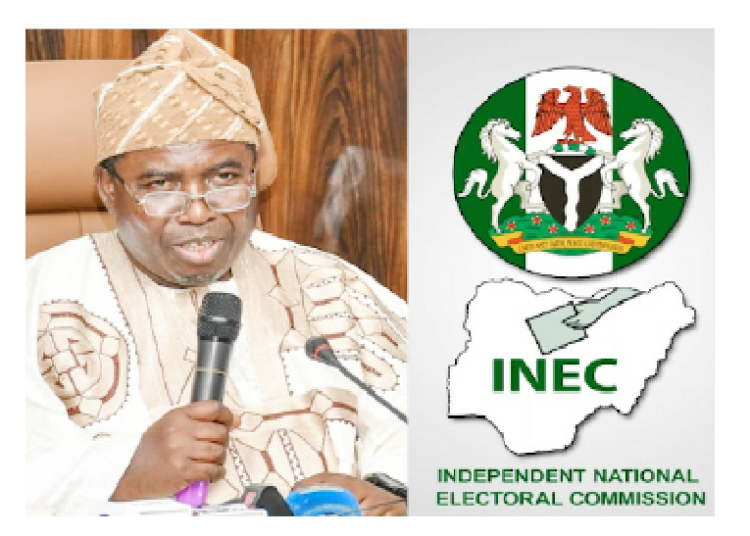
With less than 100 days to the February 6, 2027 governorship and State Houses of Assembly elections, uncertainty continues to surround the participation of some political candidates following the Independent National Electoral Commission’s (INEC) review of the final list of candidates.
The controversy stems from a September 24, 2026, Supreme Court judgement that restored Sections 77(5), (6), (7) and 84(2) of the Electoral Act 2026, which set out requirements governing political party membership registers and the nomination of candidates.
In a unanimous decision, a seven-member panel of the Supreme Court allowed INEC’s appeal and set aside the July 16 judgement of the Court of Appeal, which had nullified the provisions.
The apex court ruled that the provisions were not inconsistent with the 1999 Constitution, thereby restoring the May 5 decision of the Federal High Court in Abuja, which had dismissed a challenge filed by the Zenith Labour Party (ZLP) in suit FHC/ABJ/509/2026. The Supreme Court also awarded N2 million in costs against the party.
Under Section 77(5), only individuals whose names appear in a political party’s membership register submitted to INEC at least 21 days before a primary, congress or convention are eligible to participate in the exercise.
Section 77(6) requires political parties to use the membership registers submitted to the commission during their primaries, congresses and conventions, while Section 77(7) provides that parties that fail to submit their registers within the stipulated period are ineligible to field candidates in an election.
Section 84(2), meanwhile, provides that political parties shall nominate candidates through direct primaries or consensus.
INEC subsequently clarified that the Supreme Court judgement did not automatically disqualify individual candidates but addressed the eligibility of political parties to participate in elections where they failed to meet statutory requirements concerning membership registers.
However, on October 10, 2026, the commission omitted the names of several governorship and State Houses of Assembly candidates from its final list for the 2027 elections, citing the implications of the Supreme Court ruling.
Among the prominent candidates affected were former Minister of Communications and Digital Economy, Prof. Isa Pantami, and Ladi Adebutu, both of the Peoples Democratic Party (PDP).
Pantami emerged as the PDP governorship candidate after leaving the All Progressives Congress (APC) on May 19. His emergence was challenged in court by another aspirant, Ahmed Mailantarki.
A Federal High Court sitting in Gombe subsequently nullified the primary election and ordered a fresh exercise, which Pantami won again.
Adebutu, on the other hand, emerged as the PDP governorship candidate in Ogun State. The governorship candidate of the New Nigerian Peoples Party (NNPP) in Oyo State, Adebiyi Adedapo, was also reportedly omitted from INEC’s list.
The situation took another turn on October 29, when INEC announced the reinstatement of 66 governorship and State Houses of Assembly candidates following a review of its final list for the 2027 elections.
In a statement issued by the National Commissioner and Chairman of the Information and Voter Education Committee, Mohammed Haruna, the commission said it had received complaints from political parties and candidates over alleged omissions, wrongful inclusion of candidates whose names were absent from submitted membership registers, and multiple nominations.
Haruna explained that INEC reviewed the complaints against relevant records and applicable legal provisions, approving petitions it considered valid while rejecting those that lacked merit.
He added that some candidates initially published in the final list were removed after verification showed that their names were not included in their parties’ membership registers or that they had failed to meet other legal requirements.
Providing a breakdown, Haruna disclosed that the commission received 69 petitions from 12 political parties across 26 states concerning governorship elections. Of these, 41 were successful, while 28 were rejected.
For the State Houses of Assembly elections, INEC received 61 petitions from 11 political parties across 11 states. Twenty-five petitions were successful, while 36 were unsuccessful.
The commission said the affected candidates, political parties and states would be reflected in an updated version of the list on its official website.
Although INEC did not publicly identify the candidates reinstated, reports indicated that Pantami had cleared the hurdle, while the status of Adebutu remained uncertain.
In Adebiyi’s case, reports suggested that his replacement followed a letter allegedly submitted by the NNPP chairman and secretary, indicating his withdrawal from the race.
Adebiyi, however, told THISDAY that his signature had allegedly been forged and that an affidavit was prepared in his name without his consent.
The continuing uncertainty has raised concerns about the campaign activities of affected candidates, some of whom may be unable to proceed with their electoral programmes while their status remains unresolved.
With the February 6, 2027 elections approaching, INEC’s review of the candidate list has become a significant development in the preparations for the polls, particularly for political parties and aspirants whose nominations have been affected by the membership-register requirements.