

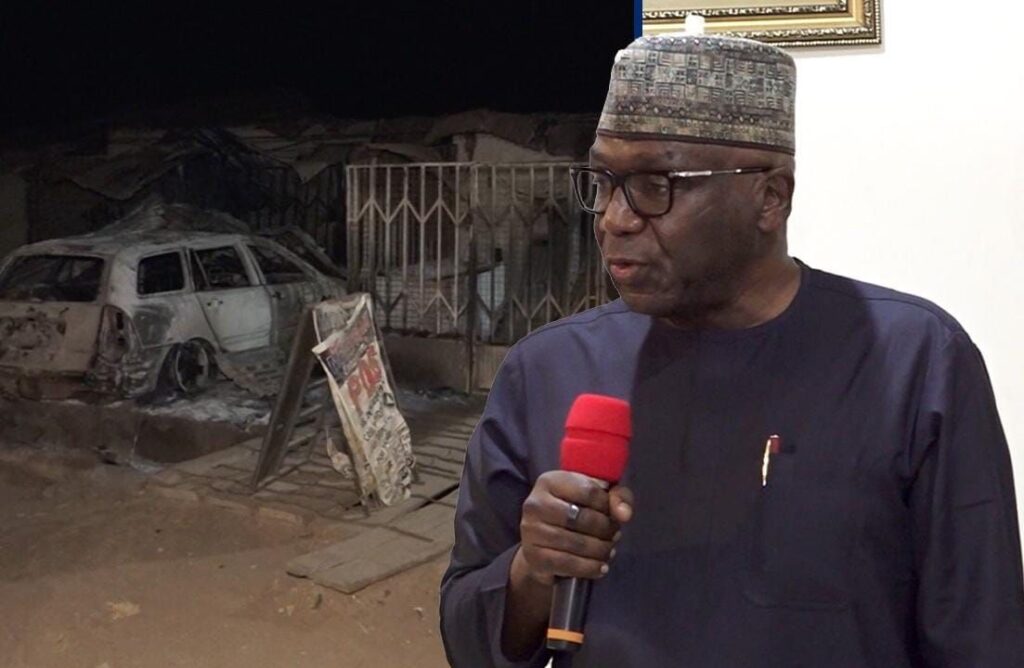
The legitimacy of any government rests on its ability to protect human life. This obligation is the core of the social contract through which Kwarans confer authority on the state in exchange for security and public order. When a government persistently fails in this duty, its claim to legitimacy is weakened. In Kwara State, the administration of Governor AbdulRahman AbdulRazaq has reached that point.
The killings in Woro and Nuku were not isolated security incidents. They were the culmination of prolonged governance failure. Months before the attacks, residents and traditional authorities reportedly issued repeated and specific warnings about the presence of armed groups in vulnerable rural communities. These warnings were not speculative. They were grounded in escalating threat. Yet the state’s response appeared marked by denial and reassurance rather than preparedness. In matters of security, such posture reflects a failure of leadership and priority.
The events themselves exposed deep institutional weakness. Reports of a delay exceeding ten hours before effective intervention reached the affected communities cannot be explained away as operational difficulty. In democratic governance, prolonged absence of protection during an active crisis amounts to abandonment. Kwarans were left exposed during a critical period when decisive action could have mitigated loss of life.
This failure was intensified by long-standing infrastructural neglect. Poor rural access roads reportedly hindered security and emergency response, leaving communities isolated when help was most needed. Infrastructure is not a secondary development concern. It is a core element of state capacity. Its neglect carries direct and often fatal consequences.
The aftermath of the massacre further exposed the governance gap. During the visit of Nigeria’s Vice President to Kwara State, the affected communities of Woro and Nuku were not directly visited. Whatever the reasons, the consequence was significant. Federal authorities were unable to engage survivors firsthand or observe the full scale of devastation on the ground. In moments of national tragedy, such distance limits transparency and weakens accountability, reinforcing the perception of a government more focused on managing appearances than confronting failure.
The administration’s conduct after the massacre therefore raised serious concerns. Rather than prioritising openness and direct engagement with affected communities, the response appeared carefully managed. Limited exposure of survivors and impacted areas to broader scrutiny conveyed the impression of narrative control rather than accountability. In moments of national loss, leadership demands openness, not insulation.
Governor AbdulRazaq’s administration will be judged by this sequence of failure. Warnings were discounted. Threats were downplayed. Response mechanisms proved inadequate. Accountability remains unresolved. The state appeared more adept at issuing statements than deploying protection, more focused on managing perception than safeguarding lives.
The social contract is not an abstract political theory. It is a lived reality measured by whether Kwarans are protected in moments of danger. For the people of Woro, Nuku, and other vulnerable communities across Kwara State, that contract has been gravely breached. They fulfilled their obligations as Kwarans. The state did not reciprocate.
This failure is political as well as moral. A government that cannot anticipate foreseeable threats, respond promptly to crisis, or account honestly for its shortcomings forfeits public trust. Until this breach is openly acknowledged and addressed through transparent investigation, serious security reform, and a demonstrable re-prioritisation of human life over political convenience, the government of Kwara State operates under a legitimacy deficit. Authority without protection is hollow, and power without accountability cannot endure.
