

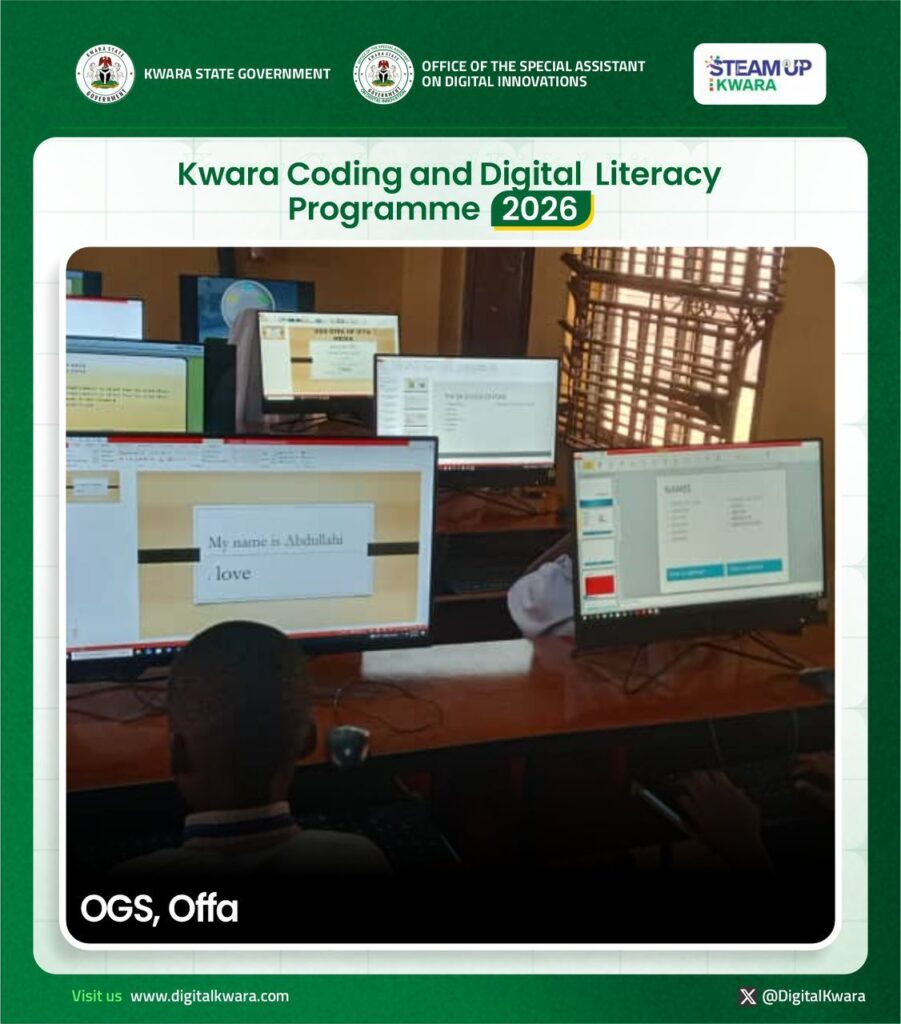
The Kwara State Government’s drive to position itself as a leading sub-national innovation hub in Nigeria recorded a new milestone as the 2026 Kwara Coding and Digital Literacy Programme successfully entered Week Seven of its Third Term schedule. Moving into mid-June 2026, the state-sponsored program has recorded a surge in student engagement across all participating public training centers.
The latest phase shifts focus toward high-demand tech skills, combining theoretical insights with rigorous, hands-on practical execution. The flag-off of the Week Seven tracks follows a series of successful structural evaluations designed by the Office of the Special Assistant to the Governor on Digital Innovation to sustain uniform educational standards across rural and urban centers.
The curriculum for the seventh week exposed public secondary school students to advanced technological logic, emphasizing both practical creation and responsible usage within the global ecosystem. Under the Ethical AI Utilization module, students learned how to safely and efficiently leverage modern Artificial Intelligence tools to act as analytical learning assistants. The sessions also utilized AI frameworks to break down advanced programming concepts under Python Programming Logic, guiding students through fundamental syntax, computational logic, and modular script development.
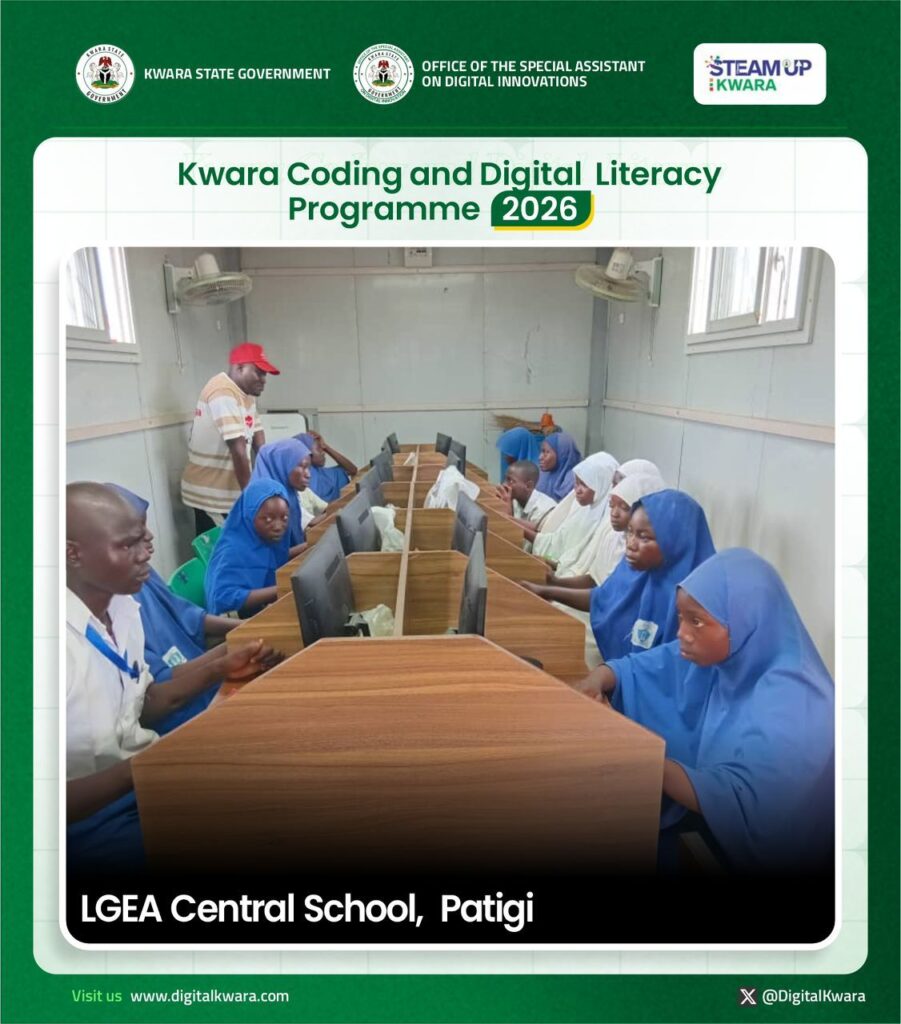
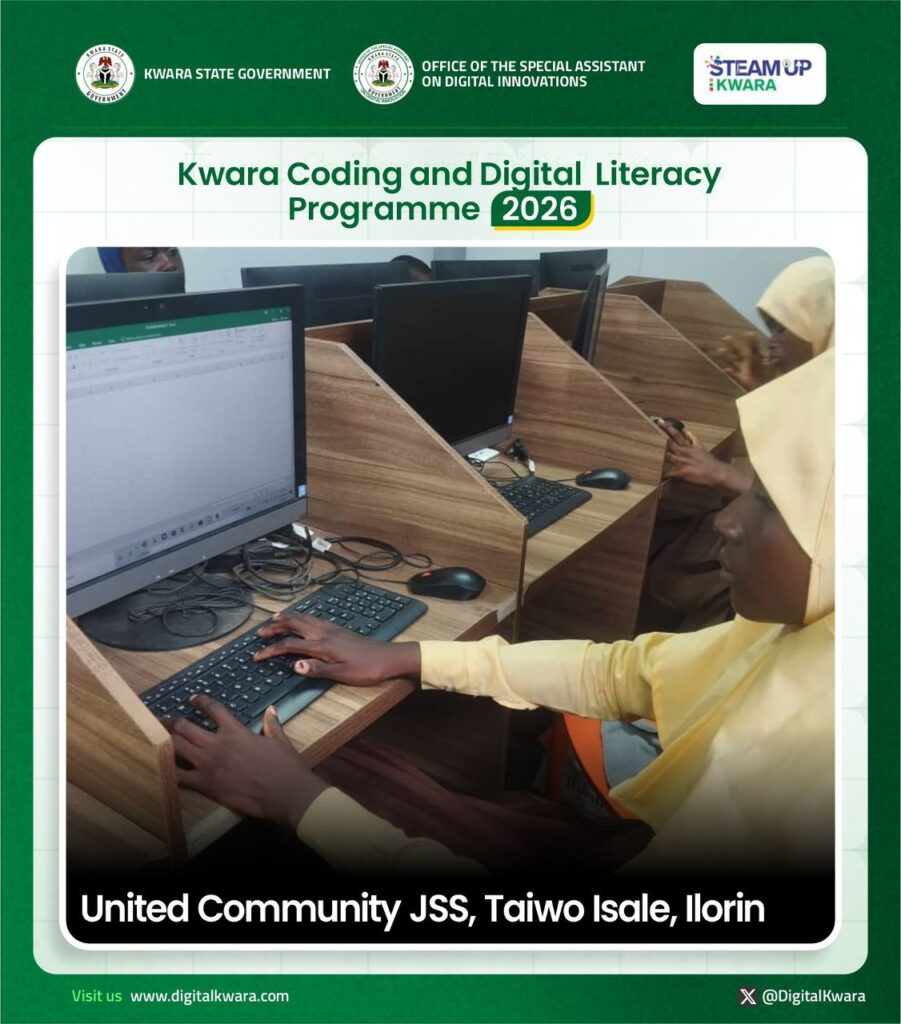
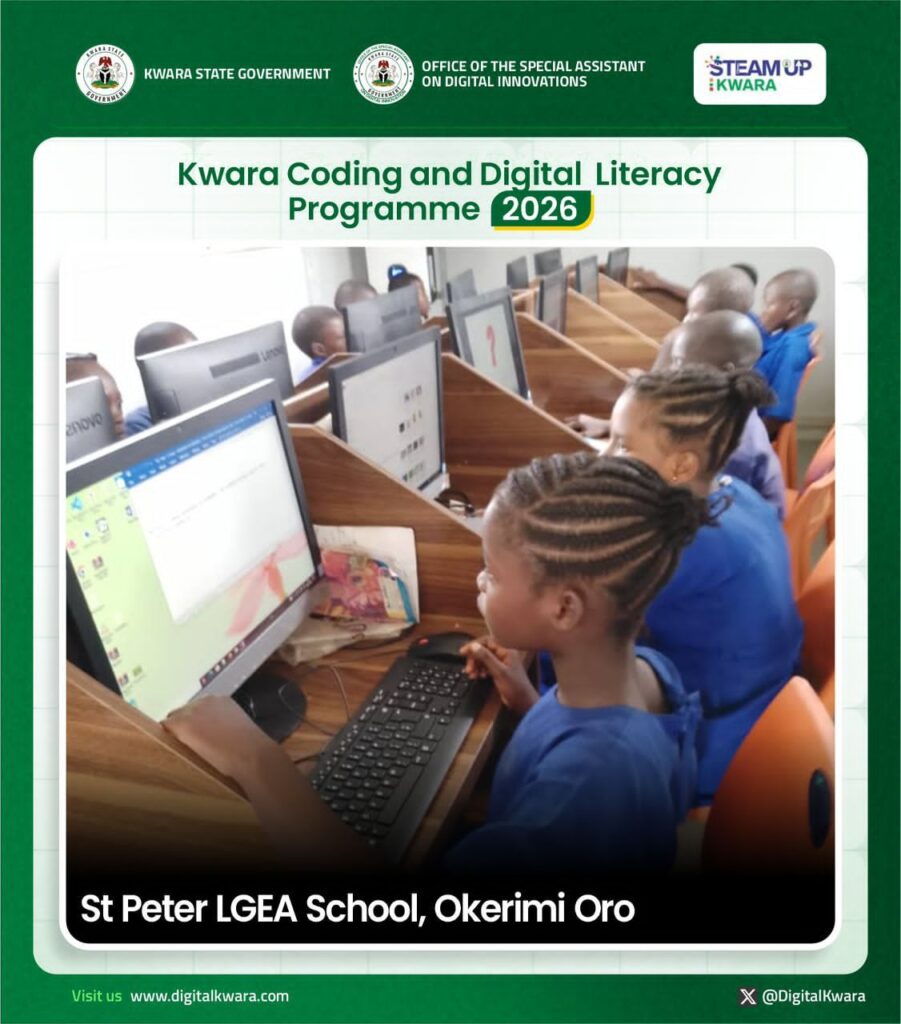
Furthermore, a core segment of the week focused heavily on Early Cybersecurity Awareness, teaching participants the operational mechanics of setting up and authenticating Multi-Factor Authentication (MFA) and utilizing built-in Python modules to understand basic network protections.
Behind the immediate classroom activities, the state government rolled out multi-layered quality control operations to keep infrastructure on par with global benchmarks. A major highlight of the week was the formal Instructors’ Engagement Meeting, which brought together frontline teachers, software engineers, technical support cadres, and coordination stakeholders. The roundtable served to review curriculum delivery speeds, analyze student assimilation metrics, and resolve technical operational issues across all centers.
Concurrently, the state activated its Needs Assessment Call—a systematic reporting protocol requiring centers to submit immediate, structural documentation regarding hardware operations, electrical needs, power consistency, and manpower deficits. In tandem with these diagnostics, the routine Training of Trainers (TOT) sessions progressed seamlessly to continuously update the teaching capacity of state-assigned instructors.
The program continues to demonstrate a clear commitment to equipping young Kwarans with relevant digital skills, regardless of their social status, financial background, or geographic location, completely preparing them for success in an increasingly technology-driven global marketplace.
Across the sixteen local government areas, participating school heads, tracking instructors, and tech teams continue to commend the Executive Governor of Kwara State, Mallam AbdulRahman AbdulRazaq, CON, for his administrative dedication. Stakeholders noted that by expanding infrastructural access and funding intellectual empowerment channels, the administration is giving young citizens a highly competitive edge in the global digital economy.
