

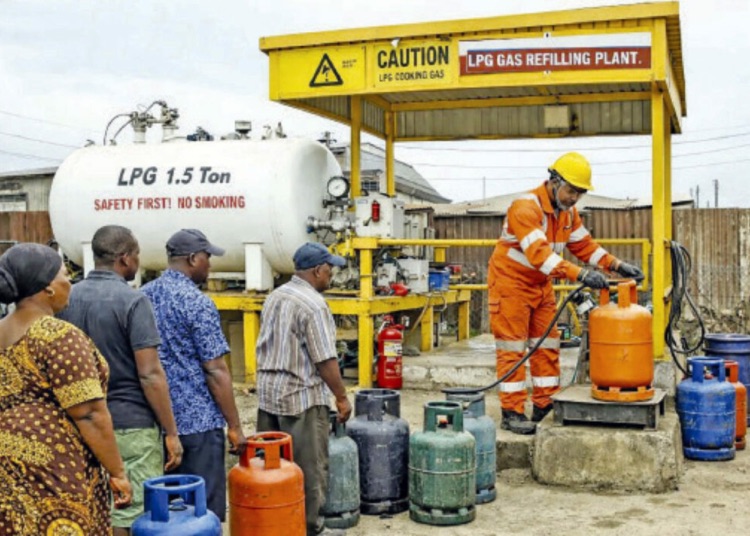
Stakeholders in Nigeria’s liquefied petroleum gas (LPG) sector have intensified coordinated efforts to increase domestic supply and drive down the high cost of cooking gas.
This came as gas prices decline by 40 per cent from their June peak in markets across the country.
The executive secretary/chief executive officer of the Nigeria Liquefied and Compressed Gases Association (NLCGA), Mr Lanrewaju Baiyewu, disclosed this at a recent industry event in Lagos.
In separate reactions, some consumers and retailers told LEADERSHIP that they welcomed the renewed efforts to bring down the prices of cooking gas, saying a reduction would provide relief to households struggling with the high cost of the product.
A resident of Utako area of the Federal Capital Territory (FCT), Aisha Bala, said the move would help prevent more households from returning to charcoal and other less desirable cooking fuels because of the high cost of LPG.
Another consumer, Agnes Idoko, applauded the stakeholders for what she described as a bold initiative, but appealed to industry players to accelerate the process.
A retailer in Zuba, Abuja, Silas Igba, said the measure would help revive the business, noting that high prices had resulted in declining patronage.
Baiyewu, in a statement he released to journalists, attributed the price reduction to sustained collaboration among the federal government, terminal operators, local producers, off-takers, marketers, the Nigerian Midstream and Downstream Petroleum Regulatory Authority (NMDPRA) and other stakeholders in the LPG value chain.
He said the stakeholders had been working to remove supply constraints and improve the availability and distribution of cooking gas to the domestic market.
According to him, the intervention is beginning to reverse the steep price increases recorded earlier in the year, which placed considerable pressure on households and small businesses that depend on LPG for cooking and other commercial activities.
Baiyewu said the national average price of refilling a 12.5kg cylinder stood at about ₦1,360 per kilogram in February but rose above ₦2,000 per kilogram by June, reaching as high as ₦2,300 per kilogram in some locations.
At the peak of the increase, he said consumers paid about ₦13,800 to refill a 6kg cylinder, while the cost of refilling a 12.5kg cylinder rose to as much as ₦28,750.
He attributed the surge to supply shortages, rising transportation and logistics costs, international energy prices, foreign exchange movements and other pressures affecting the LPG market.
While welcoming the recent decline, Baiyewu warned that a sustainable solution would require more than short-term interventions.
He called for decisive implementation of the Petroleum Industry Act (PIA), describing it as critical to preventing the recurring supply gaps that have contributed to periodic price spikes in the domestic LPG market.
He also noted that the influence of international pricing benchmarks continued to expose the domestic market to global energy prices and foreign exchange fluctuations.
To strengthen the sector against future disruptions, Baiyewu said NLCGA members were increasing investments in storage, transportation, cylinder manufacturing and distribution infrastructure.
He said improved infrastructure would enhance the capacity of the domestic market to store and distribute adequate volumes of LPG, thereby reducing the likelihood of supply shortages and sudden price increases.
The NLCGA chief executive also disclosed that the association had set a target of raising Nigeria’s domestic cooking gas consumption to five million metric tonnes by 2030 under the leadership of its new President, Mr Ladi Falola.
He said achieving the target would require sustained investment and closer cooperation among producers, terminal operators, marketers, regulators, transporters and other stakeholders.
Beyond household cooking, Baiyewu said the association was also supporting increased adoption of gas as a fuel for transportation in line with the Federal Government’s gas-for-mobility initiative.
He noted that road transportation remained the dominant means of moving people, goods and services across the country, adding that greater adoption of gas-powered mobility could help reduce transportation costs over time.
Baiyewu urged stakeholders to sustain the current collaboration, stressing that increased domestic supply, infrastructure development and effective implementation of government policies remained essential to achieving affordable and stable LPG prices.
He said the ultimate objective should be to build a resilient domestic gas market capable of meeting rising demand without exposing consumers to frequent supply disruptions and sharp price increases.