

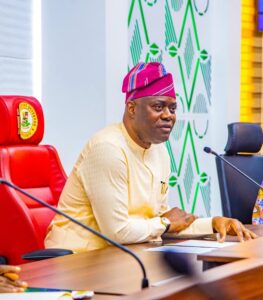
The presidential candidate of the Allied Peoples Movement (APM) for the 2027 general elections, Engr. Seyi Makinde, has promised to introduce far-reaching economic reforms aimed at improving the living conditions of Nigerians if elected president.
Makinde said the party’s proposed Reset Nigeria Agenda was designed to address the country’s economic difficulties, insecurity and other structural challenges through a comprehensive policy framework.
He made the remarks during a live interview on Bauchi Radio Corporation (BRC) in Bauchi on Friday night, ahead of the official flag-off of his presidential campaign scheduled for Saturday.
The APM candidate identified the economy as the foremost of the four major pillars of the party’s agenda, saying the proposed reforms were designed to ensure that government policies have a direct and positive impact on ordinary Nigerians.
Makinde criticised the economic policies of President Bola Ahmed Tinubu’s administration, arguing that some major decisions were implemented without adequate planning and coordination, resulting in increased hardship for citizens.
According to him, Nigeria needs a carefully designed development strategy that takes citizens’ welfare and the practical consequences of government policies into consideration.
He said the APM had developed a documented manifesto detailing its vision and specific measures for tackling the challenges facing the country.
Makinde explained that the Reset Nigeria Agenda was informed by his experience with governance challenges, particularly poor coordination and excessive centralisation of power.
He expressed confidence that addressing these fundamental issues would provide the foundation for sustainable national development.
On security, the APM candidate identified insecurity as one of Nigeria’s major challenges and called for fundamental reforms to strengthen national stability.
He also stressed the importance of recognising Nigeria’s diverse nationalities and promoting a federal structure capable of accommodating the interests of the country’s different groups.
Makinde maintained that Nigeria’s diversity should serve as a foundation for unity and collective development rather than division.
“We want Nigerians to feel the impact of our policies, and that is precisely what we intend to address,” he said.