

By: Sulyman Lanre Abubakar
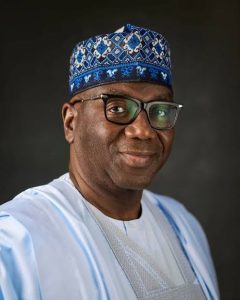
The true measure of leadership in public institutions is not found merely in the projects announced, facilities commissioned or policies introduced, but in the lasting opportunities created, the people empowered, the systems strengthened and the communities positively impacted. It is against this understanding that the institutional development of Kwara State Polytechnic, Ilorin, under the leadership of its Rector, Engr. Dr Abdul Jimoh Mohammed, deserves attention.
Since assuming office in November 2019, Dr Abdul has steered the Polytechnic through a period of institutional renewal, pursuing a development agenda that cuts across infrastructure, academic advancement, staff development, innovation, entrepreneurship, student welfare and community engagement. His administration has approached institutional development as a responsibility that goes beyond maintaining existing structures, embracing instead the need to strengthen the Polytechnic’s capacity, expand its academic possibilities and position it for greater relevance in a rapidly changing educational and technological environment.
This journey has also benefited from the broader development vision of Governor AbdulRahman AbdulRazaq, whose administration has continued to prioritise education, human capital development and the strengthening of public institutions. Within this framework, the Rector’s leadership has helped translate institutional priorities and government support into practical interventions across the Polytechnic and its surrounding communities.
Repositioning an Institution Through Purposeful Leadership
One of the clearest expressions of Dr Abdul’s administration has been its sustained attention to the physical environment in which teaching, learning and research take place. Recognising that academic excellence cannot thrive in an environment burdened by deteriorating facilities and inadequate infrastructure, his administration has pursued the rehabilitation of student accommodation, lecture facilities, laboratories, offices and other essential institutional assets.
Several student hostels across the Polytechnic’s campuses have undergone renovation, addressing years of deterioration and improving the accommodation environment. The administration’s two-year stewardship report documented extensive rehabilitation works across hostel blocks, alongside efforts to secure government support for the completion of a hostel project abandoned for more than two decades, subject to the relevant TETFund requirements.
The same commitment to restoring institutional capacity was evident in the rehabilitation of four engineering machines that had remained non-functional for several years. These included a Power Guillotine, Rolling Machine, 1,000 KVA Generator and Washer Machine. Their restoration was more than an equipment intervention; it represented an effort to recover practical-learning resources that are essential to the training of technically competent graduates.
In response to deficiencies in lecture-room furniture, the administration also provided 255 four-seater chairs across selected lecture rooms at the Main and Mini Campuses. Other interventions covered campus roads, sanitation, water supply, office accommodation, landscaping and digital infrastructure. The establishment of a Network Operations Centre was particularly important in the institution’s efforts to improve internet access for teaching, learning and research.
A landmark in the institution’s infrastructure history was the completion of the multipurpose auditorium, now known as the Rear Admiral Lawal Auditorium. Abandoned for nearly two decades, the project was completed and commissioned by Governor AbdulRahman AbdulRazaq in June 2021. The intervention demonstrated the Governor’s commitment to completing inherited projects, while the Polytechnic management’s responsibility for institutional coordination and utilisation ensured that the facility could serve its intended purpose.
These developments reflect a leadership approach that recognises that infrastructure is not simply about physical structures; it is about creating an environment in which students can learn, lecturers can teach and the institution can fulfil its mandate more effectively.
Developing the People Behind Institutional Excellence
Perhaps one of the most consequential aspects of the administration’s development agenda is its attention to human capital. While buildings, laboratories and equipment provide the physical foundation of a tertiary institution, its intellectual strength ultimately rests on the quality, competence and professional advancement of its academic workforce.
During the period under review, the Polytechnic has witnessed growth in the number of doctorate-qualified lecturers across its academic institutes and departments. This development extends beyond the Institute of Information and Communication Technology and the Institute of Applied Sciences, reflecting a broader advancement in the institution’s academic workforce.
The growing pool of PhD-qualified lecturers strengthens the Polytechnic’s capacity for teaching, research, academic supervision, scholarly publication and professional collaboration. It also supports the institution’s ambition to expand its academic offerings and meet the demands associated with higher levels of academic responsibility.
Staff development has been complemented by efforts to address outstanding promotion exercises, improve office accommodation and enhance working conditions. The administration’s early stewardship report documented the conclusion of outstanding promotion exercises for 2017, 2018 and 2019, alongside progress on subsequent exercises.
The significance of these interventions lies in the understanding that institutional transformation must include the people who sustain its academic and administrative operations. An institution’s progress is measured not only by the facilities it acquires but also by the intellectual capacity it develops and the opportunities it creates for its workforce.
Innovation, Enterprise and the Pursuit of Institutional Sustainability
Dr Abdul’s administration has also pursued initiatives aimed at strengthening the Polytechnic’s productive capacity and reducing overdependence on conventional sources of institutional funding.
A notable example is the introduction of the One Department, One Patentable and Commercialised Product initiative, designed to encourage departments to develop practical innovations with commercial potential. One product associated with this initiative was the pedal-operated handwashing machine developed by the Department of Mechanical Engineering during the COVID-19 pandemic.
The administration also pursued the establishment of a bottled-water production facility with a reported capacity of 2,000 bottles per hour, revived the Polytechnic’s sachet-water factory and reactivated commercial operations at its bakery. Efforts were equally directed towards reviving the institution’s block-making industry.
The establishment of a Computer-Based Test Centre further demonstrated the administration’s commitment to combining academic efficiency with revenue diversification. Designed to accommodate more than 150 students in a class and serve as a JAMB examination centre, the facility offers both improved examination administration and an additional avenue for internally generated revenue.
The proposed Kwarapoly Microfinance Bank also reflected the administration’s ambition to extend financial services to the Polytechnic community. Its regulatory and operational status remains a matter that should be distinguished from the initial establishment efforts.
Collectively, these initiatives reveal an administration seeking to position the Polytechnic not only as a centre of technical education but also as an institution capable of innovation, enterprise and productive engagement with the wider economy.
Academic Expansion: Opening New Frontiers of Opportunity
Perhaps the most defining academic milestone of Dr Abdul’s administration is the affiliation between Kwara State Polytechnic and the University of Ilorin.
Following institutional engagements, resource assessments and the necessary approval processes, the two institutions signed an affiliation Memorandum of Understanding on December 30, 2025. On January 4, 2026, the University of Ilorin announced that Kwara State Polytechnic had received approval to run nine Bachelor’s degree programmes.
The approved programmes are Mechanical Engineering, Agricultural and Bio-Systems Engineering, Chemistry, Physics, Statistics, Computer Science, Mathematics, Business Administration and Sociology.
This development represents a significant expansion of the Polytechnic’s academic opportunities and a major step in its institutional evolution. It provides an avenue for students to pursue University of Ilorin degrees through the approved affiliation arrangement, subject to the University’s academic and quality-assurance requirements.
The significance of this achievement is not limited to the number of programmes approved. It reflects the importance of institutional readiness, academic personnel, infrastructure, quality assurance and strategic collaboration. It also demonstrates the value of the sustained institutional development efforts pursued under Dr Mohammed’s leadership.
The administration’s commitment to emerging areas of knowledge is further reflected in the National Board for Technical Education’s approval of a National Diploma programme in Artificial Intelligence, announced by the Rector in September 2026. The announcement was made during the seventh Annual International Conference of the Institute of Applied Sciences, themed Harnessing Artificial Intelligence for Sustainable Development in Sciences and Applied Sciences.
By embracing emerging technological disciplines, the Polytechnic is responding to the changing demands of the digital economy and creating opportunities for students to acquire skills relevant to contemporary industry and society.
The institution has also strengthened its research and industrial engagement through collaboration with the Federal Institute of Industrial Research, Oshodi (FIIRO), covering joint research, technology development, industrial attachment, staff capacity building, innovation and commercialisation.
Together, these developments demonstrate an administration looking beyond immediate institutional needs towards the academic and technological demands of the future.
Extending Development Beyond the Polytechnic Community
The administration’s understanding of institutional responsibility has also found expression in its engagement with surrounding communities.
The revitalisation of the Polytechnic Medical Centre, involving improvements to laboratory facilities, medical equipment, essential supplies and service delivery, represents an important investment in healthcare for students and staff, with benefits extending to surrounding communities.
The administration’s agricultural initiative, involving the cultivation of 20 hectares of land with maize and cassava, further demonstrated the institution’s capacity to contribute to food production while protecting its land against encroachment. The initiative aligned with the broader food-security and agricultural development priorities of the AbdulRazaq administration.
Another notable intervention is the donation of electricity-related equipment to Ara Community, captured in the Polytechnic’s feature, Light Comes to Ara: How Kwarapoly’s Donation Mirrors Gov. AbdulRazaq’s Giant Strides in Grassroots Development.
The intervention followed appeals for assistance from local government leadership and reflected the Polytechnic management’s willingness to respond to the needs of its host communities. It also demonstrated how a public institution can complement government efforts by deploying its resources and institutional relationships towards addressing grassroots challenges.
These interventions reinforce the idea that a Polytechnic’s contribution to society should not end at the graduation of students. It should also be reflected in research, innovation, community engagement and practical responses to societal needs.
A Shared Vision and a Foundation for Greater Possibilities
The development trajectory of Kwara State Polytechnic under Dr Abdul Jimoh Mohammed illustrates the importance of purposeful institutional leadership working within a supportive government environment.
Governor AbdulRahman AbdulRazaq’s commitment to tertiary education and institutional development has provided an important policy and support framework. His administration’s role in completing the Rear Admiral Lawal Auditorium and supporting the broader development of the state’s educational institutions demonstrates the value of government commitment to institutional progress.
Within this framework, Dr Abdul’s administration has pursued a series of interventions aimed at strengthening the Polytechnic’s infrastructure, advancing its academic workforce, promoting innovation, improving student welfare and expanding its academic opportunities.
The cumulative significance of these efforts is greater than the individual projects themselves. A renovated hostel improves the student experience; restored engineering equipment strengthens practical learning; an academically advanced lecturer contributes to intellectual development; commercial ventures support institutional sustainability; and university affiliation expands the academic possibilities available to students.
The approval of nine Bachelor’s degree programmes through the University of Ilorin affiliation, alongside the approved National Diploma programme in Artificial Intelligence, represents an important indication of the institution’s evolving academic identity.
As the Polytechnic continues its development journey, the task ahead is to consolidate these gains, complete ongoing initiatives, strengthen the operational capacity of its facilities and ensure that expanded academic opportunities translate into tangible benefits for students and society.
In conclusion, the measure of Dr Abdul’s leadership will extend beyond the projects delivered during his administration. It will also be found in the strength of the institution he helps build, the intellectual capacity it develops, the opportunities it creates and the possibilities it leaves for future generations.
In this continuing journey, Kwara State Polytechnic’s institutional progress forms an important part of Governor AbdulRahman AbdulRazaq’s broader education and development agenda, while reflecting the contribution of its Rector and management to building a stronger, more relevant and future-ready institution.