

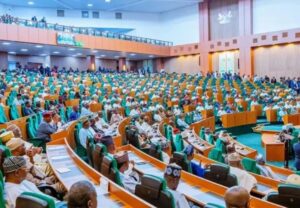
The House of Representatives on Tuesday passed for second reading a bill seeking to strengthen the institutional framework for implementing, coordinating and monitoring social investment programmes across the country.
The bill, sponsored by Deputy Speaker Benjamin Kalu and six other lawmakers, seeks to amend the National Social Investment Programme Agency (Establishment) Act, 2023, to improve accountability and ensure government interventions reach vulnerable Nigerians.
The other co-sponsors are Bamidele Salam, Jonathan Gbefwi, Nkemkamma Kama, Lawan Shettima, Aminu Balele and Kelechi Nwogu.
Leading the debate on the general principles of the bill during plenary on Tuesday, Kalu argued that the success of social investment programmes “should not be measured by the size of their budgets or the number of interventions introduced, but by the extent to which intended beneficiaries feel their impact.”
He described social investment as “a commitment by the Nigerian State to stand between vulnerability and destitution, ensuring that temporary hardship does not become permanent exclusion.”
The National Social Investment Programme Agency was established to provide the institutional structure for government interventions in the lives of vulnerable Nigerians.
He, however, said the growing scale and complexity of Nigeria’s social protection landscape had made it necessary to strengthen the framework for coordinating, implementing and monitoring the various interventions.
According to him, “effective social investment requires more than individual programmes operating independently. It demands an integrated system that ensures proper management of beneficiary data, eliminates duplication, improves coordination and gives state and local governments a more effective role in implementation.”
He explained that the proposed amendments would address these challenges by strengthening the agency’s institutional structure, defining responsibilities more clearly and introducing mechanisms for improved coordination.
Among the major provisions of the 15-clause bill is the introduction of the Grant for Vulnerable Groups Programme and the National Social Safety-Net Coordinating Office as additional components of the agency.
The bill also proposes establishing the National Social Safety-Net Coordinating Office as the central coordinating and data-management institution for national social safety nets, with responsibility for maintaining, updating and verifying the National Social Register.
Kalu said the proposed legislation would also bring programme implementation closer to the grassroots through the establishment of state offices and the introduction of executive directors with clearly defined responsibilities for individual programmes.
He maintained that the proposed structure would establish “clearer lines of accountability, improve coordination among the various interventions and strengthen the agency’s capacity to deliver social investment programmes more effectively.”
Highlighting the human consequences of weaknesses in the existing system, Kalu said social investment must ultimately be measured by its impact on citizens, particularly children who need assistance to remain in school, unemployed young people seeking economic opportunities, vulnerable households requiring temporary support and other Nigerians in need of government intervention.
He stressed that administrative fragmentation, unreliable data and unclear responsibilities were not merely institutional problems, as they could determine whether government assistance reached the people for whom it was intended.
The Deputy Speaker said the bill presented an opportunity to strengthen the machinery for delivering social assistance through clearer institutional responsibilities, a more reliable National Social Register, improved coordination among the different levels of government and better protection of beneficiaries’ information.
He urged lawmakers to support the legislation, arguing that its passage would help transform the agency from a collection of individual interventions into a more integrated and effective social investment system.
The bill was subsequently put to a voice vote by the Speaker of the House, Tajudeen Abbas, who presided over the plenary, and received the support of lawmakers to scale second reading.
The proposed amendment comes against the backdrop of longstanding concerns over the coordination, targeting and effective delivery of Nigeria’s social protection programmes, particularly the need to ensure that government interventions reach their intended beneficiaries without duplication or exclusion.
The National Social Investment Programme was established to provide social assistance and economic support to vulnerable households, unemployed young people, women and other disadvantaged groups through interventions designed to address poverty, unemployment and social exclusion.