

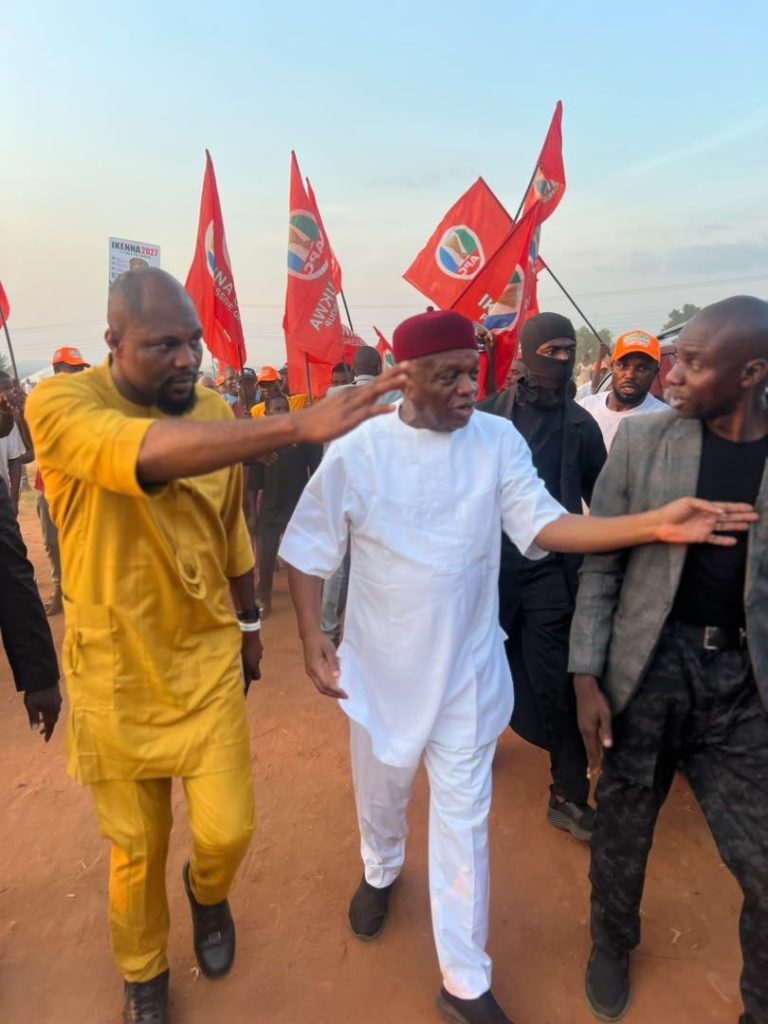
By Ranmilowo Ojalumo
As the 2027 general elections approach, the question of who should represent Abia North Senatorial District in the Senate will increasingly attract public attention. For Senator Orji Uzor Kalu, the argument for re-election rests on his legislative experience, constituency development initiatives, investment in human capital, infrastructure projects and efforts to attract federal presence to the district. Since his election to the Senate in 2019, Kalu has pursued a representation that combines lawmaking with practical interventions in the lives of his constituents. The record provides a basis for continuity, particularly at a time when Abia North still has considerable developmental needs and requires a representative who understands its challenges and has established experience navigating the federal legislative system.
One of the distinguishing features of Kalu’s representation is the emphasis on connecting legislative responsibilities with grassroots development. Rather than viewing his mandate exclusively through activities in the Senate chamber, his constituency interventions have extended to education, road infrastructure, economic empowerment, healthcare and industrial development. These are areas that directly affect the everyday lives of residents across Arochukwu, Ohafia, Bende, Isuikwuato and Umunneochi, the five local government areas that make up Abia North.
In infrastructure, there are records that he has facilitated several road projects across the district, alongside the construction and rehabilitation of educational facilities. These interventions are significant for communities where poor road connectivity affects agricultural production, commercial activities and access to essential services. Improved roads provide farmers with better opportunities to transport their produce, facilitate movement between communities and strengthen local economic activities.
Senator Kalu’s intervention in education is equally noteworthy, as more than 100 school blocks and classrooms have been constructed or renovated, while pupils have benefited from the distribution of desks, textbooks, school uniforms, school bags, sandals and other learning materials. These initiatives address some of the challenges confronting public education, particularly in rural communities where inadequate infrastructure and learning resources can undermine the quality of education.
However, Kalu’s human capital development initiatives extend beyond classroom construction. Scholarships, international training and professional development opportunities have also featured in his constituency programmes. More than 50 young people and other beneficiaries have accessed overseas scholarships, specialised training and capacity-building opportunities. Such investments are important because the future of Abia North depends not only on the infrastructure it builds but also on the quality of its human resources.
A young person who receives specialised training, acquires professional qualifications or gains exposure to international learning environments has an opportunity to contribute more meaningfully to society. This is why human capital development should remain a priority in constituency representation. By expanding educational and professional opportunities, the objective should be to prepare more young people to become employers, professionals, entrepreneurs and contributors to the economic development of their communities.
Another area deserving attention is the senator’s efforts to facilitate industrial investments in Abia North. The completed cashew processing factory in Igbere, alongside the solar panel manufacturing project and tricycle assembly initiative highlighted in reports on his constituency activities, represents an approach to development that goes beyond the distribution of empowerment materials. Such investments have the potential to stimulate local production, create employment, provide markets for agricultural produce and generate business opportunities for residents. Their long-term value will depend on sustained operations, production capacity and employment generation.
Perhaps one of the strongest elements of Kalu’s representation and the need for continuity is his legislative record. A senator’s primary responsibility is lawmaking, and the quality of sponsored bills, motions and contributions to national debates remains an important measure of performance. Since his election in 2019, Kalu has sponsored bills addressing several areas of national development, including education, transportation, security, environmental protection, taxation, social welfare and economic advancement.
Among the legislative proposals attributed to him are the National Food Bank Establishment Bill, the National Tax Crimes Commission Bill, the Coastal and Inland Shipping (Cabotage) Act Amendment Bill, the Compulsory Free Universal Basic Education Act Amendment Bill and the Social Welfare Service Bill. He has also sponsored proposals seeking the establishment of educational institutions in Abia North, including the Federal Polytechnic, Abiriba, and the Federal College of Education (Technical), Arochukwu. These proposals demonstrate an effort to use legislative representation to address broader national concerns while also pursuing institutional development for his constituency.
Kalu’s recognition by the Senate Press Corps also forms part of the conversation about his constituency performance. He received the organisation’s Constituency Development Award in 2021, 2022 and 2024. The recognition was attributed to his infrastructure and human empowerment interventions in Abia North. While awards are not substitutes for independent assessments of project delivery, repeated recognition by a parliamentary press organisation adds another dimension to the public discussion of his record and why he should continue.
Beyond projects and legislative activities, the relationship between a representative and his constituents is equally important. A lawmaker must be willing to listen, understand community priorities and remain accessible to the people. The expectations of constituents do not end with election victories; they continue throughout the period of representation. Kalu’s community engagements and interactions with stakeholders provide opportunities to receive feedback and identify areas requiring government attention.
Indeed, no representative can claim to have addressed every developmental challenge within a single tenure. Abia North still requires improved infrastructure, more educational opportunities, stronger healthcare services, employment opportunities and greater economic investment. These outstanding needs make the argument for continuity inseparable from the responsibility to do more.
For Kalu, another term would provide an opportunity to consolidate existing interventions, pursue outstanding legislative proposals, attract additional federal projects and expand programmes that directly benefit constituents. It would also create an opportunity to strengthen accountability by ensuring that ongoing projects are completed, properly maintained and equitably distributed across the five local government areas.
Ultimately, the need for Orji Uzor Kalu’s re-election is anchored on the desire to build upon his legislative experience and the development initiatives associated with his representation. His continuity is not simply to retain an incumbent senator but sustaining an established development agenda while demanding greater results. Abia North needs representation that combines effective lawmaking with visible development, investment in people and responsiveness to community needs. Kalu’s re-election represents an opportunity to consolidate the gains of the past and pursue a more ambitious future for Abia North.