

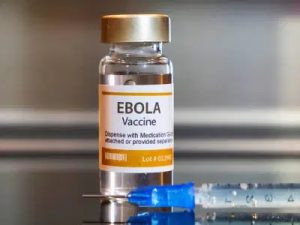
Two experimental vaccines are set to begin clinical trials in the Democratic Republic of Congo (DRC) on Monday as health authorities intensify efforts to contain an outbreak of the less common Bundibugyo strain of Ebola.
The World Health Organization (WHO) said the outbreak has recorded more than 11,000 cases and over 5,700 confirmed deaths since it was declared in May.
According to the WHO, there are currently no approved vaccines or treatments specifically available for the Bundibugyo strain, prompting researchers to accelerate trials of potential vaccines in the outbreak’s epicentre in eastern DRC.
The trials will initially focus on people who have had contact with confirmed cases and individuals considered to be at high risk of infection.
Meanwhile, neighbouring Uganda has launched a trial of one of the experimental vaccines developed by US-based pharmaceutical company Moderna, using messenger RNA (mRNA) technology similar to that used in some COVID-19 vaccines.
The Uganda Virus Research Institute described the study as “Africa’s first mRNA Phase I clinical trial.”
The trial will involve 224 healthy volunteers aged between one and 65, with researchers assessing the vaccine’s safety and ability to generate an immune response.
The second candidate vaccine, ChAdOx1, an adenoviral-vector vaccine developed by India’s Serum Institute in collaboration with the University of Oxford, is also scheduled to begin testing in the DRC on Monday.
Gavi Plans Early Vaccine Deployment
The Vaccine Alliance, Gavi, has moved to secure potential supplies ahead of the completion of the trials.
Following lessons from the COVID-19 pandemic, Gavi established a $50 million First Response Fund under its “No Regrets” approach, allowing it to commit funds to vaccine purchases before their full testing and approval.
Gavi this week signed a purchase commitment with the Serum Institute for 1.5 million doses of the ChAdOx1 vaccine.
The alliance plans to have hundreds of thousands of doses available for deployment if the vaccine trials produce positive results and the vaccine receives approval from the WHO and the DRC government.
“We’re investing in it, hoping that the signals will be positive, and if that is the case, we’ll have gained months and months on the deployment,” Gavi’s Director of Global Health Security, Emanuele Capobianco, told AFP.
Capobianco said the trials could conclude within the first half of 2027, with an even earlier completion possible under an optimistic scenario.
Gavi also maintains a stockpile of about 500,000 doses of Ervebo, an existing Ebola vaccine developed against the Zaire strain. Researchers began testing it last month to determine whether it could also provide protection against the Bundibugyo strain.
Despite sharing a long and porous border with eastern DRC, Uganda has managed to contain the virus following imported cases earlier this year.
The country was declared Ebola-free in August after recording 20 cases, including two deaths.
This version keeps the medical claims and trial details attributed to the WHO, Gavi and Ugandan research authorities while making the story sharper for publication.