

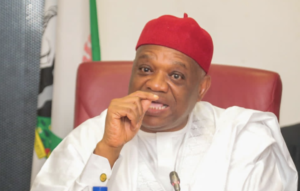
On March 29, 2026, Senator Orji Uzor Kalu publicly expressed his views on leadership, governance, family, and personal experiences through a series of statements that together offer insight into his perspective on Nigeria’s political and social landscape. His remarks focused primarily on the 74th birthday of Bola Ahmed Tinubu, while also touching on generational leadership within his own family and an incident affecting his private residence.
In his message marking the president’s birthday, Kalu presented Tinubu as a central figure in Nigeria’s ongoing political and economic development. He described him as a leader whose decisions and policies continue to influence the country’s direction. According to Kalu, Tinubu’s leadership is characterized by resilience and a willingness to take difficult steps, particularly in the area of economic reform. These reforms, while challenging, are framed as necessary measures aimed at stabilizing the national economy and encouraging long-term growth.
Kalu’s statement also highlighted Tinubu’s political experience and his ability to operate across different divides within Nigeria’s complex political environment. By emphasizing his role in strengthening democratic institutions and promoting unity, Kalu pointed to what he sees as an effort to maintain cohesion in a country marked by ethnic, regional, and political diversity. This portrayal suggests that Tinubu’s leadership style relies not only on policy decisions but also on building relationships and maintaining influence across various segments of society.
A notable aspect of Kalu’s reflection is his reference to their shared political history, particularly their time as part of Nigeria’s 1999 class of governors. This period is often regarded as significant in Nigeria’s democratic journey, marking the country’s return to civilian rule. By recalling this connection, Kalu situates his relationship with Tinubu within a broader historical context, suggesting continuity in their political engagement and shared commitment to governance. He presents this longstanding association as evidence of mutual trust and alignment in their approach to national issues.
Kalu further argued that Tinubu’s economic agenda is focused on repositioning Nigeria to attract investment and create sustainable opportunities. He acknowledged that such reforms may involve short-term difficulties but maintained that they are intended to produce long-term benefits. This perspective reflects a broader argument often made in support of structural reforms: that immediate challenges are sometimes necessary to achieve future stability and growth. In this context, Kalu framed Tinubu’s actions as both strategic and forward-looking.
Beyond his comments on national leadership, Kalu also used the occasion to highlight the role of emerging figures in Nigeria’s development, particularly within his own family. He spoke about his daughter, Neya Kalu, emphasizing her involvement in both the private sector and political events such as the convention of the All Progressives Congress. He described her presence at the event as more than symbolic, suggesting that it represents a connection between government leadership and private sector expertise.
According to Kalu, individuals like Neya Kalu bring practical business experience that can complement government policy-making. This reflects a broader viewpoint that effective governance often requires collaboration between public institutions and private enterprise. By presenting his daughter as part of this process, Kalu highlighted the potential role of younger professionals in shaping Nigeria’s economic and industrial policies. He suggested that such involvement could help ensure that government initiatives are better aligned with real-world economic conditions and challenges.
His remarks also point to the importance of generational transition in leadership. While acknowledging his own political experience, Kalu appeared to place value on the contributions of a younger generation that is building its own identity and influence. This perspective aligns with ongoing discussions in Nigeria about the need for greater inclusion of younger voices in both politics and economic decision-making.
In addition to these political and familial reflections, Kalu addressed a personal incident involving damage to his country home in Igbere, known as Camp Neya. He reported that heavy rainfall and strong winds had caused some destruction to parts of the property. While the event was unfortunate, he emphasized that no lives were lost and no injuries were recorded. This response highlights a sense of perspective, focusing on the importance of safety over material loss.
By sharing this experience, Kalu also drew attention to the broader reality of environmental and weather-related challenges that can affect individuals and communities. His comment that such incidents can happen to anyone suggests an awareness of shared vulnerability, regardless of social or economic status. It reflects a recognition that natural events remain an unpredictable factor in everyday life.
Overall, these statements collectively provide a window into Kalu’s views on leadership, governance, and personal responsibility. His comments on Tinubu emphasize continuity, resilience, and reform as key elements of national leadership. His remarks about his daughter point to the importance of bridging generational and sectoral divides in order to strengthen policy outcomes. Meanwhile, his reflection on the damage to his home underscores the role of personal experience in shaping public communication.
Rubby Obinna
March 30, 2026