

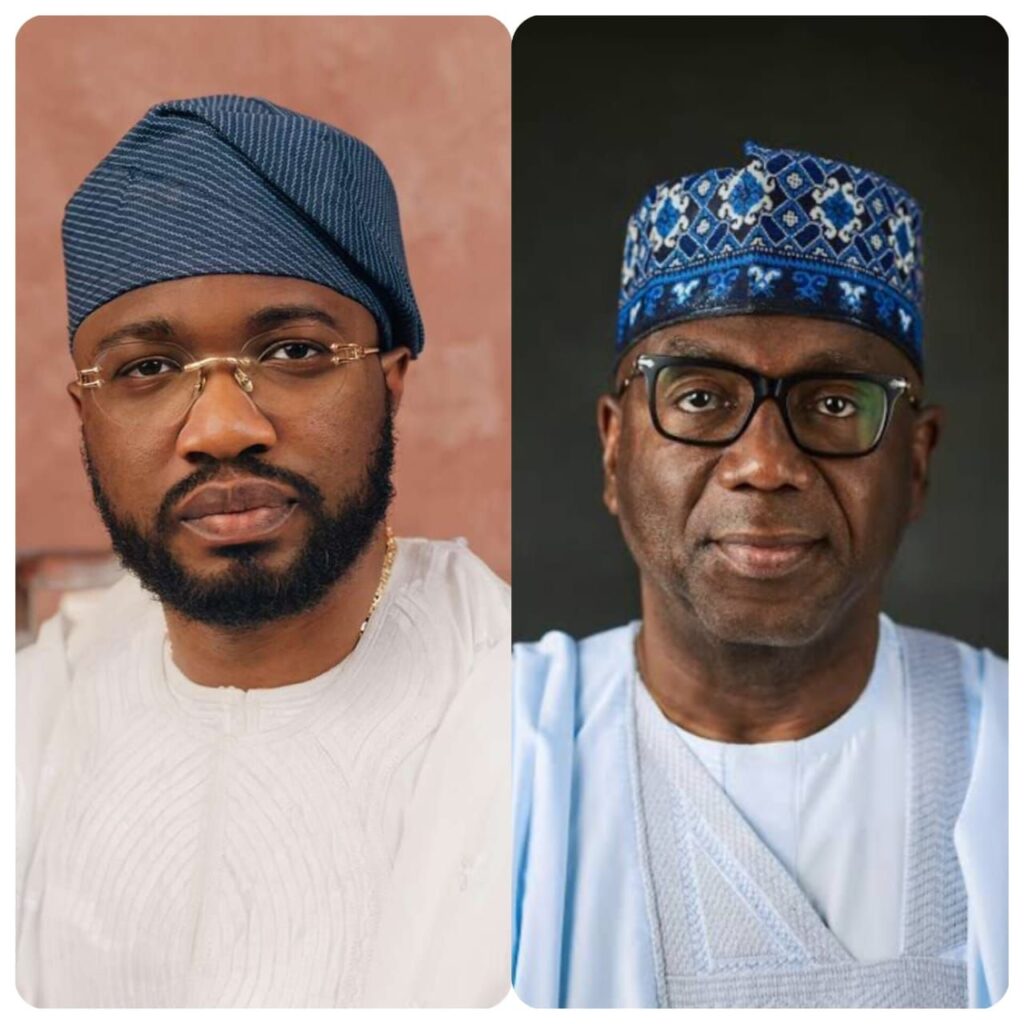
When AbdulRahman AbdulRazaq swept into office in May 2019 on the wings of the historic ‘O To Ge!’ movement, a people-powered declaration that enough was enough, many wondered whether his administration would live up to the enormous expectations that came with that watershed moment. Today, more than six years later, the evidence is overwhelming, the scorecard is undeniable, and the verdict of history is being written in concrete, in classrooms, in hospitals, and in restored dignity: Kwara State has found, in Governor AbdulRahman AbdulRazaq, not just a leader but its finest governor to date.
This is not praise for its own sake. It is a reckoning with facts; a recognition of a man who took a state long held hostage by political feudalism and chose, instead, to govern for the people. From the northernmost communities of Kwara North to the farming heartlands of Kwara Central and the culturally rich communities of Kwara South, the imprint of this administration’s work is visible, measurable, and enduring.
He did not just win an election. He won back the soul of Kwara State and chose to govern it with conscience, competence, and courage.
I. EDUCATION——
Education Transformed Across All Three Senatorial Districts
Perhaps no sector captures Governor AbdulRazaq’s commitment to the future of Kwara more powerfully than education. Upon assumption of office, his administration inherited a deeply troubled school system: underfunded, understaffed, and structurally neglected for decades. What followed was one of the most ambitious school renovation and construction programmes in the state’s history, with projects distributed deliberately and equitably across all three senatorial districts.
Projects Delivered in Kwara Central
Full rehabilitation of Government Day Secondary School, Ilorin, restoring one of the state’s flagship institutions to its former glory.
Renovation and refurbishment of Government Secondary School, Ganmo, Ilorin West Local Government Area.
Construction and equipping of new science laboratories at Government Secondary School, Tanke, Ilorin.
Distribution of furniture, textbooks, and digital learning aids to all public schools within the Ilorin metropolis.
Renovation of primary schools across Asa, Ilorin East, Ilorin South, and Moro local government areas.
Establishment of a model school at Fate, Ilorin, equipped with modern classrooms, a library, and an ICT centre.
Projects Delivered in Kwara North
Reconstruction and full equipping of Government Secondary School, Lafiagi, Edu Local Government Area, serving communities long denied quality infrastructure.
Renovation of Government Secondary School, Kaiama, Baruten Local Government Area, one of the most remote constituencies in the state.
Rehabilitation of primary schools across Edu, Baruten, Kaiama, and Patigi local government areas with new roofing, floors, windows, and furniture.
Deployment of qualified science and mathematics teachers to secondary schools in Kwara North under a targeted placement scheme.
Payment of NECO and WASSCE examination fees for all public school candidates across the senatorial district.
Provision of solar power to schools in off-grid communities in Baruten and Patigi, enabling evening study for pupils.
Projects Delivered in Kwara South
Renovation of Government Secondary School, Offa, one of the oldest and most storied institutions in Kwara South.
Rehabilitation of Government Secondary School, Omu-Aran, Irepodun Local Government Area, including new classrooms and laboratory blocks.
Reconstruction of damaged school buildings at Government Secondary School, Ajase-Ipo, Ifelodun Local Government Area.
Construction of toilet and sanitation facilities in primary schools across Ekiti, Isin, Oke-Ero, and Oyun local government areas.
Stocking of school libraries and supply of textbooks to over thirty secondary schools across the senatorial district.
Renovation of Government Secondary School, Oro, Irepodun Local Government Area, benefiting communities in the Irepodun corridor.
Key Education Policies Enacted
The Free and Compulsory Education Policy (2020): Guaranteeing free tuition for all public school pupils from primary through secondary levels.
The Kwara Education Quality Assurance Policy: Establishing a rigorous framework for regular inspection and benchmarking of all public schools statewide.
The Teacher Welfare and Development Policy: Addressing promotion backlogs, withheld allowances, and structured professional development for educators.
The STEM Integration Policy: Mandating the teaching of science, technology, engineering, and mathematics in all public secondary schools.
The Scholarship Expansion Policy: Broadening access to Kwara State Scholarship Board awards to cover more beneficiaries across all local government areas.
The KwaraLEARN Programme (2021): A pioneering digital education initiative designed to empower teachers with technology-driven instructional tools, described by the Governor as one of his best-ever policies, improving learning outcomes across public schools statewide.
The Abolition of PTA Levy (2025): Governor AbdulRazaq approved the complete stoppage of Parent-Teacher Association levies in all public primary schools from Primary 1 to 6, replacing them with government-funded annual grants to all 1,717 public primary schools, ensuring schools remain operationally funded without burdening parents.
The Kwara State Education Trust Fund: The Board was inaugurated to mobilise sustainable private sector resources for educational infrastructure development, providing a long-term funding mechanism beyond the state budget.
The AGILE Initiative (Adolescent Girls Initiative for Learning and Empowerment): Governor AbdulRazaq facilitated this World Bank-supported programme for Kwara State, targeting improved learning environments and empowerment for adolescent girls across the state’s public schools.
Ongoing and Recent School Renovation Programmes
Beyond completed projects, Governor AbdulRazaq’s administration has maintained an ambitious, continuously expanding pipeline of school renovation and construction. The scale of what is currently under execution represents one of the most comprehensive education infrastructure programmes ever undertaken in Kwara State’s history.
Comprehensive renovation and construction at Ilorin Grammar School, Ilorin West Local Government Area, covering classrooms, sanitation facilities, laboratories, and administrative blocks at one of the oldest schools in the state capital.
Comprehensive renovation and construction at Government High School, Ilorin East Local Government Area.
Comprehensive renovation and construction at Patigi Secondary School, Patigi Local Government Area, Kwara North.
Comprehensive renovation and construction at Government Secondary School, Lafiagi, Edu Local Government Area.
Comprehensive renovation and construction at Offa Grammar School, Offa Local Government Area, Kwara South.
Comprehensive renovation and construction at Oro Grammar School, Oro, Irepodun Local Government Area.
Comprehensive renovation and construction at Government Secondary School, Share, Ifelodun Local Government Area.
Comprehensive renovation and construction at Government (Unity) Secondary School, Kaiama, Baruten Local Government Area.
Pre-handover inspections led by the Commissioner for Education at United Community Secondary School, Barakat Community Secondary School, and Baboko Community Secondary School in Ilorin, all undergoing extensive remodelling and infrastructure upgrades at the time of inspection.
Ongoing UBEC/SUBEB intervention projects covering the construction of 70 new classroom blocks with offices, construction of 28 VIP toilet blocks, remodelling of 110 classrooms, fabrication of 4,652 pupil desks and 391 teacher furniture units, drilling and installation of 11 motorised solar-powered boreholes, rehabilitation of digital literacy centres, and implementation of the Safe Schools Initiative across selected schools in Asa, Kaiama, Offa, Ilorin West, and Ilorin South local government areas.
The AGILE renovation sub-component targeting the renovation of 898 public junior and senior secondary schools statewide, the largest single school renovation programme in Kwara State’s history, with WASH facilities being a central component and School-Based Management Committees trained and empowered to oversee quality and community ownership.
Procurement and free distribution of English and Mathematics textbooks to all pupils in public primary schools across the state.
Renovation and rehabilitation of the School for the Blind, Ilorin, including the donation of Braille learning tools and educational aids to support pupils with visual impairment.
Reaccreditation of the Kwara State School of Nursing and Midwifery and all Colleges of Education, restoring their institutional standing and enabling them to admit and graduate students without hindrance.
The state’s 2025 budget allocated 16.2 per cent of the total N540.37 billion budget to education, underscoring the administration’s sustained financial commitment to the sector year on year.
He did not just fix buildings. He restored the dignity of public education in Kwara. And with 898 schools under the AGILE renovation programme, he is ensuring that every child in Kwara, girl or boy, rich or poor, has a school worthy of their potential.
A Healthier Kwara:
Revitalising Health Infrastructure Across the State
Kwara’s health sector was, like its schools, desperate for urgent attention when Governor AbdulRazaq assumed office. His administration responded with a phased, systematic rehabilitation of primary healthcare centres across all three senatorial districts, while simultaneously upgrading specialist hospitals and expanding maternal and child health services to underserved communities.
Projects Delivered in Kwara Central
Rehabilitation and equipping of primary healthcare centres in Ilorin West, Ilorin East, Ilorin South, Asa, and Moro local government areas.
Supply of ambulances and emergency medical equipment to general hospitals serving Kwara Central communities.
Establishment of a maternal and child health programme targeting reduction of infant and maternal mortality in Ilorin and its environs.
Renovation of the Maternity and Children’s Hospital, Ilorin, improving care for mothers and newborns in the state capital.
Construction of a new isolation and infectious disease ward at General Hospital, Ilorin, enhancing the state’s capacity to manage public health emergencies.
Projects Delivered in Kwara North
Complete renovation and equipping of General Hospital, Lafiagi, Edu Local Government Area, the main referral facility for Kwara North communities.
Rehabilitation of primary healthcare centres in Baruten, Kaiama, and Patigi local government areas, historically underserved by health infrastructure.
Supply of essential medicines and medical consumables to PHCs across the senatorial district under a free drug distribution initiative.
Deployment of doctors and nurses to General Hospital, Kaiama, addressing a critical staffing shortage that had persisted for many years.
Construction of maternity wards in two PHCs in Edu Local Government Area, bringing safe delivery services closer to rural mothers in Kwara North.
Projects Delivered in Kwara South
Renovation and equipping of General Hospital, Offa, serving as the anchor health facility for Kwara South communities.
Rehabilitation of the General Hospital, Omu-Aran, Irepodun Local Government Area, including new wards and modern diagnostic equipment.
Rehabilitation of PHCs across Oyun, Isin, Oke-Ero, and Ekiti local government areas with new medical equipment and drug supplies.
Launch of the Ifelodun and Offa maternal health outreach programme, improving antenatal care access for rural women.
Supply of ultrasound machines and oxygen concentrators to general hospitals in the senatorial district.
Key Health Policies Enacted
The Primary Healthcare Revitalisation Programme: A structured policy committing government resources to rehabilitating at least one PHC per ward across all 16 local government areas.
The Free Maternal and Child Health Policy: Ensuring free antenatal, delivery, and postnatal care services at all government health facilities statewide.
The Essential Medicines Availability Policy: Mandating consistent supply of essential drugs to all PHCs, ending years of chronic shortages.
The Health Worker Recruitment and Retention Policy: Providing competitive allowances to health workers who accept posting to rural and underserved communities across Kwara.
Communities in Kwara North that once had no functioning health facility now have PHCs with staff, drugs, and equipment. That is not politics. That is governance.
III. HOSPITALS UPGRADED
Transforming Healthcare Facilities: Major Hospital Upgrades Across Kwara State
Beyond the rehabilitation of primary healthcare centres, Governor AbdulRazaq’s administration undertook a deliberate programme of upgrading general and specialist hospitals to a standard befitting a progressive state. These upgrades have brought modern diagnostics, improved wards, better equipment, and renewed staffing capacity to facilities serving hundreds of thousands of Kwaranites annually.
General Hospital Upgrades Across the Three Senatorial Districts
Comprehensive upgrade of General Hospital, Ilorin, including new ward blocks, an expanded accident and emergency unit, modern theatre equipment, and improved power supply infrastructure.
Upgrade of the Civil Service Clinic, Ilorin: A facility that had fallen into severe disrepair was comprehensively renovated and re-equipped to serve state government employees and their families with dignity. The clinic now offers general outpatient services, laboratory diagnostics, pharmacy services, and maternal care under one roof.
Upgrade of General Hospital, Offa, Kwara South: New wards, diagnostic equipment, and a modernised theatre were installed, positioning the facility as a credible referral centre for the entire southern senatorial district.
Upgrade of General Hospital, Omu-Aran, Irepodun Local Government Area: The facility received new beds, medical equipment, and a rehabilitated maternity wing serving communities across Irepodun, Isin, and Oke-Ero local government areas.
Upgrade of General Hospital, Lafiagi, Edu Local Government Area: Beyond renovation, the facility received modern surgical equipment, new ward furniture, and a functioning pharmacy, transforming it into the anchor health institution for Kwara North.
Upgrade of General Hospital, Kaiama, Baruten Local Government Area: New diagnostic tools, ward rehabilitation, and deployment of additional medical personnel brought a previously struggling facility back to full functional capacity.
Upgrade of General Hospital, Patigi: Roofing, electrical, and water supply systems were overhauled, and the facility received a new set of medical equipment to serve River Niger corridor communities.
Upgrade of General Hospital, Ajase-Ipo, Ifelodun Local Government Area: Expanded outpatient capacity, new beds, and improved sanitation facilities were provided to serve growing demand from surrounding communities.
Kwara State University Teaching Hospital (KWASUTH)
One of the most landmark healthcare decisions of the AbdulRazaq administration has been the establishment and development of the Kwara State University Teaching Hospital (KWASUTH). This institution represents a transformative investment in both healthcare delivery and medical education in Kwara State, creating a platform for training the next generation of medical professionals while providing tertiary-level healthcare services to the people of Kwara.
KWASUTH was established to serve as the clinical training ground for medical and health science students of Kwara State University (KWASU), ending the era when Kwara’s own medical students had to travel outside the state for clinical attachments.
The teaching hospital has been progressively equipped with diagnostic and imaging equipment, theatre facilities, and specialist clinical units covering internal medicine, obstetrics and gynaecology, paediatrics, surgery, and family medicine.
Specialist consultants and resident doctors were recruited to staff the facility, building a credible clinical team capable of managing complex cases that previously required referral outside Kwara State.
KWASUTH has significantly reduced the burden of medical tourism on Kwaranites, providing high-quality tertiary healthcare closer to home and at more accessible cost.
The hospital serves as an anchor institution for medical research and public health initiatives in Kwara State, positioning the state as a growing centre of healthcare excellence in the north-central region.
The Kwara State University Teaching Hospital is not just a hospital. It is a statement of ambition: that Kwara can train its own doctors, treat its own citizens, and lead in healthcare on its own terms.
- IV. TERTIARY EDUCATION & INNOVATION*
Universities, Campuses, and the Knowledge Economy: Investing in Kwara’s Intellectual Future
Governor AbdulRazaq’s administration has made the expansion of access to quality tertiary education one of its defining commitments. Beyond the rehabilitation of primary and secondary schools, the administration has invested in the growth of Kwara State University, the establishment of new campuses to bring university education closer to underserved communities, and the creation of an innovation ecosystem for technology-driven development.
Kwara State University (KWASU): Growth and Consolidation
Sustained funding and infrastructure development at the main KWASU campus in Malete, Moro Local Government Area, including construction of new faculty buildings, hostels, and administrative blocks.
Accreditation of new academic programmes across engineering, health sciences, law, and the social sciences, broadening the university’s offerings and attracting a larger student population.
Improvement of KWASU’s research infrastructure through the provision of laboratory equipment, library resources, and internet connectivity.
Regular payment of staff salaries and promotion of academic and non-academic staff on merit, restoring confidence in KWASU as a credible institution of learning and employer of choice.
Pursuit of full accreditation for KWASU’s medical school programme in partnership with the National Universities Commission (NUC) and the Medical and Dental Council of Nigeria (MDCN).
Kwara State University of Education (KWASUED): A Historic New Institution
In one of the most visionary decisions of his entire administration, Governor AbdulRahman AbdulRazaq conceived, championed, and delivered the establishment of the Kwara State University of Education (KWASUED), a brand-new university dedicated to the training of professional educators at the highest level. Described by the Governor himself as a child of necessity, this institution is designed to position Kwara at the forefront of teacher education and knowledge-based development in Nigeria’s north-central region.
Governor AbdulRazaq inaugurated a blue-ribbon committee of top educationists, chaired by former University of Ilorin Vice-Chancellor Prof. Shuaib Abdulraheem, to midwife the establishment of the university, setting in motion a rigorous and structured process for the institution’s creation.
The Kwara State House of Assembly passed the Kwara State University of Education (Establishment) Bill, which the Governor signed into law alongside the Kwara State University Teaching Hospital (Establishment) Bill, in a landmark dual signing that created two new institutions of higher learning and healthcare in a single stroke.
On 30 July 2024, the National Universities Commission (NUC) formally recognised KWASUED as the 64th state-owned university and the 274th university in the Nigerian University System, with JAMB, TETfund, and NYSC all notified of its establishment.
The NUC’s approval came after the state government submitted a robust master plan, a comprehensive academic brief, and the enabling university law, demonstrating the seriousness and thoroughness with which the administration pursued this project.
In November 2024, Governor AbdulRazaq inaugurated the 11-member pioneer Governing Council of KWASUED, chaired by Prof. Shuaib Abdulraheem as Pro-Chancellor, clearing the path for the university’s official academic take-off.
The Olupo of Ajase-Ipo, Oba Ismail Yahya Alebiosu, was appointed as the pioneer Chancellor of KWASUED, connecting the new institution to the traditional authority and cultural identity of Kwara South.
KWASUED becomes the second state-funded university in Kwara State, following KWASU established in 2009, making Kwara one of a small number of states in Nigeria to host two state-owned universities.
The Governor presented new buses to the students’ unions at the inauguration of the Governing Council, signalling his personal commitment to student welfare at the new institution from its very first days.
KWASUED is envisioned as a centre of excellence for research, teacher training, and academic discipline, positioned to produce highly qualified education professionals who will transform teaching and learning across Kwara State and beyond.
In one of the most significant equity-driven decisions of his administration, Governor AbdulRazaq approved the establishment of the KWASU Osi Campus in Osi, Ekiti Local Government Area, bringing university-level education directly to a community in Kwara South that had never before hosted a tertiary institution. This decision was historic in its implications for educational access and community development.
The Osi Campus was established to serve students from Ekiti, Oke-Ero, Isin, and surrounding communities in Kwara South who previously had to travel long distances or relocate entirely to access university education.
The campus offers foundation and degree programmes in selected disciplines, with a clear expansion plan as infrastructure and staffing capacity grow.
Construction of lecture halls, administrative offices, and essential student facilities was commenced under the administration’s capital investment programme.
The Osi Campus sent a powerful and unmistakable message to communities in Ekiti Local Government Area and across Kwara South: that this administration sees them, values them, and is committed to investing in their children’s futures.
The campus also serves as an economic catalyst for Osi and its surrounding communities, generating employment and stimulating local commerce in a historically underserved part of the state.
Ilorin Innovation Hub
Recognising that the economy of the future will be driven by technology, creativity, and entrepreneurship, Governor AbdulRazaq’s administration established the Ilorin Innovation Hub as a dedicated centre for fostering technology-driven enterprise and cultivating the next generation of Kwara’s innovators and digital entrepreneurs.
The Ilorin Innovation Hub was established as a state-of-the-art co-working, incubation, and acceleration space for technology startups, creative entrepreneurs, and digital skills trainees across Kwara State.
The Hub provides free and subsidised workspace, high-speed internet connectivity, mentoring from industry professionals, and access to startup funding networks for young Kwaranites with business ideas.
Training programmes in software development, digital marketing, data analytics, graphic design, and e-commerce have been delivered through the Hub, equipping hundreds of young people with skills relevant to the modern economy.
The Hub has hosted pitch competitions, hackathons, and innovation showcases, creating a vibrant technology community in Ilorin and positioning the state capital as a credible tech destination in Nigeria’s north-central zone.
Partnerships with national and international technology organisations have been facilitated through the Hub, connecting Kwara’s young innovators to global networks, knowledge, and opportunities.
The Ilorin Innovation Hub represents Governor AbdulRazaq’s clear-eyed recognition that Kwara’s long-term prosperity must be built on knowledge, technology, and the boundless potential of its youth.
The Ilorin Innovation Hub is where Kwara’s future is being coded, designed, and built. It is the most powerful investment this administration has made in the economy of tomorrow.
V. KWASSIP: SOLID MINERALS INVESTMENT
KWASSIP: Unlocking Kwara’s Mineral Wealth for the Benefit of All
Governor AbdulRazaq’s administration has moved decisively to unlock the vast economic potential of Kwara State’s solid mineral resources through the Kwara State Solid Minerals and Investment Programme (KWASSIP). For too long, Kwara’s rich deposits of granite, limestone, kaolin, feldspar, quartz, and other valuable minerals lay largely unexploited, generating little value for the state and its people. The AbdulRazaq administration changed this narrative.
KWASSIP was established as a structured, government-backed initiative to attract credible investors into Kwara’s solid minerals sector, creating a transparent and business-friendly framework for mineral exploration, extraction, and processing within the state.
A comprehensive geological survey and mineral resource mapping exercise was undertaken to provide investors with accurate data on the location, volume, and quality of Kwara’s mineral deposits across the three senatorial districts.
Investor engagement forums and roadshows were organised to present Kwara’s mineral endowment to domestic and international mining investors, resulting in expressions of interest from credible companies in quarrying, granite processing, and industrial minerals.
The administration facilitated the regularisation of artisanal mining operations in Kwara, bringing informal miners into a structured framework that protects their livelihoods while ensuring environmental responsibility and revenue generation.
Granite quarrying operations in Kwara Central were expanded and formalised, generating increased revenue for the state government and creating employment for communities near quarrying sites.
The Kwara State Ministry of Mines and Solid Minerals was strengthened and properly staffed, providing institutional capacity to manage the sector and liaise effectively with the Federal Ministry of Mines and Steel Development.
Revenue from solid minerals has become a growing contributor to Kwara’s internally generated revenue, reducing the state’s dependence on federal statutory allocations and building fiscal resilience.
Kwara sits on a treasure of solid minerals. Governor AbdulRazaq is the first governor in a generation to take that treasure seriously, structure it properly, and begin turning it into prosperity for Kwaranites.
VI. INFRASTRUCTURE & ECONOMIC DEVELOPMENT
Building Kwara: Roads, Bridges, Flyovers, and Economic Transformation
Drive through Ilorin today and the transformation is unmistakable. Roads that had been impassable for years have been reconstructed to world-class standards. New flyovers have changed the city’s skyline. Hundreds of kilometres of rural roads are being opened for the first time in the state’s history. The statistics are striking: between 1995 and 2019, all previous administrations combined completed only 605 kilometres of roads in Kwara over 24 years. Governor AbdulRazaq’s administration has already completed 302 kilometres and has another 275 kilometres under active construction, totalling 577 kilometres in just six years. This does not even include 294 kilometres of federal roads being reconstructed under a federal tax credit scheme that the Governor personally facilitated. In 2024 alone, not fewer than 170 road projects were embarked upon simultaneously across the state. By any measure, AbdulRazaq is Kwara’s greatest road builder.
Landmark Road and Bridge Projects in Kwara Central
Full reconstruction of Wahab Folawiyo (Unity) Road, a four-lane dual carriageway through the heart of Ilorin, awarded to Craneburg Construction at over N1.51 billion. The road now boasts quality and aesthetics comparable to major capital cities across Africa.
Construction of the Unity Roundabout Flyover Bridge, a landmark modern flyover awarded to Craneburg Construction at N8.4 billion, dramatically reducing congestion at one of Ilorin’s busiest intersections and transforming the visual identity of the state capital.
Construction of the General Tunde Idiagbon Bridge (flyover), which has reshaped Ilorin’s traffic flow and added an iconic landmark to the city’s infrastructure landscape.
Full reconstruction of Ibrahim Taiwo Road, one of Ilorin’s most commercially significant arteries, including the Challenge-Post Office corridor.
Rehabilitation of Ahmadu Bello Way, the central artery connecting the city to government ministries, the State Police Command, the Government House, and key economic institutions.
Rehabilitation and upgrade of Sulu Gambari Road and the IICC Roundabout-Sulu Gambari-Post Office Road, adding further elegance to Ilorin’s urban network.
Rehabilitation of the Secretariat-Lafiagi Township Road within Ilorin, serving government workers and the general public.
Reconstruction of Murtala Road, Ojo-Oba Road, and Gambari Road, all of which had outlived their engineering design lifespan.
Rehabilitation of Tanke and GRA link roads, improving connectivity within one of Ilorin’s fastest-growing residential and commercial zones.
Reconstruction of the 4.7km Yebumot-Adeta-Oloje Road and the 13km Ile Ire District Road, opening up farming and residential communities on the fringes of Ilorin.
Rehabilitation of Asa-Dam Lower Road, Sawmill Garage Road, Olorunshogo Road, Adabata Road, Emir’s Road, Taiwo-Surulere Road, Sefura Junction Road, Airport-Sawmill-Taiwo Road, and dozens of other inner-city roads that had been neglected for years.
Rehabilitation and upgrade of Roundabout Omoda-Oja Oba Road as part of the ongoing urban renewal initiative.
Completion of over 200 interlocking road projects across communities in Kwara Central, the first such programme in the history of Kwara State, transforming muddy, waterlogged neighbourhoods into clean, accessible all-season roads.
Commencement of the Ilorin Smart City Project, a sustainably planned urban extension north of the state capital, designed to relieve pressure on the existing city centre and provide a modern, well-serviced new city quarter complete with roads, utilities, schools, hospitals, and recreational facilities.
Road and Bridge Projects in Kwara North
Reconstruction of the Lafiagi Township Road (Secretariat Road), transforming the administrative seat of Kwara North into a more functional and attractive district capital.
Construction of the Madi-Peke Road (17.5km) under the RAAMP programme, a crucial rural corridor in Kwara North now connecting farming communities to market centres for the first time.
Reconstruction of the Mandala-Yowere-Agbonna Road (12.485km) and the Panada-Oloro Road (5.43km) in Kwara North communities previously lacking basic road access.
Construction of roads across Edu, Baruten, Kaiama, and Patigi local government areas covering over 209.77 kilometres under the RAAMP programme, co-funded by the World Bank, the French Development Agency (AFD), and the Kwara State Government, which paid over N4 billion in counterpart funds between 2019 and 2025. Not a kobo of this counterpart funding was paid by any previous administration.
Construction of bridges and culverts on flood-prone routes in Patigi Local Government Area along the River Niger corridor, restoring year-round access to communities that were periodically cut off during rainy seasons.
Rehabilitation of the Gwanara township road in Baruten Local Government Area, serving one of the state’s most remote communities.
Solar-powered streetlighting installed in Lafiagi, Kaiama, and Patigi towns, ending decades of darkness in these district headquarters.
Construction of three agro-logistics centres, one each in Alapa (Kwara Central), Ajase-Ipo (Kwara South), and Kaiama (Kwara North), to be upgraded to international standards under the RAAMP programme, boosting agricultural commerce across the three senatorial districts.
Road and Bridge Projects in Kwara South
Reconstruction of the Offa-Oyun Road, a major commercial artery serving Kwara South.
Rehabilitation of the Omu-Aran township roads and the Omu-Aran-Oko Road, including a 10-metre span bridge at Omipa-Odo-Ashe Road.
Reconstruction of the 12km Ajase-Ipo-Okeye Road (N2.27 billion), opening up communities in Ifelodun Local Government Area.
Construction of the Owu Falls Road Phase One (11km, N3.99 billion), opening access to the Owu Waterfalls, the highest waterfall in West Africa, and positioning it as a major tourism destination.
Reconstruction of the 20km Arandun Township Roundabout-Esie-Oro Township Road (N3.82 billion), a landmark project for communities in Kwara South that had long been neglected.
Rehabilitation of the Offa Eid Praying Ground-Olofa Palace Way leading to Federal Polytechnic Offa Gate, improving access and aesthetics in the heart of Offa.
Reconstruction of the 11km Osi-Obbo Aiyegunle Road in Ekiti Local Government Area, providing the communities of Osi and its neighbours with an asphalt road linking them to Ekiti State for the very first time.
Construction of the first asphalt road to the Esie Museum, the pioneer tourism centre in Nigeria, giving the iconic 79-year-old institution the access road it deserved.
Grading and rehabilitation of rural feeder roads across Ekiti, Isin, and Oke-Ero local government areas under the RAAMP programme, supporting agricultural communities with year-round road access.
Economic Development and Investment Policies
Establishment and full activation of the Kwara Investment Promotion Agency (KWIPA) to attract domestic and foreign investment into the state.
Launch of the Kwara Agribusiness and Rural Investment Programme (KARIP), supporting smallholder farmers and agro-processing entrepreneurs across all three senatorial districts.
Signing of the Rural Access Road Agency (RARA) and State Road Fund (SRF) bills into law, creating a sustainable institutional framework to guarantee regular maintenance of completed roads and prevent future decay.
Introduction of the Kwara Ease of Doing Business Policy, reducing bureaucratic bottlenecks for businesses seeking to register and operate in the state.
Signing of memoranda of understanding with major investors in agriculture, manufacturing, and hospitality sectors.
Development of the Kwara State Tourism Master Plan, positioning the state’s rich cultural and natural heritage, including the Owu Falls and the Esie Museum, as economic assets for the state.
302 kilometres completed. 275 kilometres ongoing. 294 kilometres of federal roads reconstructed through the tax credit scheme. In six years, AbdulRazaq has built more roads than all his predecessors combined across 24 years. The numbers do not lie.
330 Kilometres Completed, 258 Kilometres Ongoing: The Definitive Road Record
The most up-to-date figures from the Kwara State Ministry of Works and Transport, confirmed by the Commissioner for Works, Engr. Abdulquawiy Olododo, in April 2026 paint a picture of infrastructure transformation without precedent in Kwara State’s history. As of 2026, the ministry has completed 330.77 kilometres of roads, with a further 257.96 kilometres currently under active construction. In the period between April and September 2025 alone, 84 road and related infrastructure projects covering 76.5 kilometres were completed under the state’s Urban Renewal Agenda. Another 48 kilometres were still under construction during the same period, with 52 kilometres approved and set to commence. In 2024, not fewer than 170 road projects were embarked upon simultaneously across the state.
These figures do not include the 209.77 kilometres of rural roads under the RAAMP programme, nor the 294 kilometres of federal roads being reconstructed under the federal tax credit scheme that the Governor personally facilitated. When all sources are combined, the total road infrastructure executed or underway under Governor AbdulRazaq’s watch exceeds 1,000 kilometres, a figure that dwarfs anything achieved by any predecessor across any equivalent period in Kwara’s existence as a state.
Bridges Constructed Across the Three Senatorial Districts
General Tunde Idiagbon Bridge (Flyover), Ilorin: One of two landmark flyover bridges constructed in the state capital, reshaping traffic flow and transforming the visual identity of Ilorin.
Unity Roundabout Flyover Bridge, Ilorin: The second major flyover, awarded to Craneburg Construction at N8.4 billion, now one of the most iconic infrastructure symbols of the AbdulRazaq era.
10-metre span bridge at Omipa-Odo-Ashe Road, connecting communities in Kwara South.
Bridges and culverts on flood-prone routes in Patigi Local Government Area along the River Niger corridor, restoring year-round access to communities previously cut off during rainy seasons.
First post-colonial Orisa Bridge, Oro Ago, a historic bridge construction that has served Oro Ago community for the first time since Nigeria’s independence.
Multiple mini-bridges constructed across communities in all three senatorial districts as part of the urban and rural road programme, improving drainage and connectivity simultaneously.
Construction of culverts and drainage bridges across flood-prone communities in Ilorin, Asa, Baruten, and Edu local government areas, addressing years of seasonal flooding that had made movement dangerous and damaged properties.
Interlocking Road Projects: A Programme Without Precedent
One of the most community-level visible achievements of the AbdulRazaq administration has been the completion of over 200 interlocking road projects across communities in Kwara State. This programme, the first of its kind in the entire history of Kwara State, has transformed muddy, waterlogged neighbourhoods into clean, accessible, all-season roads. Communities that had lived without any road surface since the creation of Kwara State in 1967 now have interlocked roads that ease movement, reduce flooding, and boost the dignity of residents. The Commissioner for Works confirmed that at different points, the government has handled well over 100 projects simultaneously across the three senatorial districts.
——— XI. ACHIEVEMENTS ACROSS MINISTRIES AND PARASTATALS ———
Every Ministry, Every Sector: A Government That Left No Portfolio Untouched
Governor AbdulRazaq’s administration is distinguished not just by what it achieved in headline sectors but by the breadth and depth of its engagement across the full spectrum of government. From justice to environment, from water supply to sports, from agriculture to tourism, every ministry and parastatal under this administration has a record of achievement to stand upon.
Ministry of Justice
Payment of all outstanding allowances owed to judicial officers, some dating back as far as 2014, restoring the dignity and financial security of the state’s judiciary.
Complete remodelling of the Centre Igboro Area Court in Ilorin, more than 30 years after it had been abandoned, with the compound now paved with modern interlocking tiles.
Re-roofing of the State High Court complex, done for the first time since the building was constructed during the military era.
Reconstruction of the Sango Magistrate Court, which had been gutted by fire and left in ruins for over four years before the AbdulRazaq administration rebuilt it from scratch.
Payment of full gratuities owed to retired judges and Kadis, ending years of financial hardship for those who served the state’s judicial system.
Commencement of construction of a new Ministry of Justice building, giving the ministry a proper administrative home for the first time.
Ministry of Agriculture and Rural Development
Launch of the Kwara Agribusiness and Rural Investment Programme (KARIP), providing structured support to smallholder farmers and agro-processing entrepreneurs across all 16 local government areas.
Launch of the Kwara Farmers Support Fund, offering low-interest loans and agricultural inputs to farmers, reducing their dependence on exploitative middlemen and informal lenders.
Rehabilitation of irrigation infrastructure to support dry-season farming in riverine communities along the Niger corridor in Kwara North.
Engagement in the federal government’s anchor borrowers programme, bringing subsidised agricultural financing to Kwara farmers.
Initiation of the School Feeding Programme in partnership with the federal government, addressing child malnutrition, boosting school enrolment, and stimulating local food economies simultaneously.
Approval of three agro-logistics centres, one each in Alapa (Kwara Central), Ajase-Ipo (Kwara South), and Kaiama (Kwara North), to be developed to international standards under the RAAMP programme.
Regular engagement with the Rice Farmers Association of Nigeria and other commodity-based farmer groups to improve productivity and market access for Kwara’s agricultural producers.
Ministry of Water Resources and Rural Development
Restoration of tap water supply to Ilorin and several communities across Kwara State, reversing years of water supply collapse that had left residents entirely dependent on boreholes and water vendors.
Rehabilitation of water treatment plants and pumping stations serving the state capital and major towns across the three senatorial districts.
Construction and solar-powered motorised boreholes in rural communities across all 16 local government areas, bringing safe, potable water closer to underserved populations.
Engagement with the World Bank and development partners to fund rural water supply and sanitation programmes, with the Rural Water Supply and Sanitation Programme board constituted and activated.
Rehabilitation of water infrastructure in Offa, Omu-Aran, Lafiagi, and other major towns, extending clean water access beyond the state capital.
Ministry of Environment
Revitalisation of the Kwara Environmental Protection Agency (KWEPA), giving it the institutional capacity to enforce environmental standards and manage waste more effectively.
Improvement of waste management systems in Ilorin, including procurement of waste collection vehicles and expansion of collection routes to previously unserved parts of the city.
Launch of urban beautification and tree-planting campaigns across Ilorin, improving the aesthetic quality of the state capital and contributing to environmental sustainability.
Coordination of environmental impact assessments for major infrastructure projects, ensuring that road and building construction adheres to environmental standards.
Establishment of the Kwara State Signage and Advertising Agency, bringing order and revenue generation to the previously unregulated outdoor advertising sector.
Ministry of Finance and the Office of the Accountant-General
Sustained improvement in fiscal discipline, with the state consistently meeting its salary and statutory obligations without resorting to emergency borrowing.
Clearance of over N15 billion in inherited salary, promotion, and gratuity arrears left by previous administrations, restoring financial stability to thousands of civil servants and retirees.
Diversification of the state’s revenue base through KW-IRS reforms, doubling internally generated revenue compared to pre-2019 levels.
Prudent management of the state’s debt profile, avoiding the reckless borrowing that characterised previous administrations.
Sustained payment of counterpart funds for World Bank, UBEC, and other federal-state partnership programmes that had been neglected, unlocking billions of naira in development support for Kwara State.
Ministry of Information and Communications
Revitalisation of the Kwara State Broadcasting Service (Radio Kwara and Harmony FM), improving broadcast quality, expanding coverage, and repositioning the state broadcaster as a credible public communications institution.
Appointment of a multimedia professional to lead Kwara TV, signalling a commitment to modernising the state’s television broadcasting capability.
Launch of a robust digital communications strategy, including active government social media platforms and a responsive press office that keeps Kwaranites informed of government activities.
Regular ministerial press briefings across all sectors, establishing a culture of transparency and public accountability in government communications.
Ministry of Sports and Youth Development
Revival of the Kwara State Sports Festival after a 15-year hiatus, restoring a platform for athletic competition, talent discovery, and inter-community engagement across the state.
Investment in sports infrastructure, including the renovation of sports facilities in Ilorin and support for community sports programmes across the senatorial districts.
Launch of the Kwara State Youth Empowerment Scheme (K-YES), one of the most comprehensive youth empowerment programmes in the state’s history.
Appointment of one of the youngest ever commissioners for youths and sports in Nigeria’s history, reflecting the Governor’s commitment to youth inclusion in governance.
Active support for Kwara United Football Club and participation in national league competitions, boosting the state’s profile in Nigerian football.
Hosting of the 40th Federal Public Service Games in Kwara State, a major national event that brought teams from across the federation to Ilorin and demonstrated the state’s capacity to organise events of national significance.
Ministry of Culture, Tourism, and Arts
Construction of the first asphalt road to the Esie Museum, Nigeria’s oldest museum, giving this iconic national heritage site the access infrastructure it had lacked since its establishment in 1945.
Commencement of works to open up the Owu Waterfalls in Kwara South, the highest waterfall in West Africa, as a world-class tourism destination, including the construction of an access road under the N3.99 billion Owu Falls Road Phase One project.
Development of the Kwara State Tourism Master Plan, creating a structured framework for attracting domestic and international tourists to the state’s rich cultural and natural endowments.
Revitalisation of the Kwara State Council for Arts and Culture, with its board constituted and activated to support cultural programming and the creative arts.
Investment in the restoration and promotion of cultural festivals across the three senatorial districts, strengthening Kwara’s identity as a state of diverse and rich heritage.
Ministry of Business, Innovation, and Technology
Establishment of the Ilorin Innovation Hub, positioning Kwara State as a growing destination for technology entrepreneurship and digital skills development in Nigeria’s north-central zone.
Launch of digital literacy and coding programmes in public schools, introducing Kwara’s young people to the foundational skills of the technology economy.
Establishment of the Kwara State Geographic Information Service (KWGIS), bringing digital precision and transparency to land administration, with hundreds of Certificates of Occupancy processed and issued annually.
Processing of 354 land applications and 247 Certificates of Occupancy in the first quarter of 2025 alone, demonstrating the efficiency and productivity of the reformed land administration system.
Ministry of Works and Transport (Parastatals)
Establishment and operationalisation of the Kwara State Road Traffic Management Authority (KWARTMA), which was subsequently expanded to Offa in Kwara South, extending professional traffic management beyond the state capital for the first time.
Procurement of new patrol vehicles and motorcycles for KWARTMA and the Vehicle Inspection Unit, improving traffic enforcement capability statewide.
Signing of the Rural Access Road Agency (RARA) Bill and the State Road Fund (SRF) Bill into law, creating an institutional framework to guarantee regular maintenance of completed roads and prevent future decay.
Signing of the Rural Access Road Agency (RARA) and State Road Fund (SRF) boards into active operation, ensuring that the institutional infrastructure for road maintenance is properly governed.
Procurement of state-of-the-art firefighting equipment for the Kwara State Fire Service, including a new fire truck and a flying boat, strengthening the state’s emergency response capacity. The Fire Service responded to 22 emergency calls in a single quarter of 2024, saving property worth over N17 billion.
Installation of 34 new electricity transformers across all 16 local government areas, improving power supply to communities statewide.
Health Sector Parastatals
Reaccreditation of the Kwara State School of Nursing and Midwifery, restoring its capacity to train and graduate qualified nursing professionals for the state’s health system.
Implementation of 100 per cent CONMESS and CONHESS salary scales for doctors and ancillary health workers respectively, making Kwara State one of the most competitive employers for health professionals in Nigeria’s north-central region and significantly reducing medical brain drain.
Procurement of a state-of-the-art MRI machine for the Kwara State University Teaching Hospital, giving Kwara’s flagship tertiary health institution a diagnostic capability previously unavailable anywhere in the state.
Establishment of new dental and eye care facilities and intensive care units at government hospitals, expanding the range of specialist services available to Kwaranites within the state.
Return of routine polio vaccination across Kwara State after the previous administration’s neglect had led to a vaccine-derived polio case: the first on the African continent. By December 2019, the new government had secured N8 billion worth of vaccines, drugs, and technical support from the federal government and international development partners who had previously abandoned Kwara.
Injection of N232 million specifically to tackle malaria, maternal mortality, and malnutrition in the first year of the administration, reversing years of catastrophic underinvestment in public health.
Judiciary and Legal Sector
Completion of all outstanding judicial allowance arrears dating back to 2014, restoring confidence in the state’s commitment to its judiciary.
Full payment of gratuities owed to retired judges and Kadis, many of whom had waited years for entitlements due to them.
Reconstruction of the Sango Magistrate Court, which had been gutted by fire and abandoned, giving the court system a functioning facility in an important part of Ilorin.
Ilorin International Conference Centre (IICC) and Urban Renewal
Ongoing rehabilitation and upgrade of the Ilorin International Conference Centre (IICC) Roundabout-Sulu Gambari-Post Office Road as part of the administration’s urban renewal drive.
Commencement of works on the comprehensive redevelopment of the iconic Kwara Hotel, positioning it as a flagship hospitality asset capable of hosting national and international conferences.
Commissioning of the new Ilorin City Master Plan, the second ever since Kwara became a state in 1967, providing a structured framework for the organised, sustainable growth of the state capital over the coming decades.
Commencement of the Ilorin Smart City Project, modelled on sustainable urban development principles used in cities like New Delhi and Washington D.C., designed to provide a modern, well-serviced new urban quarter north of the existing capital with full utilities, road network, schools, hospitals, commercial facilities, and recreational infrastructure.
This is a government that governed everywhere, in every ministry, every parastatal, every sector. No portfolio was left idle, no community was forgotten, and no Kwaranite was treated as undeserving of good governance.
IX. THE VERDICT
Kwara’s Greatest Governor: The Judgement of History
Across every measurable metric, education, health, infrastructure, investment, governance transparency, security, and social development, Governor AbdulRahman AbdulRazaq has outperformed every predecessor Kwara State has ever known. He has not governed perfectly; no human administration does. But he has governed purposefully, honestly, and with a sincere orientation towards the welfare of the Kwara people above all other considerations.
He took a state fractured by decades of political misrule, wounded by broken institutions and depleted public trust, and began the painstaking work of rebuilding it: brick by brick, school by school, road by road, policy by policy. He has governed all three senatorial districts with equity, ensuring that Kwara North is no longer the forgotten stepchild of the state’s development agenda and that Kwara South and Kwara Central continue to receive the investments they deserve.
Kwara has had governors. Some were competent. Some were well-intentioned. But none has combined vision, equity, transparency, and consistent delivery with the dedication that AbdulRahman AbdulRazaq has demonstrated across six years in office. History will be generous to him, because the evidence demands generosity.
Kwara has had governors. But in AbdulRahman AbdulRazaq, it has found its greatest.
And let this truth settle deeply in the hearts of every Kwaranite: if a man can accomplish all of these things in just six years, building roads where there were none, establishing universities where there were only colleges, restoring hospitals that had been left to rot, paying salaries and pensions that predecessors neglected for years, constructing flyovers and bridges, renovating hundreds of schools, creating institutions that will outlast his tenure, and doing all of this with equity across Kwara North, Kwara Central, and Kwara South, then that man means well for Kwara. He means well for its people. He means well for its future. A governor who builds for posterity, not for personal gain, is a governor whose judgment we can trust. His six-year record is not the record of a man who came to take. It is the record of a man who came to give, and gave generously, purposefully, and without discrimination. That is the man we are trusting with the question of succession. And that trust is well placed.
A MESSAGE TO ALL KWARANITES
Patience, Trust, and Faith in Governor AA’s Judgment
As Governor AbdulRahman AbdulRazaq prepares to complete this remarkable chapter of Kwara’s story, the question of who will carry this work forward is naturally on the minds of all Kwaranites who love this state and cherish the progress it has made. It is a question that deserves to be answered with the same seriousness, wisdom, and patriotism with which this administration has governed.
I stand with my fellow Kwaranites in urging patience, calm, and unwavering trust in our Governor’s judgment. Governor AbdulRazaq has spent six years demonstrating, in deed after deed and decision after decision, that he places Kwara’s best interests above all else. His judgment on the question of succession will be no different. This is a man who has earned the right to be trusted, especially on a matter this consequential.
The Governor will work carefully and deliberately, in close consultation with all relevant stakeholders: the party structures at the ward, local government, and state levels; the All Progressives Congress (APC) leadership at the national level; the federal government under President Bola Ahmed Tinubu; our revered traditional institutions; civil society voices; and the broad community of Kwaranites who believe in the continuity of this transformative project. He will not rush this process. He will not be reckless with what has been built. His judgment will be fair, his choice will be one that reflects the aspirations of all Kwaranites, and his decision will be guided by a single overriding question: who is best positioned to continue the good work that has been done and take Kwara State to even greater heights?
A Call to All Kwaranites
Let us resist the temptation of impatience. Let us resist those who would use the question of succession to sow division, spread rumours, or distract us from the unity that has been our greatest strength since 2019. The same solidarity that powered ‘O To Ge!’ must now power our trust in the process that Governor AA is carefully leading.
His judgment will be fair. His choice will be one that reflects the aspirations of all Kwaranites across the three senatorial districts, not just one faction or one interest group. His decision will emerge from genuine consultation with the party, the federal government, and all relevant stakeholders.
We trust him to make the right call. And we will stand by it, fully and without reservation.
We equally repose our confidence in President Bola Ahmed Tinubu, whose administration at the federal level continues to provide the enabling environment for states like Kwara to thrive and grow. Working in concert with Mr. President and all relevant stakeholders, Governor AbdulRazaq will ensure that Kwara’s next chapter is in safe, capable, and visionary hands.
We stand with Governor AbdulRahman AbdulRazaq.
We stand with President Bola Ahmed Tinubu.
We stand with Kwara State.
And together, with patience and faith in the judgment of a governor who has never let us down, we look forward with confidence and hope to the next great chapter of this beautiful story.
Kwara Must Continue to Rise.
Otunba (Dr.) Toba Oloyede
Chairman, Board of Trustees, DTO Foundation
April 2026 | Kwara State, Nigeria