

By Monsurat Abisoye
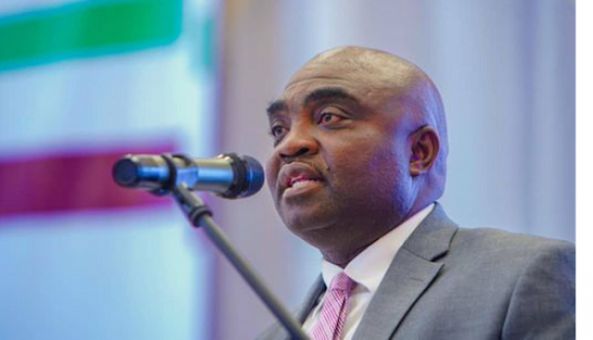
The Director-General and Chief Executive Officer of the Infrastructure Concession Regulatory Commission (ICRC), Dr Jobson Oseodion Ewalefoh, has stated that Nigeria is currently grappling with an estimated $2.3 trillion infrastructure deficit and will need about $100 billion in annual investments over the next 17 years to bridge the gap.
He made this known on Tuesday in Abuja during a one-day stakeholders’ engagement on the Model Public-Private Partnership (PPP) Agreement for federal Ministries, Departments and Agencies (MDAs).
Ewalefoh said the infrastructure shortfall is evident in abandoned roads, inadequate electricity supply, weak rail networks, poor healthcare facilities, insufficient water systems and underdeveloped digital infrastructure, all of which continue to affect millions of Nigerians. He stressed that government budgets alone cannot meet the scale of funding required.
According to him, the Tinubu administration has prioritised Public-Private Partnerships as a key strategy to attract private investment, expertise and innovation into infrastructure development. He noted that the ICRC has spent nearly two years developing a Model PPP Agreement to serve as a standardised framework for government transactions, replacing the previous fragmented approach where agreements were negotiated from scratch.
He explained that the earlier system often led to inconsistent contract terms, prolonged negotiations, legal disputes and reduced investor confidence. The new model, he said, was developed through consultations with experts, stakeholders, financiers and government agencies, and is designed as a “living instrument” that will evolve with legal and global developments.
Ewalefoh added that the framework provides a national baseline grounded in Nigerian law, ensuring clearer risk allocation, faster negotiations and greater predictability. It also includes provisions covering insurance, force majeure, changes in law, defaults and contract termination, while protecting financiers through direct agreements that allow lenders to intervene before project termination.
On dispute resolution, he said the agreement prioritises consultation and mediation, with arbitration in Abuja under the Arbitration and Mediation Act, 2023 where necessary. It also introduces contract monitoring systems, performance reporting, audit rights and periodic reviews to ensure long-term project accountability, alongside strong anti-corruption safeguards.
He said the model is intended to improve predictability for government, protect investors and ensure value delivery for the public. It is also expected to reduce transaction costs, speed up financial closure and strengthen Nigeria’s attractiveness to private investors. He encouraged MDAs to adopt the framework, seek professional advice where necessary, and submit adapted versions for ICRC review. He also noted that it would support funding options such as pension funds, Sukuk, green bonds and blended finance.
Ewalefoh urged PPP desk officers to champion the framework, describing the ICRC as a partner rather than a gatekeeper. He said the document forms the foundation for future infrastructure development in Nigeria.
The Solicitor-General of the Federation and Permanent Secretary of the Federal Ministry of Justice, Mrs Beatrice Jedy-Agba, also commended the initiative, noting that it followed extensive consultations aimed at improving accountability, value for money and investor confidence while protecting public interest.
She said the Ministry of Justice has strengthened its capacity to handle complex PPP agreements and ensure government is protected from unnecessary liabilities and litigation. She further urged stakeholders to provide constructive feedback to refine the framework, describing it as essential for building trust-based partnerships and advancing national infrastructure development.