

By Monsurat Abisoye
The Federal Government has said the implementation of capital projects across Nigeria is significantly higher than figures commonly reported, announcing plans to introduce a transparent, real-time reporting system that will allow Nigerians to monitor budget performance and project execution.
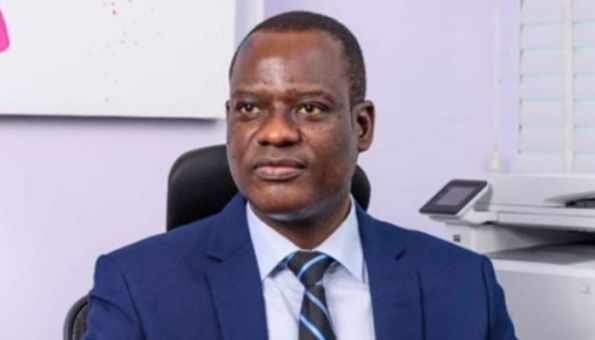
Minister of Finance and Coordinating Minister of the Economy, Taiwo Oyedele, disclosed this on Monday during a panel session titled Reforms in Focus: The Milestones, the Challenges, the Prospects at the fifth Nigeria Employers’ Summit in Abuja. Other panellists included the Director-General of the National Health Insurance Authority, Dr Kelechi Ohiri; the Nigerian Economic Summit Group’s lead economist, Wilson Erumebor; and the Chief Executive Officer of the Centre for the Promotion of Private Enterprise, Muda Yusuf.
Oyedele acknowledged that the government could improve budget implementation but insisted that public perception does not accurately reflect the actual level of capital project execution. According to him, some projects are implemented directly by agencies and through large-scale legacy projects whose reports are not immediately reflected in public records.
He said the Ministry of Finance is developing a more transparent reporting framework that will make information on government spending and project implementation accessible through its website. He also revealed that President Bola Tinubu had directed the harmonisation of federal projects, with the government working alongside the Ministry of Budget and Economic Planning to create a single platform for tracking projects and enhancing accountability.
The minister also defended the rising cost of debt servicing, attributing it largely to higher interest rates introduced to curb inflation. He noted that government borrowing costs increased from an average of about eight per cent before the reforms to as high as 24 per cent afterwards, making debt servicing and funding for infrastructure and social programmes significantly more expensive.
He added that inflation has also increased the cost of governance, forcing the government to spend more to execute the same projects and programmes.
On infrastructure financing, Oyedele said the government intends to attract more private investment into commercially viable projects, while public resources will be focused on social infrastructure such as schools in rural communities that may not generate immediate financial returns.
He identified the power sector as a major priority of the administration, saying discussions were ongoing to implement fundamental reforms and promote market-based solutions while protecting vulnerable Nigerians.
The government’s defence of its capital budget implementation comes amid concerns over the slow pace of project execution and the gap between budget allocations and actual releases.
According to findings from the Open Treasury Portal, the Federal Government released only about N2.68tn for the construction, rehabilitation and maintenance of roads and bridges between 2023 and April 2026, despite budgeting N54.93tn for road-related projects during the period. The releases amounted to less than five per cent of the total budgeted sum.
The analysis showed that road projects received budget allocations of N2.53tn in 2023, N9.39tn in 2024, N7.22tn in 2025 and N35.79tn in the first four months of 2026. Actual releases, however, stood at N631.51bn, N784.60bn, N670.68bn and N597.08bn respectively, translating to implementation rates of 24.95 per cent, 8.36 per cent, 9.29 per cent and 1.67 per cent.
The figures have drawn criticism from economists and industry stakeholders, who argue that low capital releases have slowed major infrastructure projects and constrained economic growth. Despite these concerns, government officials maintain that improved transparency and project monitoring under the 2026 budget will help restore public confidence in public spending and infrastructure delivery.