

By Dr. Violet Akifagbowo
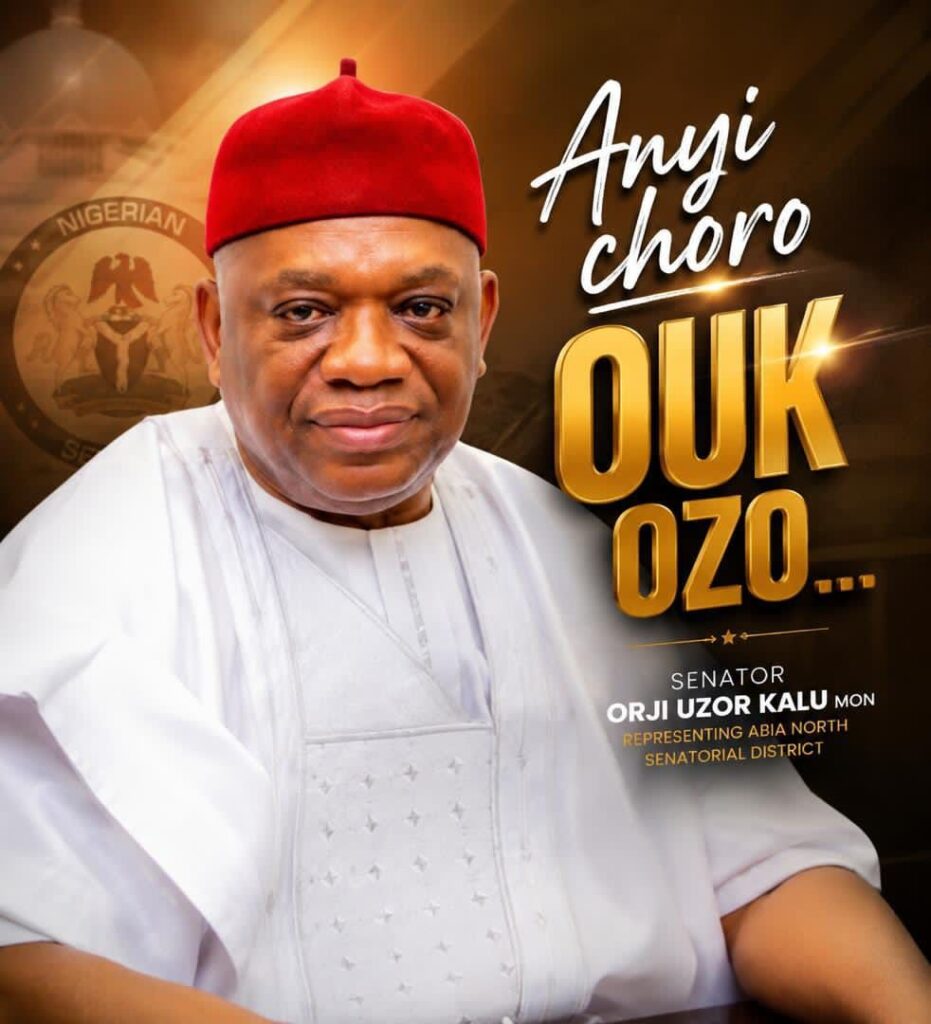
When times are hard, people don’t want long grammar. They want food on the table. They want their shop to open. They want their children to learn a trade and start something for themselves. That is why the campaign in Abia North is talking about work. And that is why the name Senator Orji Uzor Kalu keeps coming up.
Kalu is not new to business. Before politics, he built companies and created jobs. When he came to the Senate in 2019, he said he would bring that same business mind to represent us. He said government must support the trader in the market, the youth with an idea, the woman selling garri, and the farmer trying to expand. Today, the record shows he has been doing exactly that.
Six months ago, Senator Kalu announced that N500 million had already been provided to an empowerment programme, and that distribution was ongoing. Then he took it further. He rolled out a N1 billion SME support package for 2,000 small-scale businesses across Abia State. The plan is simple. Identify 2,000 viable businesses in all the local government areas, give each about N500,000 to start with, and then bring in partner agencies like the Bank of Industry, Bank of Agriculture, SMEDAN and CREDICORP to match the fund. He said Abia is an enterprising state, and if his office puts in N1 billion, these institutions can do even more. Forms are being collected at the Renewed Hope Office in Umuahia, and the goal is to gather names within 30 days and do the empowerment in February. That is direct cash to help people restock, buy equipment, and hire one or two hands.
This is not the first time. Through the Orji Uzor Kalu Foundation, an interest-free loan scheme was started for petty traders and artisans. The loan is repayable over 12 months with two months moratorium at zero interest. The target was 11,000 beneficiaries. The idea was to take unemployed youths off the street and increase the working capital of people who already have a trade but need a push. That scheme started as far back as 1997 with 7,500 beneficiaries across Abia, and it has continued.
Beyond money, Kalu has been putting tools in people’s hands. Thousands of youths and women have received financial grants, mentorship, and assets like sewing machines, refrigerators, generators, motorcycles, tricycles and laptops. He organized a free cinematography seminar where participants went home with laptops and cameras. He also ran agricprenuership training to teach young people how to turn farming into business. In the wards, you will hear people talk about how these items changed their lives. A sewing machine means a tailor can take more orders. A generator means a frozen food seller does not lose stock. A motorcycle means a young man can do deliveries and feed his family.
Farming is business too, and Kalu has not ignored it. Over 1,000 cassava processing machines were distributed to farmers across 103 wards. Fertilizers, rice seedlings and other farm inputs were also shared, especially to women farmers. The aim was to boost output and reduce cost. When a farmer processes cassava faster, she sells more. When she gets seedlings on time, she plants early. That is how you fight hunger and create income at the same time.
To make all this last, skills training centers have been set up. Young people are learning carpentry, plumbing, electrical work, IT and other trades. The idea is to bridge the gap between school and work. Instead of waiting for government jobs that may not come, a young man can learn a skill, get an internship, and start earning. There are also youth leadership and training programs to prepare the next generation of business owners and community leaders.
The numbers are telling. Over 150 constituents have received employment facilitation, scholarships and overseas training. About 1,600 individuals have accessed the Benjamin Kalu Grants. Nationally, 37 entrepreneurs, one from each state and the FCT, were empowered through the programme. In Bende alone, more than 50 people-oriented projects have been executed or are ongoing, and many of them are tied to skills and livelihood. These include schools, ICT centres, health facilities, roads, agricultural processing centres like an ultra-modern rice mill, water projects, electricity restoration, boreholes and skills training centres in communities like Item, Uzuakoli, Igbere, Ozuitem, Alayi, Ugwueke, Itumbuzor and Lohum Imenyi.
People in Abia North remember that this is not new to Kalu. As governor, he introduced the Youth Empowerment Scheme which gave vocational training and entrepreneurship support to thousands. He also worked to revive Aba, our commercial center. Financial incentives were provided and an enabling environment was created that attracted local and foreign investors. The Aba textile industry was revived, and that alone created thousands of jobs. The impact showed in the numbers. Between 1999 and 2007, Abia’s GDP grew at an average of 7% annually. Internally generated revenue moved from N500 million in 1999 to over N6 billion by 2007. Unemployment dropped from over 30% to about 15%. Small and medium businesses flourished because the environment allowed them to breathe.
That is the same thinking he is bringing to the Senate now. In the last two years he has sponsored 127 bills that touch on governance, inclusion, infrastructure, security and economic reform. Some like the SEDC Act have moved from paper to institution. Others are shaping national debate. The point is simple: policy must meet people where they are.
What does this mean for you, the trader in Ohafia market? It means there is a fund you can apply for. What does it mean for the youth in Item who wants to learn welding? It means there is a training center and a chance for an internship. What does it mean for the woman farmer in Bende? It means there are machines and inputs to help her produce more. What does it mean for the graduate in Isuikwuato with a business idea? It means mentorship and support to start small and grow big.
Abia people are enterprising by nature. Give us capital, give us tools, give us training, and we will create wealth. That is what Senator Kalu understands. He has said it himself: we are going to identify 2,000 businesses and support them. We are going to partner with agencies to multiply the money. We are going to keep doing empowerment sessions because representation is continuous and rooted in people’s needs.
As campaign season opens, the question is not who talks the loudest. The question is who has shown they can put money in people’s hands and create opportunities. From N500 million already distributed, to the new N1 billion SME package, to the sewing machines and tricycles, to the cassava processors and skills centers, the work is on the ground.
Abia North needs a senator who thinks like a businessman but serves like a father. Someone who knows that a generator can keep a shop open, that a grant can start a business, that a skill can feed a family for life. That is the record of Senator Orji Uzor Kalu.