

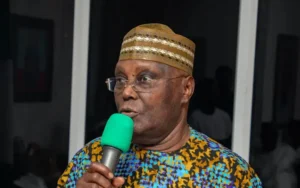
Former Vice-President and African Democratic Congress (ADC) presidential candidate, Atiku Abubakar, has renewed calls for accountability over the October 2020 Lekki shooting, asking who ordered the use of force against #EndSARS protesters six years after the incident.
Atiku made the call in a post on his X account on Tuesday, accusing the ruling All Progressives Congress (APC) of failing to provide satisfactory answers to questions surrounding the shooting and address the concerns of young Nigerians.
“Six years after the Lekki shooting, Nigeria is still waiting for a clear answer to one devastating question: Who gave the order?” he asked.
The former vice-president also criticised President Bola Tinubu’s response to the incident, recalling his remarks in October 2020, when he questioned aspects of the protesters’ presence and the circumstances surrounding the reported casualties.
Atiku argued that the response at the time appeared to focus more on questioning the victims than demanding accountability from those responsible for the violence.
He said the failure to provide satisfactory answers had deepened public distrust, leaving affected families seeking justice and many young Nigerians frustrated over the handling of the incident.
According to him, the anger expressed across the country reflects unresolved grief and a loss of confidence in the government rather than a mere social media trend.
“The APC has governed Nigeria through these six years. It cannot keep asking Nigerians to remember the dead while refusing to confront the unanswered questions,” he said.
Atiku added that a government unable to assure citizens that their lives matter had failed in one of its fundamental responsibilities.
Beyond the Lekki shooting, the ADC chieftain criticised the rising cost of living, citing petrol prices of N1,405 per litre as an example of the economic pressure facing Nigerian households.
He said the rising cost of essential goods and services had made it increasingly difficult for families to afford food, rent, education and transportation.
To illustrate the situation, Atiku recounted an account shared by one of his aides about a young woman who reportedly resigned from her job because her salary could no longer cover her transport expenses.
Quoting the woman, he said: “The pay no longer covers transport. Everything in Nigeria just dey increase in price. Feels like I’m working for Bolt guys.”
Atiku described the account as an indication of the growing financial difficulties confronting some employed Nigerians, particularly those whose earnings can no longer keep pace with rising living costs.
He said his Economic Recovery Plan was designed to ease the burden through measures aimed at making essential goods and services more affordable.
The proposed measures include passing savings from domestically refined fuel on to consumers, increasing local production to create jobs, protecting minimum-wage earners, providing student support and reducing government waste.
Atiku said the plan would prioritise practical relief for Nigerians while funding interventions through cuts in government expenditure rather than introducing additional taxes.
He described the proposal as an effort to “Make Nigeria Affordable Again,” arguing that economic relief and accountability remain critical to restoring public confidence in governance.