

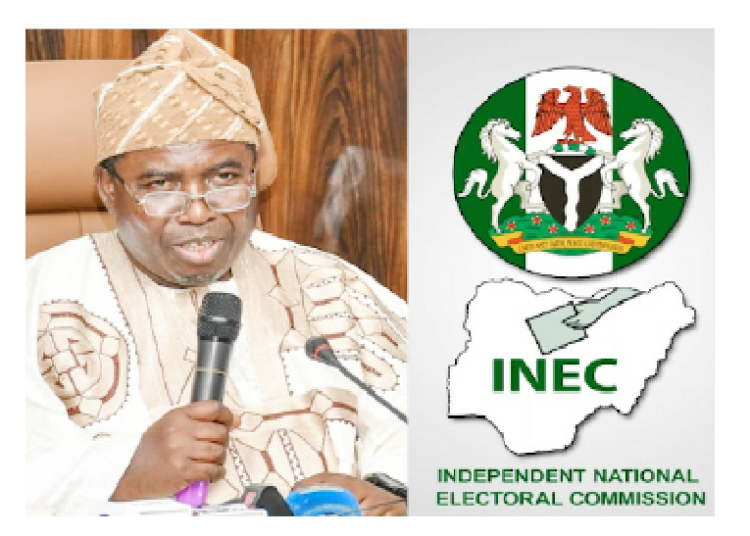
The Independent National Electoral Commission (INEC) has approved a new salary structure, enhanced field allowances and a 150 per cent increase in monthly overhead allocations to its state offices as part of efforts to strengthen preparations for the 2027 general elections.
The commission has also directed its personnel to suspend further annual leave, warning that negligence, absenteeism, political partisanship and financial impropriety would attract disciplinary measures.
INEC Chairman, Prof. Joash Amupitan, announced the decisions on Friday in Lokoja, Kogi State, during the North-Central Zonal Interactive Meeting with Staff and Readiness Assessment for the 2027 general elections.
He explained that the welfare and operational reforms were designed to improve staff motivation, strengthen field operations and enhance the commission’s capacity to conduct elections involving more than 103 million registered voters across 176,846 polling units nationwide.
Amupitan disclosed that the Consolidated Election Management Body Salary Structure (CEMBSS), introduced following the commission’s departure from the conventional civil service salary structure, took effect from January 1, 2026.
According to him, processes for providing the necessary funding for the new salary arrangement are ongoing, while enhanced salary, hazard and field allowance packages have also been approved for personnel.
He further announced that monthly overhead allocations to state offices had been increased by 150 per cent, effective July 1, 2026.
On logistics, the INEC chairman said operational pick-up vehicles had been distributed to state and Local Government Area offices nationwide, while 20 Sports Utility Vehicles (SUVs) had been procured for Resident Electoral Commissioners (RECs).
He added that Administrative Secretaries would also receive new vehicles to improve the commission’s operational efficiency.
However, Amupitan stressed that improved welfare and logistics must be matched with discipline, political neutrality and dedication to duty.
He directed RECs and Administrative Secretaries to enforce strict attendance monitoring and accountability, warning that the commission would not tolerate any conduct capable of undermining the credibility of the electoral process.
“Every staff member must remain neutral, professional and committed to the electoral process. Partisanship, negligence, financial impropriety and absenteeism will not be tolerated,” he said.
The chairman also disclosed that INEC was strengthening its technological capacity ahead of the elections, particularly in voter accreditation and electronic result management.
He said 57,000 newly procured Bimodal Voter Accreditation System (BVAS) devices were being configured alongside existing equipment to improve voter verification and accreditation.
He added that electronic result management platforms, including the eEC8A verification system, were undergoing audits to ensure transparent transmission of polling unit results to the INEC Result Viewing Portal (IReV).
According to him, the commission had also activated Printable Permanent Voter Cards (PVCs) and a digital PVC Location Portal to make it easier for registered voters to access their cards.
On the voters’ register, Amupitan said the preliminary register had been published for public scrutiny, while the certified Register of Voters was expected to be released on December 15, 2026.
Addressing concerns over photographs appearing on the preliminary register, he said the data remained subject to verification before publication of the final register.
The INEC chairman further identified insecurity and misinformation as major threats to the 2027 elections, announcing the strengthening of a security coordination framework known as the “ICCES Tentacle”.
The framework, operating under the Inter-Agency Consultative Committee on Election Security (ICCES), is designed to extend security coordination from the national level to Local Government Areas and Registration Area Centres.
He said the arrangement would help security agencies identify potential flashpoints, protect election personnel and materials, and ensure voters could access polling units without intimidation.
The agencies involved include the military, Nigeria Police Force, Department of State Services, Nigeria Security and Civil Defence Corps, Customs, Immigration, Correctional Service and Federal Road Safety Corps.
Amupitan added that INEC would deploy Electoral Risk Management tools to identify security threats and seasonal risk factors ahead of election day.
He warned that anyone who threatened, intimidated or harmed ad-hoc electoral personnel, National Youth Service Corps members or permanent staff would face the full weight of the law.
The chairman also cautioned against misinformation, fabricated media content and artificial intelligence-generated deepfakes, noting that such developments could undermine public confidence in the electoral process.
He maintained that transparent administration and efficient field operations remained the strongest safeguards against misinformation, warning that delayed opening of polling units, technical failures and misconduct by electoral personnel could create opportunities for false narratives.
On the North-Central region, Amupitan said the assessment was particularly important given the zone’s strategic position and its combined 15,448,869 registered voters across Benue, Kogi, Kwara, Nasarawa, Niger, Plateau and the Federal Capital Territory.
The breakdown showed that Benue has 2,777,727 registered voters, Plateau 2,787,273, Niger 2,698,344, Kogi 1,932,654, Nasarawa 1,899,244, Kwara 1,698,627 and the FCT 1,655,000.
He said the assessment was intended to identify operational weaknesses before election day, incorporate local challenges into national planning and prevent voter disenfranchisement arising from administrative or logistical failures.
Amupitan also disclosed that the commission had completed nine of the 14 major milestones in its statutory timetable, adding that the remaining activities required sustained attention as the elections approached.
According to the timetable, the presidential and National Assembly elections are scheduled for January 16, 2027, while the governorship and State Houses of Assembly elections will hold on February 6, 2027.
He noted that INEC had conducted governorship elections in Anambra, Ekiti and Osun states, FCT Area Council elections and 16 bye-elections under his administration, describing the exercises as opportunities to test and improve its operational arrangements.
Earlier, the Resident Electoral Commissioner for Kogi State, Dr. Alhaji Shehu L. Wahab, said the state office was intensifying preparations despite additional responsibilities arising from the restoration of 12 previously suppressed state constituencies.
Wahab said the office had commenced internal preparations, including electoral risk management activities, election monitoring, security coordination and voter awareness programmes for persons with disabilities.
He added that the commission was working with security agencies to address the perception of Kogi State as a violence-prone area during elections.
In her remarks, the Director of Planning and Monitoring, Mrs. Helen Ajayi, said the zonal assessment was aimed at evaluating the preparedness of state offices, identifying operational and logistical challenges, improving staff motivation and monitoring the implementation of the commission’s strategic plans.
She urged Electoral Officers and other field personnel to cooperate with the assessment teams and work closely with the Planning and Monitoring Department to identify gaps and ensure effective implementation of planned activities.
The Lokoja meeting, attended by National Commissioners, RECs, directors, Administrative Secretaries, Heads of Departments and Electoral Officers, marked the conclusion of INEC’s nationwide zonal readiness assessment.
The engagement followed similar meetings across the South-West, North-West, South-East, North-East and South-South zones.
The chairman had also paid a courtesy visit to the Kogi State Council of Traditional Rulers on Thursday, seeking the support of traditional institutions for voter mobilisation, peaceful political participation and efforts to combat electoral misinformation.
The commission is expected to translate its preparations at the national level into effective operations across the country’s states and local government areas ahead of the 2027 general elections.