

By Gwen Ifeson
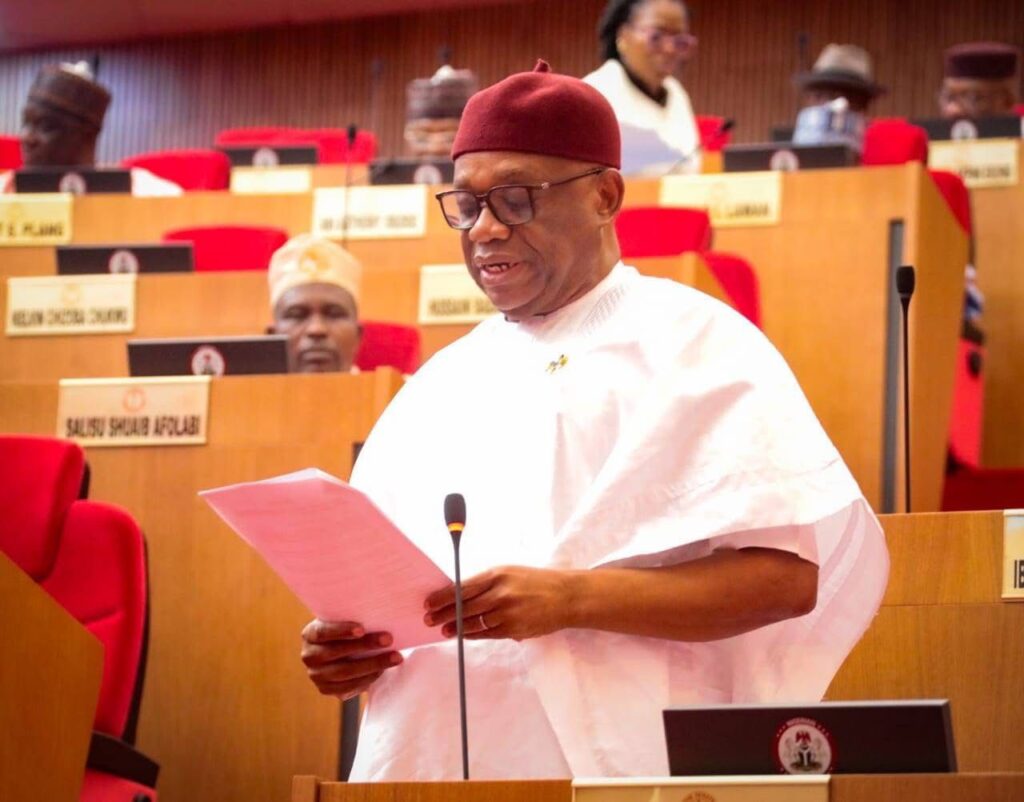
Few figures in Southeast Nigerian politics have endured as long or sparked as much debate as Orji Uzor Kalu.
Now serving as Senator for Abia North, the former Abia State Governor has maintained an unbroken presence in Nigerian public life since 1999, navigating legal battles, shifting political alliances, and a changing national landscape to remain one of the most recognisable voices in the National Assembly.
In a political environment where careers are often short and volatile, that kind of staying power is itself a story.
A Long Road Through Government
Kalu governed Abia State for two terms between 1999 and 2007 ,a period his supporters describe as foundational for the state’s development. After leaving Government House in Umuahia, he remained commercially active and politically visible before securing his Senate seat representing Abia North, a constituency he has continued to champion with notable consistency.
In the upper chamber, he has positioned himself as a persistent advocate for infrastructure, youth empowerment programmes, and federal investment in the Southeast an agenda that resonates with supporters who credit him with ensuring Abia North retains a seat at the national table, regardless of who occupies Aso Rock.
The Constituency That Keeps Calling Him Back
Perhaps the most telling measure of Kalu’s relevance is electoral. His constituents have returned him to office through competitive elections across different political climates, a fact that speaks beyond party machinery or political momentum.
For many in Abia North, Kalu represents continuity a familiar, experienced hand in an often unpredictable system.
Supporters point to constituency projects, targeted interventions, and his willingness to raise Abia North’s concerns on the Senate floor as evidence that the relationship between senator and constituency remains active, not merely symbolic.
A Voice on Unity and Security
In recent years, Kalu has made national cohesion a recurring theme in his public statements, calling for inter-ethnic dialogue, stronger institutions, and cooperative governance at a time when Nigeria faces serious security pressures and deepening regional tensions.
For a senator from the Southeast a zone carrying its own complex political anxieties those positions carry particular weight.
His consistent call for dialogue over division has been noted by political observers as a stabilising contribution to national conversations that can easily be dominated by more inflammatory voices.
Where Business Meets Governance
Before entering politics, Kalu built a visible profile in business publishing, manufacturing, and commerce that set him apart from career politicians who arrived at public office with little private-sector grounding. That background is frequently cited by his legislative allies as shaping his practical approach to economic policy, job creation, and investment attraction, issues that remain urgent for a state and a region still seeking to fully realise their economic potential.
What Twenty-Five Years Means
Longevity in Nigerian politics is never accidental. It requires political intelligence, constituency trust, and the ability to adapt without losing one’s footing. Across five presidents, multiple party transitions, and a country that has changed enormously since 1999,
Orji Uzor Kalu has remained engaged, vocal, and present.
Whether one agrees with his politics or not, the record is clear: Abia North has a senator who has spent over two decades learning the architecture of Nigerian power, and who continues to use that knowledge on behalf of his people.
In a Senate where experience is an asset and institutional memory matters, that is not a small thing.