

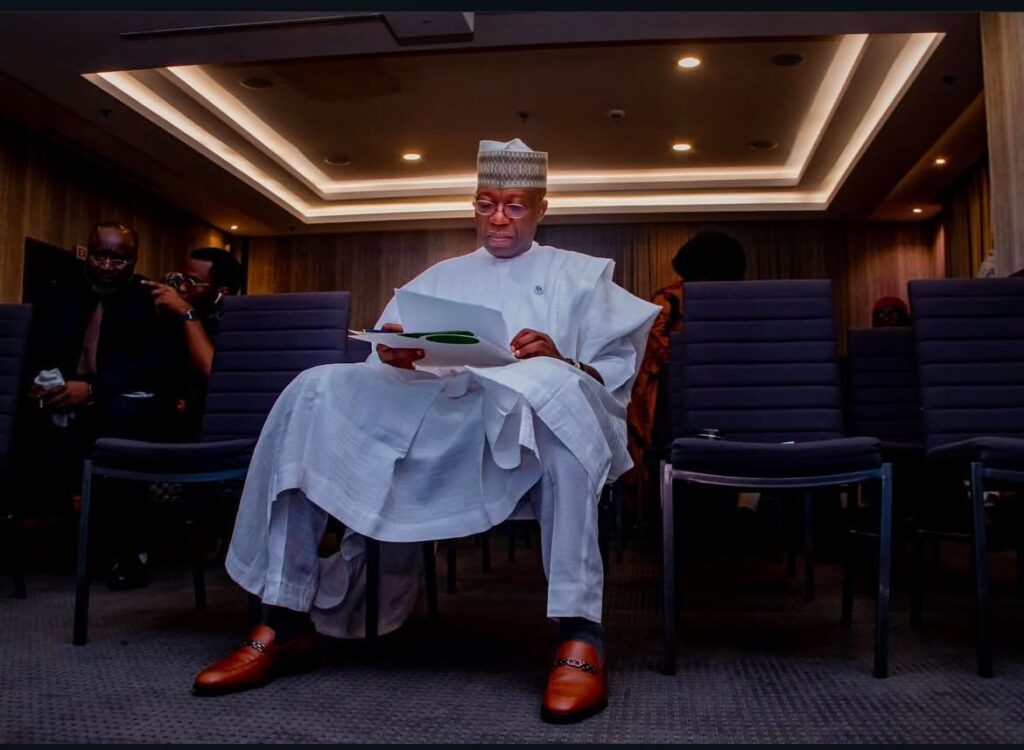
There are leaders who speak loudly and there are those whose quiet strength shakes the world. Prof. Abubakar Olanrewaju Sulaiman (Amana) belongs to the latter. His influence is not measured by the voice he speaks but by the lives he touches, the minds he shapes, and the institutions he builds. As we head toward electioneering period, there is huge demand for a competent successor who is capable to sustain the transformative strides by the Executive Governor of Kwara State, His Excellency, Mallam AbdulRaman AbdulRasaq, CON, the chairman Governor’s forum and Sardauna of Ilorin Emirate.
Professor Olanrewaju Suleiman precedent is a renowned scholar of political science and international relations with focus on Governance, policy Analysis, peace studies, Democratic Governance, institutional reforms and leadership whose administrative acumen, are well imprinted across the nation. This is a a reflecting on a man whose story is a powerful blend of intellect, integrity, and humanity.
For decades, Prof. Sulaiman has stood as a model of what public service should represent — diligence without drama, leadership without arrogance, and patriotism without pretence. His humility disarms, his brilliance inspires, and his consistency commands respect even among his critics. In a society often distracted by mediocrity and political theatrics, Amana’s life is a refreshing reminder that true greatness lies in service, not showmanship.
From the classroom to the cabinet, from the university campus to the hallowed chambers of the National Assembly, he has carried one unshakable belief: that Nigeria can be better if only we choose to lead with sincerity. And he has lived this belief every single day. His words are steady, his principles firm, and his commitment to national growth unwavering. Those who have worked with him attest to his discipline — a man of few words but profound thoughts, of modest habits but mighty vision.
As a mentor, Prof. Sulaiman has nurtured many who today occupy influential positions in academia, politics, and civil society. He never withholds knowledge; instead, he shares it generously, guiding young people to find their voice and purpose. He believes leadership must be generational — that every wise leader must reproduce himself in others. Many of his mentees speak fondly of how he combines firmness with fatherliness, how he corrects with compassion and encourages with conviction.
Beyond his professional achievements, Prof. Amana’s personal virtues are perhaps his greatest strength. He embodies patience, faith, and empathy. Despite his towering stature in Nigeria’s academic and political landscape, he remains remarkably humble — accessible to all, regardless of status. He attends community events, supports humanitarian causes, and lends his voice to issues affecting the poor and vulnerable. His philanthropy, often quiet and private, has uplifted many families and sponsored countless students through school.
What makes his gubernatorial aspirations worthy of celebration goes beyond a deafening noise of those who felt threatened by his emerging popularity across the political landscape of kwara and beyond. It is indeed about the kind of man he is — one whose character remains untainted by power. In an era where leadership is often reduced to self-interest, Amana has proven that a man can rise in politics and governance without losing his soul. He has built his legacy not on wealth, but on wisdom; not on influence, but on impact.
Colleagues describe him as a bridge-builder — one who unites rather than divides, who listens before he speaks, and who acts only after deep thought. These are the traits that have made him a beloved figure in Kwara and beyond. He has become a rallying point for those who believe in politics of development rather than destruction, politics of ideas rather than insults.
Prof. Abubakar Olanrewaju Sulaiman ‘ life continues to teach that the highest form of leadership is service; that power, when guided by purpose, becomes a force for good; and that integrity, though often rare, is still possible in Nigeria’s public life