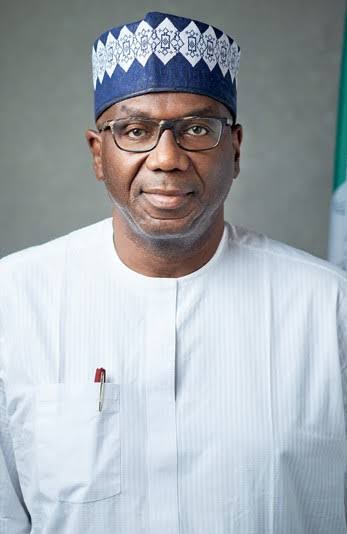
Political tension is steadily mounted across Ikorodu federal Constituency and community stakeholders voice growing opposition to the alleged plan by Babajimi Benson to pursue a fourth consecutive term in the House of Representatives.
Although no formal protest has yet taken place, discussions across the Ikorodu Federal Constituency indicate deepening dissatisfaction among several groups who argue that the constituency cannot continue to be represented by the same individual indefinitely. Many residents insist that the political space must be opened for new voices and fresh leadership after nearly a decade of continuous representation.
Benson has represented Ikorodu Federal Constituency since 2015, winning elections in 2015, 2019, and 2023, giving him three consecutive terms in the National Assembly.
However, the current political conversation within Ikorodu has moved beyond electoral competition into a stronger debate about fairness, inclusiveness, and the future direction of leadership in the constituency. Many youths now view the idea of a fourth term as a sign of political over-consolidation, warning that it limits opportunities for other qualified aspirants to emerge.
A growing number of stakeholders are insisting that Ikorodu Constituency 2 has consistently produced representatives in recent electoral cycles, and it is now firmly the turn of Ikorodu Constituency 1 to produce a member of the House of Representatives, in the interest of equity, fairness, and true constituency-wide balance.
Similarly, within party structures, attention has turned to internal power distribution. The Mandate Group has, over time, been at the forefront of producing candidates in Ikorodu, and there is now a strong and increasing call that it is the turn of the Justice Forum to also produce a candidate, ensuring internal balance, fairness, and equal opportunity within the political structure.
Several community voices argue that democracy thrives when leadership rotates and when new individuals are allowed to contribute their ideas and vision for development. According to them, prolonged control of a single political seat risks weakening internal democracy and limiting political participation.
The debate has also taken on a religious dimension among some groups who insist that leadership in Ikorodu should reflect the diversity of the constituency. Some residents argue that after years of representation by a Christian lawmaker, it would be fair and politically balanced for a Muslim candidate to emerge and represent the constituency.
These arguments have further intensified conversations across political circles, youth groups, and community meetings, with some residents warning that continued disregard for calls for political rotation could trigger public demonstrations.
The unfolding tension has also revived discussions about past representation, particularly the period between 2003 and 2015, when Ikorodu experienced leadership transition after three terms. Many observers cite that period as evidence that political renewal is possible without disrupting the constituency’s voice at the national level.
Within Ikorodu today, however, the central question remains whether the constituency should continue along the path of prolonged incumbency or embrace broader participation and leadership renewal.
While protests have not yet erupted, the atmosphere within the constituency suggests that the issue of representation is rapidly becoming one of the most sensitive political debates in Ikorodu.
Among many young people, the message is now clear and increasingly firm: the era of prolonged political dominance, they argue, should not define the future of Ikorodu, and leadership must reflect fairness, rotation, and true inclusion.