

By Philip Obin
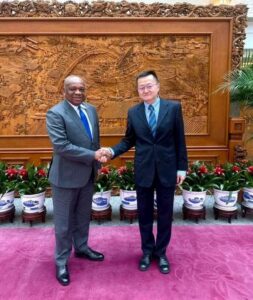
On April 15, former Abia State governor and serving senator, Orji Uzor Kalu, held a strategic meeting with Du Xiaohui, Director-General at the Ministry of Foreign Affairs of the People’s Republic of China, signaling renewed momentum in Nigeria–China economic relations.
The engagement comes at a time when Nigeria is actively seeking deeper foreign partnerships to boost infrastructure, trade, and industrial development. China remains one of Nigeria’s largest trading partners, with bilateral trade estimated at over $20 billion annually in recent years. Beyond trade, China has been instrumental in financing and executing major infrastructure projects across Nigeria—from rail lines to power initiatives.
Senator Kalu’s move reflects a broader push within the National Assembly of Nigeria to complement executive diplomacy with legislative support, ensuring that agreements translate into real economic benefits for Nigerians. His longstanding ties with international business communities and experience in economic policy position him as a key player in attracting foreign investment.
Meetings like this are not just ceremonial—they often lay the groundwork for future agreements in areas such as manufacturing, agriculture, technology transfer, and capacity building. With Nigeria aiming to diversify its economy beyond oil, stronger cooperation with global partners like China is critical.
Observers note that sustained engagement at this level can help unlock new funding opportunities, improve trade balances, and create jobs back home. Senator Kalu’s proactive diplomacy underscores a commitment to leveraging global relationships for national development.