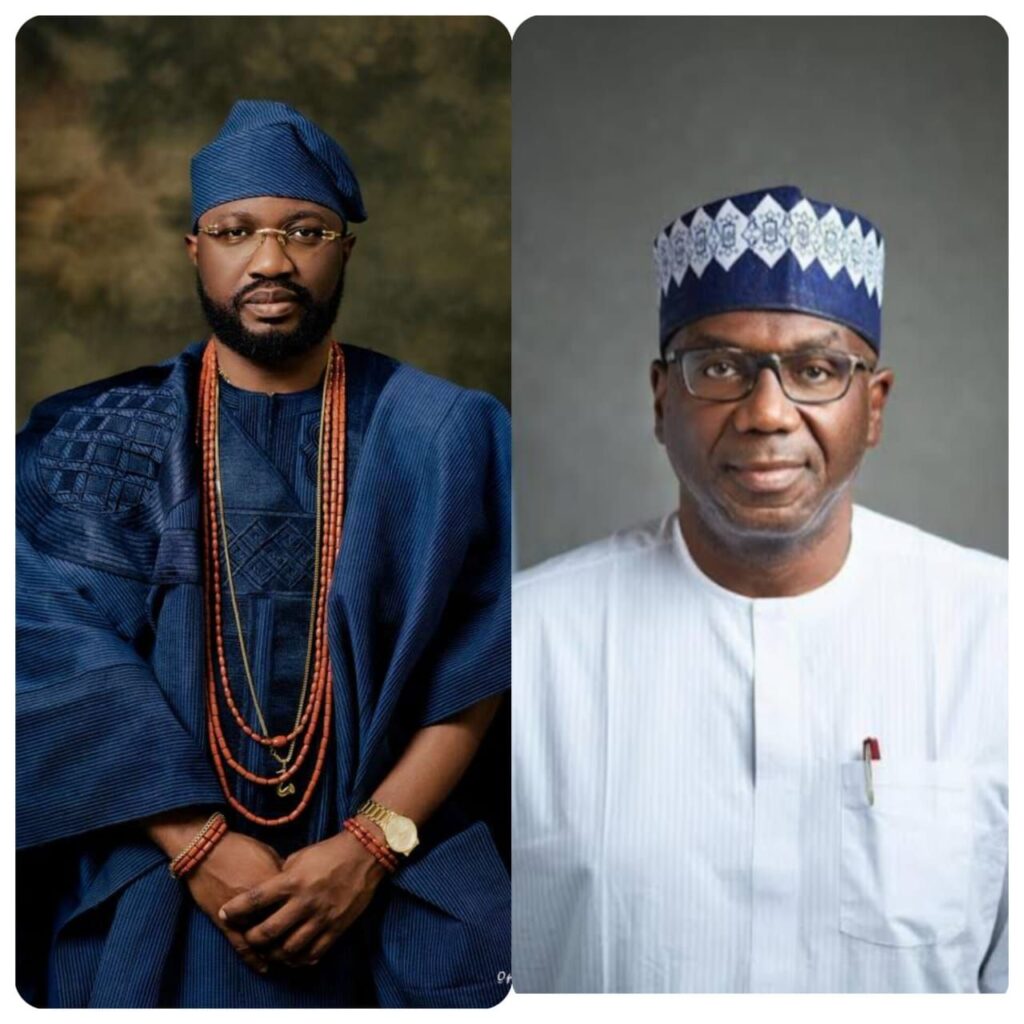
Kwara State, famously known as the “State of Harmony,” has in recent years become the symbol of what focused governance, political will, and a genuine commitment to the welfare of citizens can achieve. Since the historic political transition of 2019, the state has witnessed a sweeping transformation that has touched virtually every sector of public life. Roads are being built, schools are being rehabilitated, healthcare facilities are being upgraded, and the dignity of the average Kwarastate resident is being restored. This is the story of Kwara today: a state rising, a people prospering, and a government delivering.
The 2019 Turning Point: O To Ge and the People’s Mandate
For decades, Kwara State was perceived as a political fiefdom, a territory controlled by powerful political godfathers whose interests consistently superseded the needs of ordinary citizens. Infrastructure decayed, public schools were neglected, healthcare systems were underfunded, and the civil service was riddled with ghost workers and corruption. Year after year, budgets were passed and funds were released, yet development remained elusive for the majority of Kwarans.
The 2019 governorship election changed everything. Under the rallying cry of “O To Ge” meaning “Enough is Enough” in Yoruba, the people of Kwara State took a definitive stand against the old order. They voted overwhelmingly for change, ushering in Governor AbdulRahman AbdulRazaq and the All Progressives Congress. It was not merely a change of government. It was a revolution of the popular will. From that moment, Kwara began its journey toward a new destiny.
Education: Rebuilding the Foundation of Tomorrow
Perhaps no sector illustrates the contrast between the old and new Kwara more vividly than education. Under the previous administrations, public schools in the state were in deplorable condition. Classrooms were dilapidated, furniture was absent or broken, teachers were unpaid or owed months of salary arrears, and the learning environment was hostile to intellectual growth. Many parents pulled their children out of public schools simply because they had given up on the system.
Since 2019, the government has embarked on a comprehensive school renovation programme that has transformed hundreds of public primary and secondary schools across all senatorial districts. New classrooms have been constructed, old ones have been refurbished with modern furniture, and learning materials have been distributed to students at no cost. Teachers have been recruited, trained, and empowered. The state has invested significantly in digital learning infrastructure, connecting schools to the 21st century economy.
Examination results have improved dramatically. Kwara State has consistently produced top candidates at the West African Senior School Certificate Examination, a testament to the renewed energy in the education sector. The government has also cracked down on examination malpractice and introduced merit-based scholarships that are accessible to all, not just the children of the politically connected.
Healthcare: Bringing Quality Medicine Closer to the People
Before 2019, the state of healthcare in Kwara was a national embarrassment. Primary healthcare centres were shuttered, equipped with neither drugs nor personnel. The University of Ilorin Teaching Hospital, which ought to be the pride of medical services in the state, was underfunded and understaffed. Maternal and infant mortality rates were alarming. Citizens who could afford it crossed state lines to seek decent medical attention.
The current administration has invested heavily in healthcare infrastructure. Primary healthcare centres have been rehabilitated and equipped with essential medicines and medical devices across the state. The government launched a robust immunisation drive that has reached previously underserved communities. Free healthcare services have been extended to pregnant women, nursing mothers, and children under the age of five, dramatically reducing preventable deaths.
The introduction of the Kwara State Health Insurance Scheme has brought affordable healthcare within the reach of civil servants and informal sector workers. This is a landmark social protection initiative with no precedent in the recent history of the state. For the first time in many years, ordinary Kwarans can access quality medical care without selling their possessions or going into crippling debt.
Infrastructure: Roads, Water, and the Architecture of Progress
The road network of Kwara State was, for many years, a source of anguish for residents and a deterrent for investors. Major arterial roads in Ilorin, the state capital, as well as roads connecting rural communities, were riddled with potholes and became impassable during the rainy season. Agricultural produce rotted in farms because farmers could not transport their goods to market. Businesses relocated to other states because the infrastructure made commerce impossible.
Since 2019, the government has constructed and rehabilitated hundreds of kilometres of roads across the state, spanning urban and rural communities alike. Key roads in Ilorin have been completely overhauled. New roads have been cut through previously inaccessible communities, opening them up to commerce and social services. Bridges have been constructed or repaired, particularly in flood-prone areas. The Kwara State government has also partnered with the Federal Government and international development partners to secure funding for major road corridors.
Access to clean water has also seen remarkable improvement. The government has sunk boreholes and rehabilitated water supply infrastructure in communities that went without potable water for years. In Ilorin and several district headquarters, the water supply system has been upgraded to serve a growing urban population.
Agriculture and Food Security: Feeding Kwara, Fuelling Growth
Kwara State is blessed with vast arable land and favourable climatic conditions that make it naturally suited for agricultural production. However, for many years this potential was largely squandered. Farmers lacked access to quality seeds, fertilisers, mechanised equipment, and extension services. The result was subsistence farming at best, with the state importing food items it was perfectly capable of producing domestically.
The present administration has pursued an aggressive agricultural policy anchored on food security and rural prosperity. Farmers have been empowered with subsidised inputs, including seeds and fertilisers, delivered through a transparent distribution system that eliminates the corruption of middlemen. The government has partnered with agribusiness firms to introduce modern farming techniques and post-harvest management practices. Cold chain facilities have been developed to reduce spoilage. Access roads to farming communities have been constructed to ensure that produce reaches the market fresh.
The Special Agro-Industrial Processing Zone initiative has positioned Kwara as a destination for agribusiness investment. This is creating jobs, boosting rural incomes, and reducing rural-urban migration. The state is now firmly on the path to becoming a net exporter of agricultural commodities within the Nigerian domestic market.
Civil Service Reform: Integrity, Efficiency, and Accountability
The civil service is the backbone of any state government, and the Kwara civil service had been weakened by decades of neglect, patronage politics, and systemic corruption. Ghost workers plagued the payroll, consuming billions of naira in public funds meant for development. Promotions were based on personal connections rather than merit. Workers went months without salaries, demoralising an entire generation of public servants.
The current government undertook a thorough cleansing of the payroll through a biometric verification exercise that identified and removed thousands of ghost workers. The funds saved were channelled directly into public services and infrastructure. Civil servants now receive their salaries promptly. Merit and performance are now the criteria for advancement. A new culture of accountability has taken root in the Kwara civil service, and public confidence in government institutions is being steadily restored.
Women, Youth, and Social Inclusion: Leaving No Kwaran Behind
True development is not complete if it excludes the most vulnerable segments of society. The current administration in Kwara has made the empowerment of women, youth, and people with disabilities a central pillar of its development agenda. Women-led cooperatives have received grants and training. Youth entrepreneurship programmes have provided seed funding and mentorship to thousands of young Kwarans who would otherwise have been idle.
The Kwara Social Investment Programme has delivered conditional cash transfers to the poorest households, alleviating the worst effects of poverty. School feeding programmes have encouraged parents to enrol their children in public schools, simultaneously improving nutrition and boosting school attendance. These are not mere political gestures. They are deliberate, structured programmes with monitoring mechanisms that ensure funds reach those who need them most.
Security: Confronting Real Challenges, Demanding a Shared Responsibility
Security is the foundation upon which all other development is built. A state where citizens live in fear cannot attract investment, sustain education, or achieve lasting prosperity. It is therefore important, in the spirit of honesty, to acknowledge that Kwara State has in recent times faced serious security challenges that have caused grief and anguish to many families. The attacks on communities in northern Kwara, particularly the devastating assault on Woro village in Kaiama Local Government Area in February 2026, in which over 160 innocent residents were killed, represent a tragedy of immense proportions. These incidents, along with repeated bandit attacks, kidnappings, and cattle rustling in communities across Baruten, Edu, Kaiama, Moro, Isin, and Ifelodun Local Government Areas, cannot be glossed over or minimised. The pain of the bereaved is real. The anxiety of vulnerable communities is real.
What must also be acknowledged, however, is the response of the government. Governor AbdulRahman AbdulRazaq did not look away. He condemned the Woro attack in the strongest possible terms, describing it as a cowardly expression of frustration by terrorist cells responding to the sustained military pressure being mounted against them. The state government immediately mobilised humanitarian support for survivors. The government deployed approximately 1,000 forest guards to vulnerable communities as early as December 2025, recognising the threat from armed groups using forest corridors as cover for their operations. These forest guards were tasked with denying criminals safe havens and improving coordination with conventional security forces. The government also worked actively with the Office of the National Security Adviser to strengthen intelligence and response mechanisms. President Bola Tinubu, responding to the gravity of the Woro attack, ordered the deployment of an army battalion and launched Operation Savannah Shield, a coordinated military campaign that has achieved significant results against terrorist elements in the region.
Yet it would be both unfair and inaccurate to lay the entire burden of security solely at the feet of government. Security is a shared responsibility. No government, however well-intentioned and well-resourced, can single-handedly protect every community if the citizens within those communities do not actively support the effort. Communities must share information with security agencies promptly. They must resist the temptation to shield criminals out of misplaced loyalty or fear. They must refuse to provide logistical support to bandits and armed groups who prey upon them. Local vigilante groups must operate within the law and in coordination with official security agencies rather than in conflict with them. Religious leaders, traditional rulers, and community heads must use their authority to foster unity and resist the narratives of division and extremism that armed groups exploit.
Security is not a product that government delivers to passive consumers. It is a partnership forged between a committed government and an engaged citizenry.
The Kwara State Government has demonstrated its commitment despite the magnitude of the challenge. Now, Kwarans everywhere must match that commitment with their own active participation in making their communities inhospitable to criminals. Together, government and citizens can restore the peace that Kwara deserves.
The Verdict: The Best Administration in the History of Kwara State
Governance must ultimately be judged by its impact on the lived experience of the people. By every credible measure, including the quality of schools, the state of roads, access to healthcare, food security, civil service integrity, social protection, and the determination to confront insecurity head-on even in the face of a complex regional threat environment, the administration of Governor AbdulRahman AbdulRazaq since 2019 stands as the most transformative and most impactful in the modern history of Kwara State.
Previous administrations left behind a legacy of neglect, debt, and political domination that stunted the potential of Kwara for generations. The current government inherited a state burdened by unpaid salaries, broken infrastructure, and demoralised citizens. Rather than making excuses, it set to work. Rather than enriching a few, it invested in the many. Rather than consolidating power, it built institutions that will outlast any individual in office.
The people of Kwara are not blind to what has changed. They can see the new classrooms where their children study. They can drive on roads that were once craters of misery. They can access healthcare without selling their possessions. They can plant their crops knowing that markets are reachable. They see a government that is present, accountable, and responsive. That is the true measure of the best government a people can have.
Kwara Tomorrow: The Case for Continuity and a Consensus Candidate
The work is far from finished. There are still roads to be built, hospitals to be fully equipped, youth to be empowered, farms to be modernised, and the security of border communities to be fully restored. But the direction is clear, the momentum is real, and the institutional foundations have been laid. What Kwara needs now, more than anything else, is continuity.
It is in this spirit that well-meaning Kwarans across party lines, across geopolitical zones, and across generational divides are being called to rise above narrow personal ambition and partisan rivalry to do something truly historic: to agree on a consensus candidate who will carry forward the legacy and vision of the AbdulRahman AbdulRazaq administration into the next chapter of Kwara’s journey.
A consensus candidate is not a surrender of democratic ideals. On the contrary, it is democracy at its most mature and most selfless. It says: we have seen what good governance looks like, we know what it has cost, we understand what is at stake, and we are choosing to put the progress of our state above the ambitions of individuals. It is the kind of political wisdom that transformed nations and preserved hard-won gains from being squandered by needless internal conflict.
The legacy of the AbdulRazaq administration, its renewed schools, its rebuilt roads, its reformed civil service, its empowered farmers, its protected women and youth, and its unflinching response to insecurity even against a formidable regional threat, is a legacy worth protecting. It is a legacy that must not be handed over to those who neither understand its foundations nor are committed to its continuation.
Kwara’s political leaders, elders, traditional institutions, professional bodies, civil society organisations, and ordinary citizens must come together in a spirit of genuine harmony. They must identify, agree upon, and rally behind a candidate of integrity, competence, and vision who shares the governing philosophy that has delivered results since 2019. Not a candidate of one faction. Not a candidate of one geopolitical zone. A candidate of all Kwarans. A candidate whose election would send a clear message to Nigeria and the world that Kwara State has chosen progress over politics.
The State of Harmony has shown what it can do when it is united. The O To Ge movement of 2019 was proof of what a people acting in concert can achieve. That same energy, that same unity of purpose, must now be channelled into securing the future. This is the moment for Kwara to demonstrate once again that its citizens are capable of rising to the height that history demands of them.
This is Kwara today: a state transformed, a people awakened, and a future within reach. Let harmony lead the way.
Kwara Today | A Publication on Good Governance and Development | 2026