By Monsurat Abisoye
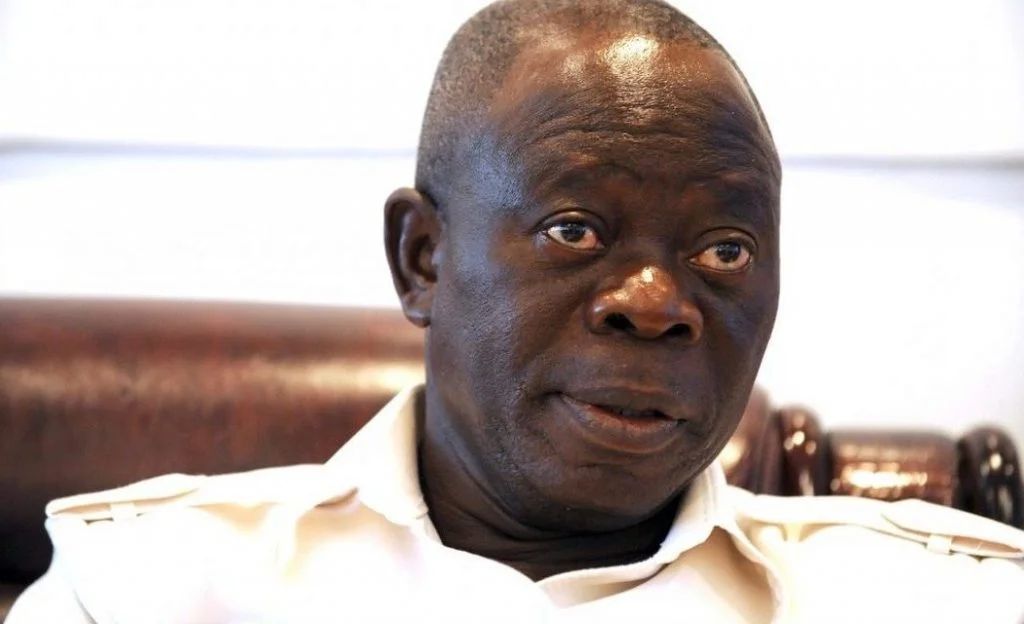
The lawmaker representing Edo North Senatorial District, Adams Oshiomhole, has called for a review of the name of the Nigeria Security and Civil Defence Corps (NSCDC), arguing that its current nomenclature limits operational perception and effectiveness.
Oshiomhole suggested on Friday in Abuja during the unveiling of a book titled “Nigeria’s Security Dilemma: Rivalries and Implications” written by NSCDC FCT Commandant, Dr Olusola Odumosu.
He explained that the word “Civil” in the agency’s name creates the impression that personnel are not expected to bear arms, despite being tasked with protecting Critical National Assets and Infrastructure and confronting armed criminals.
The former Edo State governor questioned how NSCDC operatives could effectively tackle vandals, illegal miners, and other armed offenders if they were expected to remain “civil” in the face of heavily armed threats. He argued that it is unrealistic for security personnel to engage sophisticated criminals with inferior firepower.
Oshiomhole also observed that the NSCDC was often absent from high-level security meetings, particularly those involving service chiefs, suggesting a gap in coordination. He stressed that no single security agency could address Nigeria’s security challenges alone.
He called for stronger collaboration among security institutions and urged political leaders and security agencies to set aside differences, emphasising that national unity is essential in tackling insecurity. He also expressed confidence that President Bola Tinubu would continue to deploy necessary measures to improve national security and reduce insecurity to the barest minimum.
Commending the author, Oshiomhole praised Odumosu for contributing to public discourse on security reforms, noting that speaking from within the system demonstrated courage. He added that discussing such issues internally is more impactful than speaking from the outside.
Security expert and book reviewer, Prof. Tyor Terhemba, also emphasised the need for collective action against banditry, terrorism, kidnapping, and other crimes. He said the current security environment requires unity rather than rivalry among agencies.
Terhemba highlighted that the book underscores inter-agency cooperation, intelligence-sharing, regional and international partnerships, and the need to address political interference, legal ambiguities, accountability issues, communication gaps, and broader security sector reforms.
The author, Dr Olusola Odumosu, said the book takes a holistic approach to Nigeria’s security challenges, stressing the need for a unified front. He noted that persistent inter-agency rivalry continues to hinder effective national security responses.
Odumosu added that no single agency has a monopoly on ideas or solutions, stressing that all security institutions share a collective responsibility to maintain peace and order. He warned that continued rivalry among agencies undermines coordinated national security efforts and weakens overall effectiveness.