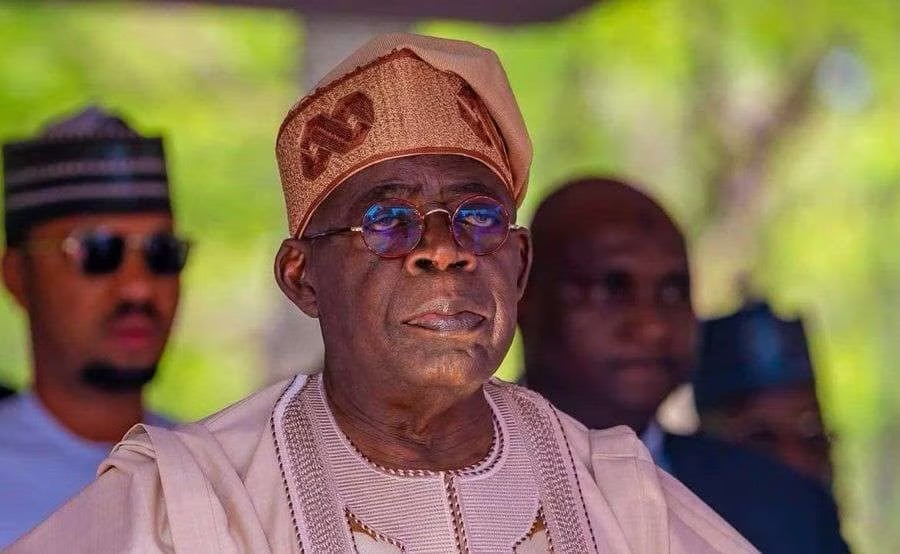
President Bola Tinubu’s administration is facing fresh scrutiny from Washington over Nigeria’s management of public finances, with the latest United States fiscal transparency assessment raising fresh questions about the disclosure of government contracts, budget information and the management of public resources.
The report is proving to be embarrassing for a government that has consistently presented fiscal discipline, debt sustainability and transparency as key pillars of its economic reforms.
In its 2026 budget, the administration pledged to strengthen controls and ensure that every naira borrowed or spent delivers measurable public value.
However, the United States Department of State, in its 2025 Fiscal Transparency Report, classified Nigeria among countries that failed to meet its minimum fiscal transparency requirements.
The assessment reviewed government fiscal practices during the January-December 2024 period and examined the availability and reliability of national budget information, disclosure of government contracts and the transparency of procurement processes.
According to the report, Nigeria had made progress in making budget documents and information on debt obligations publicly available.
However, Washington identified the failure to disclose sufficient information on public procurement contracts as a major weakness, arguing that the gap undermines accountability and good governance.
Nigeria was among 69 governments and entities that did not meet the minimum requirements, although 26 of those governments were judged to have made significant progress.
The finding has heightened concerns about the quality of fiscal governance under the Tinubu administration, particularly as the Federal Government continues to expand its borrowing programme and undertake major expenditure commitments.
While the government has repeatedly promised greater openness in the management of public resources, questions persist over the completeness and timeliness of fiscal information available to citizens, investors and oversight institutions.
RISING PUBLIC DEBT, GOVT SPENDING UNDER SCRUTINY
The renewed U.S. pressure also comes against the background of concerns by international financial institutions over Nigeria’s budget credibility and fiscal management.
The International Monetary Fund (IMF), in its 2025 Article IV assessment, said Nigeria’s budget process remained characterized by poor credibility, inadequate transparency and insufficient accountability.
The organization warned that weaknesses in budget formulation and execution could complicate fiscal-risk management and undermine the credibility of government spending plans.
More recently, the IMF reported that Nigeria’s consolidated government deficit widened to an estimated 4.4 per cent of GDP in 2025, from 2.4 per cent in 2024.
It said oil revenues fell short of budget expectations, while under-execution of reported capital expenditure helped offset the revenue shortfall.
The Fund also noted a statistical discrepancy equivalent to 2.7 per cent of GDP that could reflect spending not captured by the Office of the Accountant-General of the Federation.
The disclosure is particularly significant as transparency in public expenditure is becoming increasingly important with the Federal Government relying heavily on borrowing to finance its budgets.
The World Bank had similarly warned in its Nigeria Development Update that federal fiscal reporting remained fragmented and outdated.
At the time of its assessment, the Brenton Wood institution noted that audited financial statements were not sufficiently current, budget implementation reporting lagged and the Open Treasury Portal had yet to provide comprehensive 2025 information.
It also raised concerns about limited information on government-owned enterprises and difficulties in tracking oil revenues and the financial gains from the removal of the petrol subsidy.
PROCUREMENT REMAINS SORE POINT
With public procurement emerging as one of the most contentious aspects of the transparency debate, the U.S. assessment specifically focused attention on the disclosure of procurement contracts, raising concerns about whether citizens and other stakeholders have sufficient access to information on how public contracts are awarded and executed. The issue is particularly important given the enormous volume of government expenditure channelled through procurement.
Central to such procurement are the Lagos-Calabar coastal road out at the cost N11 trillion, the Sokoto- Badagry Lagos road put at N7 trillion both to the same company in which the President has interest without public tender and bidding.
However, the Federal Government, through the Bureau of Public Procurement (BPP), rejected Washington’s allegations that Nigeria’s procurement system lacks transparency.
The agency said it had undertaken major reforms, including the deployment of an e-Government Procurement system, and reported that its interventions generated about N1.1 trillion in savings in 2025.
The BPP also maintained that the government is strengthening procurement monitoring, contract management and digital disclosure mechanisms to improve value for money.
TRANSPARENCY CHALLENGE
The latest U.S. assessment represents more than another international report for the Tinubu administration.
The report comes at a time when the government is seeking to attract foreign capital, deepen investor confidence and convince international lenders and development partners that Nigeria is pursuing credible fiscal reforms.
In its defence, the Tinubu administration pointed to several reforms as evidence of its commitment to fiscal openness, including the use of digital public-finance platforms, reforms to the budget process and efforts to improve procurement monitoring.
Speaking at a recent public event, the President reaffirmed his administration’s commitment to transparency and accountability in public finance, highlighting systems including the Integrated Payroll and Personnel Information System, Government Integrated Financial Management Information System and Open Treasury Portal.
In the same vein, the Federal Government’s 2026 expenditure outlay is facing scrutiny from budget experts. Particularly, government’s N58.18 trillion expenditure against N34.33 trillion in revenue in the 2026 budget estimates, leaves a deficit of N23.85 trillion, with debt servicing alone projected at N15.52 trillion, has raised alarm in many quarters.
While the government insists that its borrowing strategy is sustainable, critics maintained that the size and structure of Nigeria’s debt have become a recurring source of controversy.
Finance Minister Taiwo Oyedele recently rejected claims that the administration had contracted about N80 trillion in fresh borrowing, explaining that the figure being circulated included accounting effects arising from the naira’s depreciation and other adjustments.
Critics, however, argued that the debate goes beyond the headline debt figure to the broader question of how efficiently Nigeria manages its scarce resources.
According to an economist, Dr. Peju Beckley, fiscal transparency is important to investors because uncertainty over government revenues, expenditure and debt obligations can increase perceptions of sovereign risk and ultimately raise the cost of borrowing.
Beckley warned that lack of fiscal transparency can influence borrowing costs by increasing risk perceptions.
“Credible budgets and timely disclosure of fiscal information are essential to strengthening investor confidence and public trust
“The persistence of concerns raised by Washington, the IMF, the World Bank and domestic accountability groups suggests that the challenge is no longer simply putting fiscal information online, but ensuring that the information is comprehensive, timely, reliable and sufficiently detailed to allow meaningful public scrutiny.
“Also, the latest U.S. assessment is likely to intensify pressure to close gaps in budget and procurement disclosure, improve the tracking of off-budget expenditure and strengthen oversight of public borrowing and spending.
“As Nigeria confronts mounting development needs alongside rising debt-service obligations, the credibility of the government’s fiscal management may increasingly depend not only on how much it spends or borrows, but on how transparently it accounts for every naira”, the economic expert noted.
Also speaking on the matter, a civil society group, Network for Public Procurement Advocacy and Development, questioned the adequacy of government measures.
While criticizing the BPP’s response to the U.S. report, the organization argued that the government’s defence did not sufficiently address the specific concerns raised by Washington over contract disclosure