

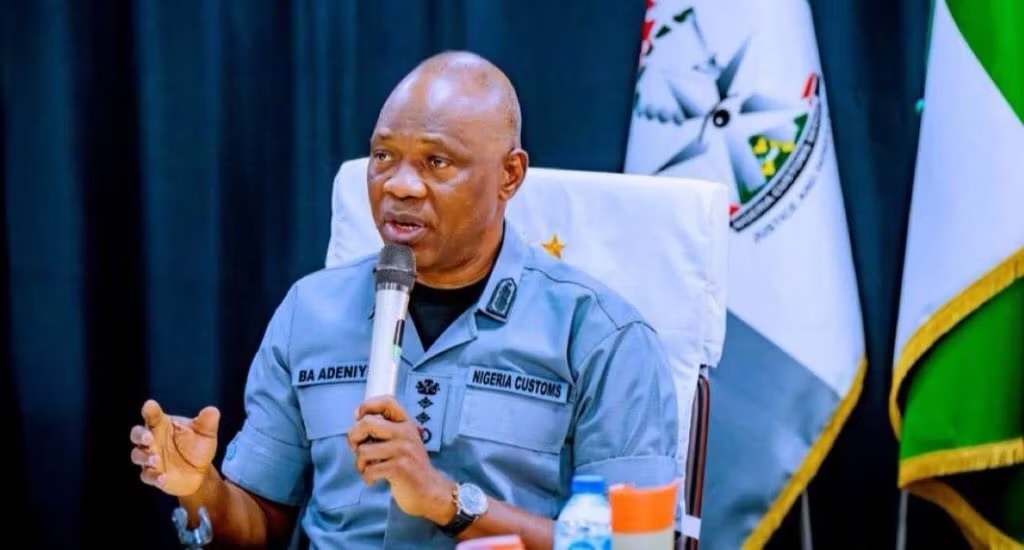
The disposal of seized and forfeited assets by the Nigeria Customs Service (NCS) has come under fresh scrutiny following allegations that 338 vehicles, including high-value utility vehicles, were allocated to a single company for a total of N3.38 million.
The alleged transaction, which amounts to an average of just N10,000 per vehicle, has triggered concerns among licensed auctioneers over the valuation, allocation, and transparency of the process.
The Nigeria Auctioneers Association (NAA), which made the revelation in a statement made available to Business Hallmark in Lagos at the weekend, demanded a probe into the transaction and other similar disposals by government agencies.
The association alleged that the practice of government agencies directly valuing and disposing of seized, or forfeited assets, had sidelined licensed auctioneers and created opportunities for abuse.
It specifically accused the Customs Service of operating an internal auction arrangement outside what it described as the statutory framework for the disposal of public assets.
The National President of the association, Musa Kurra, accused ministries, departments and agencies (MDAs) of increasingly taking over the functions of licensed auctioneers.
According to Kurra, the development was not only depriving auctioneers of legitimate business, but could also be costing the Federal Government substantial revenue through the disposal of valuable public assets without adequate valuation and competitive processes.
“Most ministries and agencies have become auctioneers on their own. They don’t care about due process anymore. This is not good for the government”, he said.
Kurra alleged that government property worth billions, and potentially trillions, of naira was being disposed of through processes that did not guarantee the best possible returns to the public treasury.
“There are a lot of properties worth billions, if not trillions, of naira that are being wasted. It is our job to generate money for the government, to go out there and auction these properties and make money for the government. But these people have taken over our jobs”, he said.
He argued that government officials should not simultaneously act as custodians of public assets and auctioneers responsible for disposing of them.
“If anybody wants to become an auctioneer, the door is open. But you cannot be a civil servant and also want to be an auctioneer at the same time”, Kurra stated.
The NAA president singled out the Customs Service, accusing it of bypassing what he described as the statutory framework governing the disposal of forfeited assets.
He particularly criticised the Customs Direct Auction Administration Department, alleging that its creation had effectively institutionalised an internal auction system.
“Customs went as far as creating a department called the Direct Auction Administration Department. That department is illegal. What they are doing is illegal”, Kurra alleged.
He maintained that once assets are finally forfeited to the government, they become public property and should, therefore, be disposed of through a transparent process involving independent valuation and licensed auctioneers.
“The law says that whatever they seize, they have to get a valuer to value it and appoint a licensed auctioneer to auction the property to the public because it belongs to the public”, he said.
N3.38M FOR 338 VEHICLES
The NAA president cited what he described as one of the most troubling examples of the alleged practice – the allocation of 338 vehicles to a single company for N3.38 million.
According to him, the list of vehicles included Toyota Prado sports utility vehicles, Hilux trucks and other vehicles, raising questions about how the assets could have been valued at an average of N10,000 each.
“Do you know how much was paid into government coffers? N3.38 million. You have Prado, Hilux and all sorts of vehicles on that list. N3.38 million was paid into the government account for 338 vehicles. That means each vehicle went for N10,000″, he alleged.
Kurra said the association had documents to support its allegations and called for an investigation by the Federal Government to establish what actually transpired.
“The President should know, and he should find out whether anything I am saying is true. I can give you documents to trace my points. I am not just saying it; I have facts”, he said.
He also alleged that some importers had paid duties on their goods only to discover that the items had subsequently been disposed of through what he called direct allocation.
“A lot of people are crying now. They paid duty for their properties and go there, only to discover that the properties are no longer there. They have been sold through direct auction allocation. I don’t know where they got that authority from”, he alleged.
The NAA boss said similar concerns existed in other government institutions, including the Federal Ministry of Water Resources, and urged President Bola Tinubu to order a review of the asset disposal practices of MDAs.
CUSTOMS DISAGREES
But the Nigeria Customs Service has rejected NAA’s interpretation of the law, saying the association was conflicting two separate categories of government asset disposal.
The service’s spokesperson, Abdullahi Maiwada, explained that the law distinguishes between fixed assets acquired by government agencies through budgetary allocations and goods seized, or forfeited as a result of Customs violations.
According to him, fixed assets, such as vehicles, generators and other equipment purchased with public funds are subject to disposal through auctioneers after they have exceeded their prescribed service periods.
“We have two categories of auctions; there are auctions that are disposal of fixed assets, immovable property after they have passed their stipulated period.
“Those are items that are purchased based on budgetary allocation. So, those forms of items require you to pass through the auctioneers as stipulated by law before you dispose of them,” Maiwada explained.
He, however, said seized and forfeited goods were governed by a different procedure.
According to him, such items include goods seized for contravening Customs laws, products linked to illicit smuggling activities, and consignments that have remained at ports beyond the legally prescribed period.
“When you are disposing of these items, you don’t need an auctioneer to dispose of those items. You can do that either by direct allocation, or through online auction. That is provided by the law”, he said.
Maiwada, therefore, urged the public not to confuse the two categories of disposal.
“Don’t mix two items together. Where auctioneers come in is when you are disposing of items bought through budgetary allocation, not items seized and forfeited to the Federal Government because of contravention of relevant laws or policies of government”, he stated.
Meanwhile, the conflicting positions have placed the spotlight on the legal and administrative framework governing the disposal of seized and forfeited assets in the country, particularly the valuation of high-value vehicles and the basis for selecting beneficiaries. Other agencies involved in direct auctions include the EFCC.
Speaking on the matter, an auditor and forensic expert, Babajide Bello, implored the government not to sweep the allegations under the carpet.
“The dispute is likely to persist unless the relevant documents, valuation records, approval processes, beneficiary details and payment records surrounding the disputed transaction are independently examined and made available for scrutiny”, Bello stated.