

There is a simple way to judge political representation: ask the people who live in the communities concerned.
Not just what they have heard. Not just what they have been told at political gatherings. Ask what has changed in their daily lives, what opportunities have opened up, what problems remain, and what they expect their representative to do next.
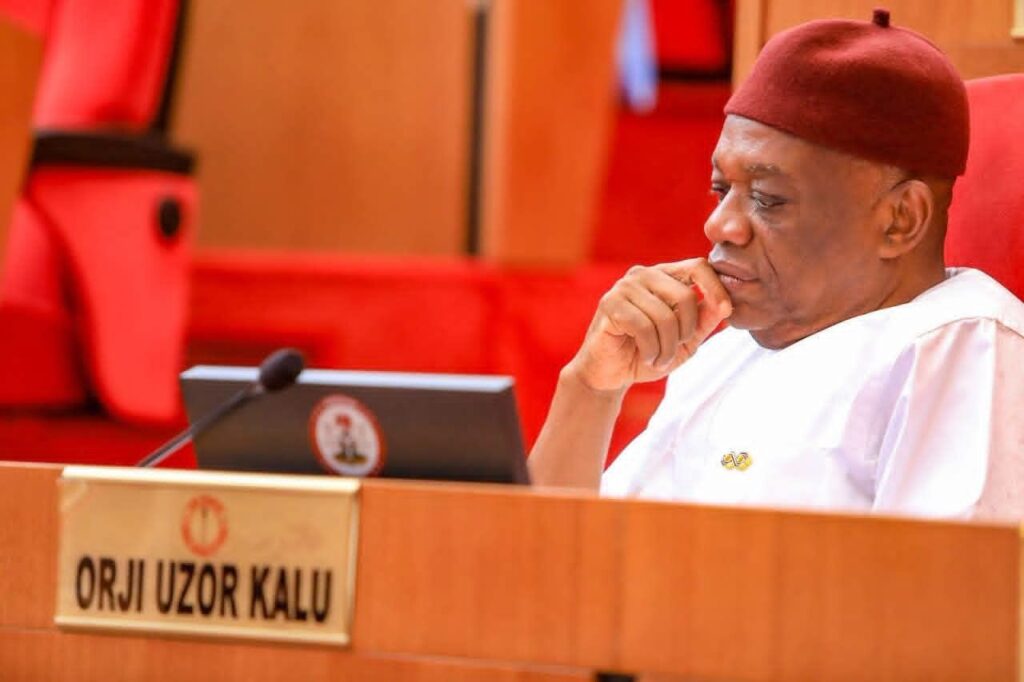
That is where the conversation about Senator Orji Uzor Kalu and Abia North becomes important.
For a senator, representation involves much more than speaking on the floor of the National Assembly. It includes making laws, scrutinising government institutions, influencing public policy, attracting development interventions and ensuring that the concerns of constituents receive attention at the appropriate levels of government.
The real value of these responsibilities, however, is measured by their impact on ordinary people.
From Abuja to the Communities
In September 2026, reports emerged that 28 road construction and rehabilitation projects had been captured in the 2025 federal budget for communities across Abia North. The projects cover locations in Bende, Isuikwuato, Umunneochi and the Arochukwu–Ohafia axis, with work reportedly commencing at some sites while contractors were expected to mobilise to others.
The significance of such interventions is easy to understand. In rural communities, a motorable road can determine how quickly farmers transport produce to market, how easily traders move goods, how much commuters spend on transportation and how readily residents reach schools and healthcare facilities.
A road is therefore more than a stretch of asphalt. When properly constructed and maintained, it can become an instrument of economic opportunity.
The Value of Going Back to the People
Another development worth examining is the senator’s ward-to-ward engagement across Abia North.
Reports from the September 2026 tour indicated that residents in parts of Isuikwuato and Ohafia acknowledged road and other development interventions attributed to his representation. They also called for additional roads, schools and other improvements.
That second part of the conversation deserves as much attention as the expressions of support.
A responsible representative must be willing to hear appreciation and criticism in equal measure. Communities are not identical. A project that addresses an urgent need in one location does not automatically resolve the challenges confronting another.
This is why direct engagement matters. It creates an opportunity for a representative to understand local priorities, explain what has been done and identify what still requires attention.
The most useful political engagement is not one in which every concern is answered with applause. It is one in which concerns are documented, responsibilities are clarified and practical steps are taken towards addressing them.
Why Experience and Access Matter
One of the central arguments of The Kalu Advantage is that experience and access can be valuable assets in public service.
Senator Kalu’s previous experience as governor of Abia State and his years in the National Assembly give him familiarity with executive administration, legislative procedures and the workings of government institutions.
Such experience can help a representative understand where to take a request, which institutions are responsible for particular projects and how to follow up on budgetary and administrative processes.
The Advantage Must Ultimately Belong to the People
The most compelling argument for retaining an experienced representative is not simply that the individual has occupied important offices or built relationships within the corridors of power.
It is that this experience can be used to serve the public more effectively.
For Abia North, the test should be whether representation contributes to better roads, stronger educational opportunities, improved access to essential services, economic opportunities for young people and more responsive engagement with communities.
The ongoing conversation about Senator Orji Uzor Kalu should therefore go beyond personalities and political excitement. It should examine what has been achieved, what is underway, what remains unfinished and what must happen next.
Ultimately, the advantage that matters is not merely an advantage enjoyed by a politician. It is an advantage experienced by the people.
And when the people can point to verifiable improvements in their lives, political representation becomes more than a promise. It becomes a record of service.
That is the standard Abia North deserves and have received and the standard by which every representative should be judged.
By Ik Ogbonna