

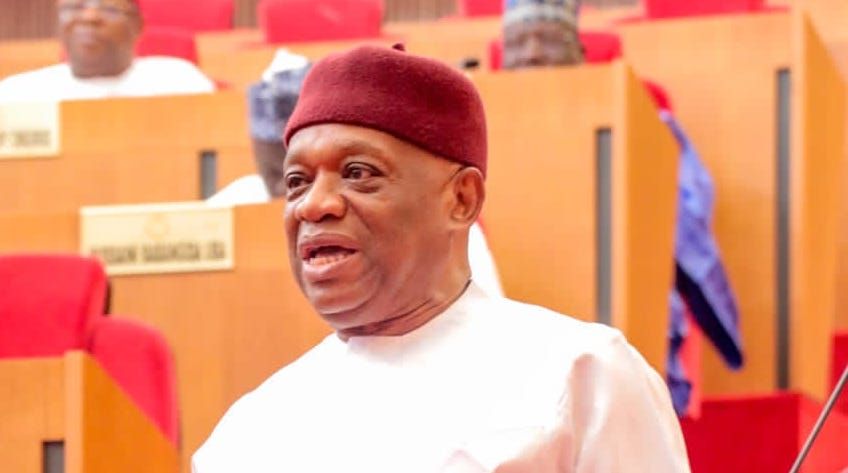
There is a fundamental question every constituent should ask about their elected representative: What difference has this person made in the lives of the people?
Politics is often measured by the strength of alliances, the number of political associates, access to powerful individuals and the ability to command attention in government circles. These things may matter in the political arena, but they are not, in themselves, evidence of effective representation.
For the ordinary citizen, representation becomes meaningful when it produces results that can be seen, experienced and appreciated.
A road that connects communities, a school that provides a better learning environment, a scholarship that keeps a promising student in school, a business that receives support to grow, or a healthcare intervention that makes medical attention accessible — these are the things that give political representation its real meaning.
This is where the conversation about Senator Orji Uzor Kalu and Abia North becomes particularly important.
In our earlier instalments, we examined the importance of experience, access to the presidency, understanding how Abuja works and the responsibilities that extend beyond occupying a seat in the Senate.
The next logical step is to examine the relationship between political influence and development.
Roads: Connecting Communities and Opening Economic Opportunities
One of the most important responsibilities of a representative is to help address infrastructure deficits that hold communities back.
In Abia North, road infrastructure has featured prominently in Senator Kalu’s constituency interventions. Reports have identified road projects across Bende, Isuikwuato, Umunneochi, Arochukwu and Ohafia and indeed across every section of Abia North.
In September 2026, reports indicated that construction and rehabilitation had commenced on 28 additional road projects captured in the 2025 Federal Government Budget. The projects include roads in Ezera, Umuelem, Ovim, Uturu, Nneato, Isuochi, Lokpaukwu, Bende and Ohafia.
The importance of these interventions goes beyond the construction of roads.
For a farmer, a motorable road means easier transportation of agricultural produce. For a trader, it means better access to markets. For a student, it can mean a safer and more convenient journey to school. For a rural community, it can mean improved access to hospitals and other essential services.
That is the development value of infrastructure.
Education: Investing in the Next Generation
Perhaps no investment has a more enduring impact on society than investment in education.
A representative who supports education is investing not just in individual beneficiaries but in the future productivity and competitiveness of the entire community.
Senator Kalu’s education interventions have reportedly included school construction and renovation, classroom furniture, STEM textbooks, school uniforms, exercise books, school bags and scholarship opportunities.
In July 2026, The Sun reported on the distribution of educational materials to schools in Ohafia, including classroom lockers, textbooks, exercise books, uniforms and school bags. The report also identified several beneficiary schools and stated that the programme was being extended to other parts of Abia North. The Sun Nigeria
These interventions matter because educational inequality often begins with unequal access to basic learning resources.
A child who receives the necessary textbooks and classroom facilities has a better opportunity to learn. A family relieved of some educational expenses has more resources available for other household needs.
Industrialisation: Moving Beyond Political Empowerment
There is a difference between giving someone temporary financial assistance and helping to create an environment in which people can earn sustainable incomes.
This is why the industrial development initiatives associated with Igbere deserve attention.
Reports have identified a cashew-processing factory, a solar-panel manufacturing facility under development and the Aku R’ulo tricycle assembly project among the industrial initiatives associated with Senator Kalu’s constituency development efforts.
These initiatives are important because Abia North, like many communities in Nigeria, needs more than political appointments and occasional empowerment distributions.
It needs productive enterprises.
A functioning factory can create direct and indirect employment, stimulate demand for local agricultural produce, support small businesses and generate opportunities for young people to acquire technical skills.
The cashew-processing project, for instance, has the potential to connect local agricultural production with value addition and manufacturing.
The solar-panel initiative, if successfully completed and operated, could also contribute to local industrial capacity.
Healthcare: Making Access to Medical Care Less Difficult
Healthcare is another area where political representation should be measured by its impact on ordinary households.
For many families, the cost of medical treatment can be financially devastating. A health intervention that reduces out-of-pocket expenses can therefore make a significant difference.
In April 2026, The Sun reported on a free healthcare initiative associated with Senator Kalu, including a health insurance arrangement intended to provide medical services to more than 500 constituents through participating healthcare facilities.
Such interventions deserve recognition, particularly in communities where access to affordable healthcare remains a challenge.
But beyond one-off medical outreaches, the long-term objective should be to strengthen healthcare facilities, improve access to essential medicines, support primary healthcare and expand health insurance coverage.
The Legislative Dimension: Representation Is Also About Influence
While constituency projects attract considerable public attention, we must not forget that a senator’s primary constitutional responsibility is legislative representation.
Senator Orji Uzor Kalu has occupied important positions in the National Assembly, including Senate Chief Whip and Chairman of the Senate Committee on the South-East Development Commission.
These positions provide opportunities to participate in national policymaking, influence legislative priorities and draw attention to the development challenges confronting the South-East.
His legislative interests have reportedly covered areas such as education, environmental regulation, transportation, criminal justice, food security and electric mobility.
His current position as Chairman of the Senate Committee on the South-East Development Commission is particularly significant.
The South-East Development Commission offers an institutional framework for addressing some of the region’s longstanding developmental challenges.
The Bigger Question: What Happens After the Projects?
There is something important we must establish about development.
A road is important, but maintaining it is equally important.
A school building is valuable, but ensuring that it has qualified teachers and adequate learning facilities is even more important.
A factory is a welcome development, but its real value lies in whether it becomes operational, creates jobs and contributes to the local economy.
An empowerment programme is commendable, but its ultimate success should be measured by whether beneficiaries become economically independent.
This is the difference between announcing projects and building sustainable development.
For Senator Kalu, the next phase of representation should therefore focus not only on attracting more projects but also on consolidating existing interventions, monitoring their performance and ensuring that communities derive lasting benefits hence the need for continuity to accomplish his mission.
Why This Matters Ahead of 2027
As the 2027 general elections approach, Abia North voters have every reason to examine the records of those seeking their mandate.
Elections should not be reduced to political sentiments, party affiliations, personal relationships or the popularity of individual politicians.
They should provide an opportunity for citizens to assess performance.
What has been achieved? What remains unfinished? What has changed in the lives of ordinary people? What new opportunities have been created? And what should be done differently?
These are legitimate questions in any democracy.
Senator Orji Uzor Kalu’s experience as a former governor and his years in the National Assembly give him a considerable political and institutional background. His constituency interventions provide material for assessing his contribution to Abia North.
Looking at the Record
The Kalu Advantage should ultimately be understood in terms of the relationship between experience, access, influence and development.
Experience provides institutional knowledge. Access creates opportunities. Political influence can facilitate interventions. But development is the ultimate measure of their value.
And as the conversation about 2027 gathers momentum, the most important question is not simply who wants to represent Abia North.
It is who can demonstrate a credible record, account for what has been achieved and articulate a realistic vision for what remains to be done.
Because, ultimately, political influence is only as valuable as the development it helps to deliver. OUK has delivered and deserves to be reelected.
The Kalu Advantage Series: Documenting the record. Telling the story. Keeping the focus on representation.
Ik Ogbonna is a PR Practitioner