

By Otunba (Dr) Toba Oloyede
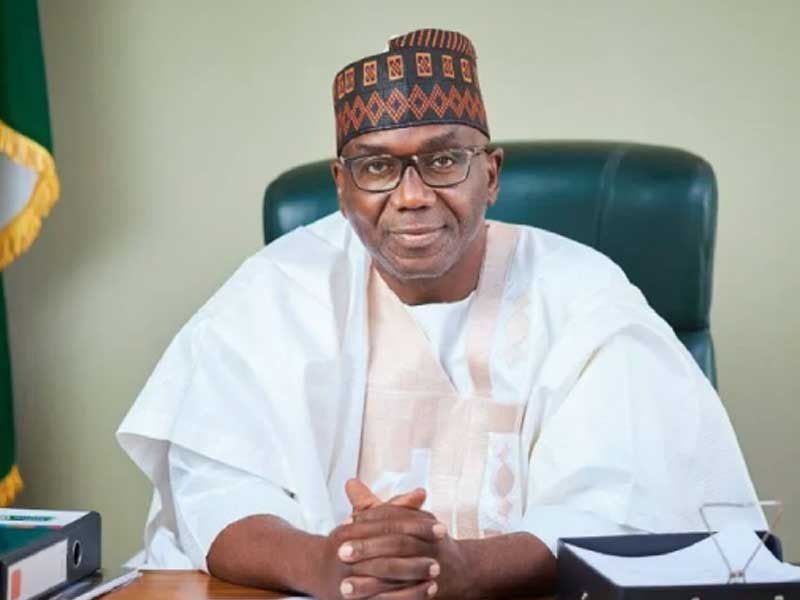
Kwara State does not get to this moment by luck. It gets here because one man made a decision, early, deliberately, and at great political cost, to govern differently. That man is Governor AbdulRahman AbdulRazaq, and the evidence of his commitment is written not in speeches, but in the lives of ordinary Kwarans who finally have reason to believe in their government again.
Those who lived through the era before the Otoge movement know exactly what Kwara was. It was a state held hostage by a political oligarchy that treated governance as personal inheritance. Public funds were diverted with impunity. Infrastructure decayed without consequence. Appointments were made not on merit but on loyalty to a few powerful individuals. The schools suffered. The hospitals suffered. The roads suffered. Most painfully, the people suffered in silence because they had been conditioned to believe that nothing would ever truly change.
That was the Kwara that Governor AbdulRahman AbdulRazaq inherited. And he did not flinch from it.
From the very first days of his administration, the Governor set a tone that was unmistakable: governance in Kwara would henceforth be about the people, not the powerful. He moved quickly to reform public institutions that had been hollowed out by years of mismanagement. He redirected attention and resources toward infrastructure, completing and commissioning road projects across the state’s sixteen local government areas, including communities that had never known a properly tarred road. He expanded social investment programmes that put food on tables, kept children in school, and gave the most vulnerable citizens a genuine safety net. He restored discipline to the civil service, improved internally generated revenue without strangling ordinary citizens, and began the painstaking work of rebuilding Kwara’s credibility as a destination for serious investment.
Under Governor AbdulRazaq, Kwara was no longer a footnote in national conversations about development. It became a reference point. The Governor’s deliberate, consistent, and principled approach to leadership earned Kwara recognition that the state had not enjoyed in decades. This was not the product of propaganda. It was the product of governance.
What makes Governor AbdulRazaq’s tenure even more remarkable is the depth of understanding he brings to his own legacy. He does not govern by instinct alone. He governs by vision. Every policy he pursued, every institution he reformed, every project he commissioned was part of a deliberate, long-range plan for what Kwara State could and should become. He understands, perhaps more clearly than anyone else, how fragile progress is when the wrong hands take over, and how quickly years of careful work can be undone by a single season of poor or self-serving leadership.
It is this depth of understanding that makes his endorsement of a successor far more than a political gesture. When Governor AbdulRazaq lends his support to a candidate, he is not simply passing a baton out of sentiment or personal affection. He is making a calculated, informed judgment about who is best equipped to carry forward the vision that he has spent years building. He knows what the job demands. He knows where the vulnerabilities lie. He knows which ongoing projects require continuity of direction, which institutions still need nurturing, and which reforms remain incomplete. No one is better placed than he is to identify the leader who will honour those responsibilities rather than abandon them.
To disregard that judgment is not an act of independence. It is an act of shortsightedness. The Governor’s preferred successor carries with them not just his name but his knowledge, his strategic intent, and the confidence of a man who has proven, through results, that his instincts about Kwara can be trusted. Those who genuinely care about the continued progress of this state would do well to align with that judgment rather than substitute it with personal ambition or factional calculation.
It is against this backdrop that every stakeholder in Kwara State must now ask themselves a sobering question: can we afford to go back?
Because going back is precisely what is at stake. The pre-Otoge era did not end simply because people grew tired of it. It ended because a critical mass of Kwarans, across party lines and across communities, decided that the cost of staying silent was greater than the risk of speaking out. The Otoge movement was not the product of one political party. It was the collective verdict of a people who had endured enough. To now allow political disagreements over succession to fracture the unity that made that verdict possible would be to hand back, voluntarily, everything that was taken away by force.
To those within the APC who may harbour grievances, who feel their interests have not been adequately represented, or who believe the succession process is not unfolding as it should: your concerns deserve to be heard and addressed through legitimate means. But consider what the alternative looks like. A divided APC in Kwara is not merely a political setback. It is an open door for the forces that the Otoge movement displaced to walk back in and reclaim what they lost. Those forces have not disappeared. They are watching, waiting, and ready to exploit every crack in the edifice that Governor AbdulRazaq spent years carefully constructing.
The greatest tribute that anyone can pay to Governor AbdulRahman AbdulRazaq is not praise. Praise is easy and costs nothing. The true tribute is stewardship: a commitment to ensuring that the foundations he laid are not only preserved but built upon. The roads he constructed should not return to ruin. The institutions he reformed should not slide back into dysfunction. The culture of accountability he introduced should not be quietly abandoned the moment attention moves elsewhere.
Kwara’s next leader must therefore be someone who understands this weight. Competence is not optional. Commitment to the values of transparent and people-centred governance is not optional. A genuine understanding of where Kwara has come from, and a genuine determination to keep it from going back there, is not optional. These are the minimum requirements of the moment, and every stakeholder in the APC must hold firmly to them as the succession process unfolds. That is precisely why the Governor’s guidance on who should lead next must be treated not as one opinion among many, but as the most informed counsel available to the people of Kwara at this defining hour.
This is not the season for bitterness. It is the season for reflection. It is not the time to weaken a political family that sacrificed enormously to liberate this state. It is the time to strengthen it, to demonstrate that what was built under Governor AbdulRazaq was not a temporary aberration but the beginning of a durable new standard for governance in Kwara.
Governor AbdulRahman AbdulRazaq gave Kwara State its dignity back. He gave its people their voice back. He gave its institutions their purpose back. The task now, for every person who benefited from that gift and for every person who once doubted it but has since seen the evidence, is simple: trust the vision, trust the process, and trust the man who knows better than anyone what this state needs next. Protect the progress. Honour the legacy. Ensure that Kwara never again becomes what it was before. The future of this state depends on it, and so does the judgment of history.