

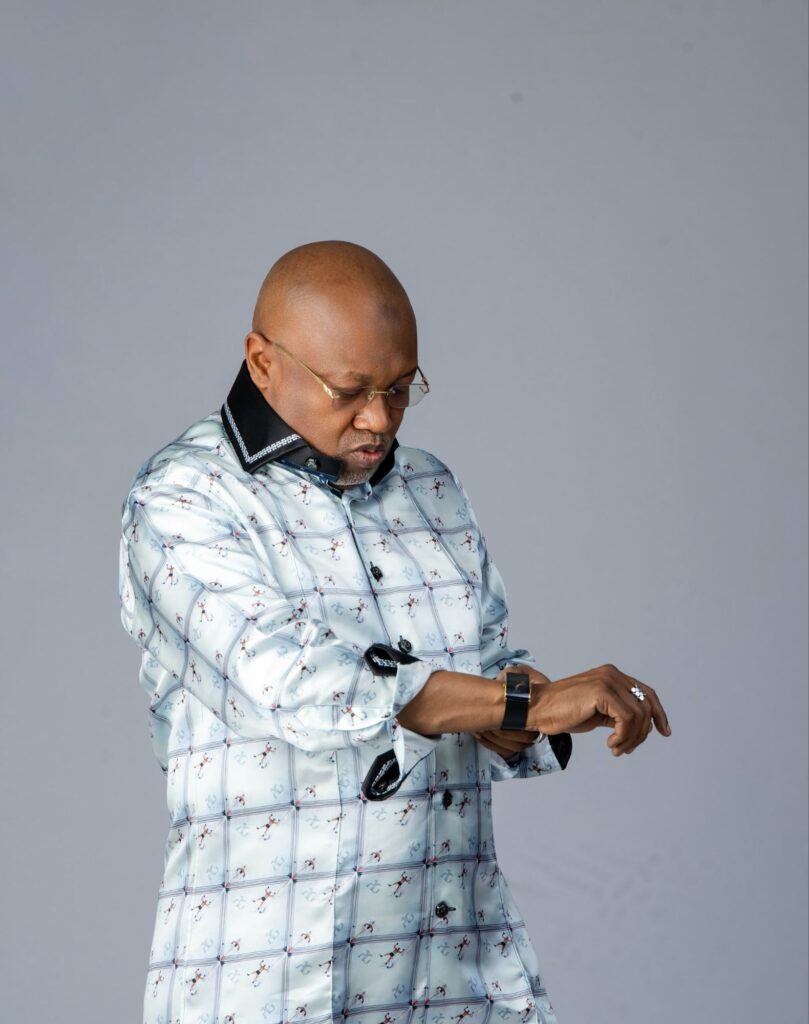
There comes a moment in every state’s history when the gap between what government promises and what government delivers becomes too wide to ignore. For Kwara, that moment has arrived. Under the leadership of the PDP candidate, Engr. Suleiman Bolakale Kawu, the Daniya of Ilorin, alongside his running mate, Rev. Fewenu, the ticket is presenting a clear blueprint to transition the state from political rhetoric to practical execution.
This is not a campaign built on noise. It addresses the fundamental question every Kwaran asks in private: why does a state with immense human and natural potential still struggle to give its own people a decent shot at a good life? The Kawu–Fewenu movement is positioning itself as the direct response to that challenge.
ON EMPLOYMENT
Kwara has built a significant educational ecosystem, boasting institutions such as the University of Ilorin, Kwara State University, Kwara State Polytechnic, colleges of education, schools of nursing, and the International Vocational and Technical Education Centre (IVTEC).
A Kawu–Fewenu administration promises to stop treating a degree as a final destination. Their policy agenda focuses on building an economy with the structural capacity to absorb these skills, reward local enterprise, and turn knowledge into sustainable wealth.
Recognizing the present reality in Ilorin, Offa, Omu-Aran, and Lafiagi—where graduates are routinely pushed into informal survival jobs due to systemic neglect—the Kawu–Fewenu team intends to eliminate this economic mismatch. While human mobility is natural, their goal is to dismantle the conditions that make leaving Kwara feel mandatory for survival.
Upon taking office, the Kawu–Fewenu administration will:
Establish Direct Industry-Education Links: Mandate structured pipelines between tertiary institutions, vocational centers, and industrial sectors to facilitate direct job placement.
Launch Targeted Apprenticeships & Capital Access: Expand technical training programs backed by state-supported grants and low-interest micro-finance for youth-led ventures.
Develop Tech and Industrial Hubs: Establish specialized technology clusters and enterprise zones across all three senatorial districts to attract foreign and local investment.
Stop Brain Drain: Shift Kwara from an exporter of talent into a regional hub for enterprise, ensuring young Kwarans can build viable careers at home.
Under their model, graduation will no longer mark the beginning of an exit strategy from Kwara—it will mark the start of building a career within it.
ON SECURITY
The ticket treats security as the non-negotiable bedrock of economic stability. Addressing the displacement of families in Kwara North and Kwara South, abandoned farmlands, and compromised rural communities sits at the top of their governance priorities.
The Kawu–Fewenu plan for state security will:
Overhaul Security Infrastructure: Deploy surveillance technology, enhanced logistics, and well-equipped rapid response units to vulnerable zones.
Strengthen Multi-Agency Coordination: Establish unified operational command centers integrating federal security agencies, state apparatus, and vetted local intelligence networks.
Reclaim and Resettle Communities: Secure affected rural areas to ensure displaced families can safely return to their ancestral homes and rebuild their livelihoods.
ON AGRICULTURE
Agriculture will no longer be treated as subsistence farming dressed up for campaign photo-ops. The Kawu–Fewenu IDEA aims to modernize farming into a primary commercial driver for the state.
Their agricultural action plan will:
Guarantee Land Tenure & Direct Credit: Streamline land access and deliver direct financial credit directly to working farmers, bypassing political intermediaries.
Deploy Modern Mechanization: Provide modern machinery, high-yield seeds, and processing facilities to transition Kwara from raw output to high-value agro-processing.
Build Rural Infrastructure: Construct farm-to-market feeder roads and storage facilities to eliminate post-harvest losses and raise rural incomes.
GOVERNANCE BUILT ON RESULTS
Ultimately, the Kawu–Fewenu platform asks to be judged by a practical standard: whether an ordinary citizen’s life improves—whether a graduate finds work at home, a farmer earns a profitable living, and a family sleeps in safety.
With Engr. Suleiman Bolakale Kawu bringing hands-on experience in infrastructure delivery, complemented by Rev. Fewenu’s community-focused leadership, the ticket presents Kwarans with a distinct choice: moving away from politics-as-performance toward a practical model of problem-solving governance.