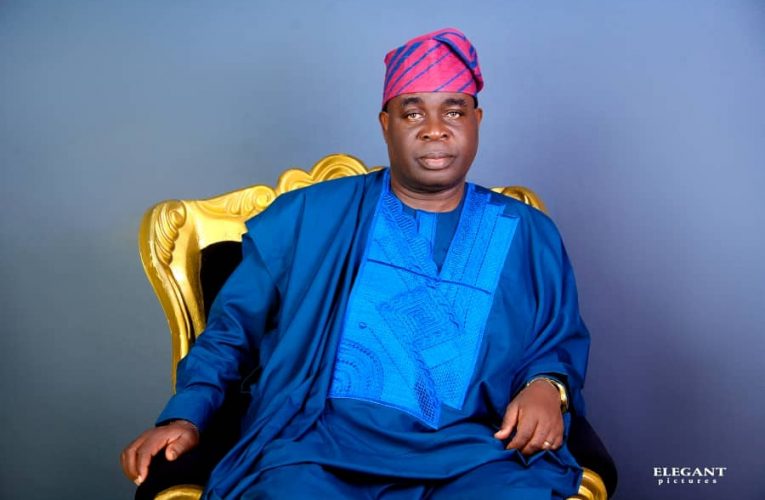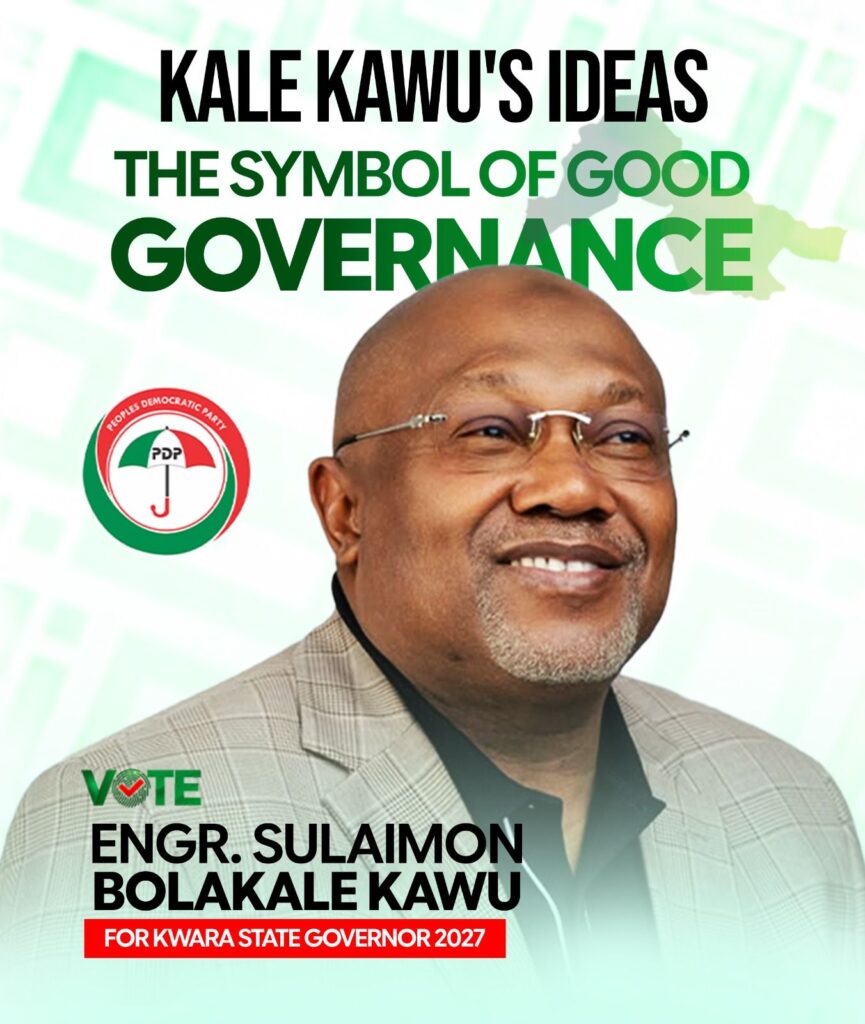
Engr. Kale Kawu is not a stranger to Kwara or to the realities confronting its people. He is a man who has always been around, accessible and connected to the people, long before politics became a consideration. Over the years, he has built relationships across communities and remained engaged with the issues that affect ordinary citizens of the state. His understanding of Kwara, its people and its challenges is therefore shaped not merely by political briefings or statistics, but by years of direct engagement with the communities that make up the state.
That familiarity matters because effective leadership and governance begin with understanding the people and the challenges they face.
For many Kwarans, the most pressing concerns are not grand government buildings or impressive project photographs. They are the ability to secure decent jobs, grow their businesses, provide quality education for their children, travel safely on functional roads, access quality healthcare without having to leave the state or break their pockets, protect their families from insecurity and cope with the rising cost of living.
This is the philosophy Kawu says should guide public investment. He holds that government must focus its limited resources on projects and programmes that deliver tangible improvements in the lives of the people.
That is why, if elected governor of the state, Kale Kawu’s administration will prioritise substance over spectacle, impact over optics. His focus will be on projects and programmes that respond directly to the needs and aspirations of the average Kwaran, rather than vanity projects designed to loot public funds or generate headlines while delivering little or no measurable impact to the people.
Kale Kawu will not, for instance, sink N30 billion into renovating a single hotel or pour billions of naira into grandiose, high-cost projects with limited or no social value while roads across the state remain in poor condition, hospitals lack essential diagnostics equipment, quality healthcare remains out of reach for many and the rising cost of living continues to place enormous pressure on families.
A responsible and responsive administration must ask pertinent questions before committing billions of naira to any project: Who will benefit from it? How many people will it serve? What problem is it solving? How much will it cost taxpayers? What economic or social value will it generate? And, perhaps most importantly, could the same resources produce greater impact if invested elsewhere?
That is the standard Kale Kawu says he will hold his administration to. This approach is particularly important for a state such as Kwara, where competing development needs remain substantial and public resources are limited.
Every major expenditure carries an opportunity cost. Money committed to one project cannot simultaneously be spent on another. A government that allocates tens of billions of naira to a single project must therefore be able to demonstrate clearly why that investment represents the most effective use of scarce public resources and what measurable benefits it will deliver to citizens.
Kale Kawu’s stated approach is to prioritise investments that directly address the everyday needs of Kwarans: employment and enterprise development, infrastructure, healthcare, education, security and other essential public services.
At the heart of his vision is a development model that places people at the centre of government decisions and measures success not merely by the size, cost or appearance of projects, but by their actual impact on the lives of citizens.