By Comr. C. I. Duke
Umunneochi, Abia State | 29/09/26
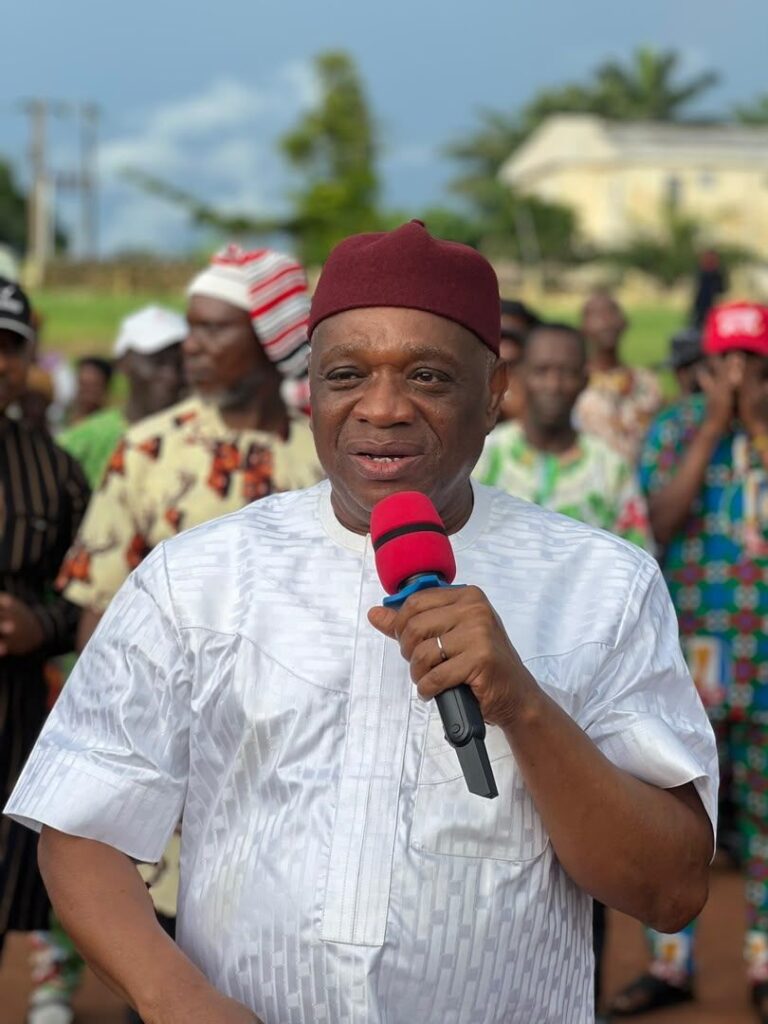
Senator Orji Uzor Kalu’s recent ward-to-ward tour across Isikwuato Local Government Area reveals something increasingly rare in Nigerian politics: a sitting senator who treats constituency engagement not as a campaign strategy but as an ongoing burden of political responsibility. These visits, comprehensive in scope and consistent in pattern, offer important insights into what genuine representation looks like in practice.
What stands out immediately about Senator Kalu’s recent activities is not their novelty but their consistency. These community visits to multiple wards in Isikwuato; Oguduasa, Avuvu, Nunya, Isuamawu, Umuobiala, Otamkpa, Mgbelu Umunnekwu, and Amiyi Obilohia, are not electoral campaign activities. Rather, they represent an ongoing pattern that has defined his political practice for decades, regardless of whether an election is imminent.
Many Nigerian politicians conduct intensive constituency tours only when elections approach, disappearing from communities between electoral cycles. Senator Kalu’s pattern differs fundamentally. Whether elections are scheduled or not, his engagement with constituents remains active. This suggests that for Kalu, community representation is not a tactical tool but a genuine responsibility he has internalised as part of his political identity.
Senator Kalu’s approach to community engagement demonstrates sophistication in understanding how local governance actually works. His visits encompass engagement at multiple levels: traditional rulers, women leaders, youth groups, and local community members. By consulting with the Isuikwuato Traditional Rulers Advisory Council led by HRM Eze Faraday Chinekwe, he recognises that effective representation must respect existing community structures and seek their partnership, a goodwill he has enjoyed over years.
This multi-level approach serves several important functions. It ensures that development interventions are coordinated with traditional institutions rather than imposed upon them. It demonstrates respect for hierarchies and institutions that our people value. Most importantly, it creates a foundation for sustainable development because projects recommended and supported by traditional rulers enjoy community legitimacy and are more likely to receive maintenance and community protection.
The engagement with women leaders like Dr. Lilian Obenwa (Igolo) is another dimension: recognition that women often serve as critical links between government programmes and community implementation. Women’s groups typically manage empowerment programmes, monitor educational facilities, and advocate for community needs. By directly engaging women leaders, Senator Kalu ensures that representation includes the voices most directly affected by development policy.
The scale of Senator Kalu’s documented interventions raises an important question about what constitutes the burden of political responsibility. According to reports from his recent visits, his representation has facilitated the construction and renovation of over 100 classroom blocks across Abia North, more than 70 road projects, multiple scholarship programmes, international training opportunities, and various empowerment initiatives.
These numbers are not mere campaign rhetoric. Communities cite specific schools, anyone can verify this; Central School Amune-Ovim, Amiyi Uhu Central School, Umerem Central School – that have benefited from interventions. Residents mention specific roads in their localities. When Senator Kalu visits communities, he is not presenting aspirational promises but a documented record of delivery. This transforms community engagement from political theatre into accountability discussion grounded in verifiable reality.
The burden here is significant. Maintaining such extensive projects requires continuous oversight, securing additional funding, coordinating with multiple stakeholders, and ensuring quality implementation. Many senators might consider this burden excessive and retreat to minimal constituency engagement, or even nothing at all. That Senator Kalu continues this intensive work suggests a commitment to representation that extends beyond what political survival requires.
Senator Kalu’s consistent engagement pattern across his entire tenure suggests that his motivation transcends electoral calculation. This raises questions about what drives politicians to maintain such intensive constituent engagement. The answer appears rooted in what might be termed a philosophy of political responsibility, the conviction that occupying elected office carries obligations to constituents that exist independent of electoral cycles.
This non-electoral motivation has practical implications. It means that constituent concerns receive attention based on merit rather than strategic electoral calculation. Communities receive projects based on identified needs rather than election about which areas require intensive wooing. This approach may ultimately produce more equitable development distribution because it is not skewed toward swing constituencies or politically marginal areas.
Most interestingly, community responses to Senator Kalu’s visits suggest genuine satisfaction rather than manufactured enthusiasm. Community leaders list specific achievements, address specific challenges, and raise future expectations. This suggests relationships based on demonstrated performance rather than political manipulation. When residents say they appreciate Kalu’s visits because they can present concerns directly rather than relying on intermediaries, they are describing a democratic relationship fundamentally different from patronage politics.
Very clearly, Kalu’s recent community visits represent an approach to political responsibility that treats constituency engagement as an ongoing genuine commitment to the people rather than an electoral tactic.