

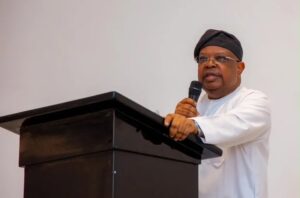
The Federal Government has signalled a shift in its approach to electricity tariff subsidies, with the Minister of Power, Joseph Tegbe, warning that the government can no longer continue absorbing tariff shortfalls while struggling to ensure reliable electricity supply across the country.
Tegbe made this known while highlighting the financial challenges confronting Nigeria’s power sector, particularly the widening gap between the cost of generating and supplying electricity and the tariffs paid by consumers.
The minister identified poor revenue collection, inadequate metering and mounting debts owed to electricity generation companies as major obstacles undermining the financial sustainability of the sector.
According to him, the existing arrangement, which requires the government to cover the difference between the actual cost of electricity and the amount paid by consumers, has become increasingly difficult to maintain.
As part of efforts to address the challenges, Tegbe disclosed that the Federal Government was considering a transition from the Nigerian Bulk Electricity Trading (NBET) model to bilateral electricity agreements, which would allow power suppliers and buyers to negotiate commercial terms directly.
The proposed arrangement is expected to strengthen payment discipline, improve revenue recovery and promote a more financially sustainable electricity market.
On metering, the minister disclosed that Nigeria currently faces a metering gap of approximately 40 per cent, a situation that continues to complicate accurate billing and revenue collection across the electricity value chain.
He said more than 700,000 electricity meters had been deployed within the preceding six months, while the government was targeting the installation of 7.5 million meters over the next two to three years.
The planned expansion of metering is expected to improve billing transparency, reduce estimated billing disputes and enhance accountability between electricity distribution companies and consumers.
However, the proposed changes could have significant implications for electricity consumers, particularly if the government reduces its role in absorbing tariff shortfalls. The impact will depend on the implementation of the proposed market reforms, the applicable tariff arrangements and measures introduced to protect vulnerable households.
The development comes amid persistent concerns over electricity supply, rising energy costs and the financial difficulties affecting operators across Nigeria’s power sector.
While the Federal Government’s proposed reforms are aimed at improving the sector’s commercial viability, their success will largely depend on stronger infrastructure, transparent billing, effective regulation and improved electricity supply to consumers.